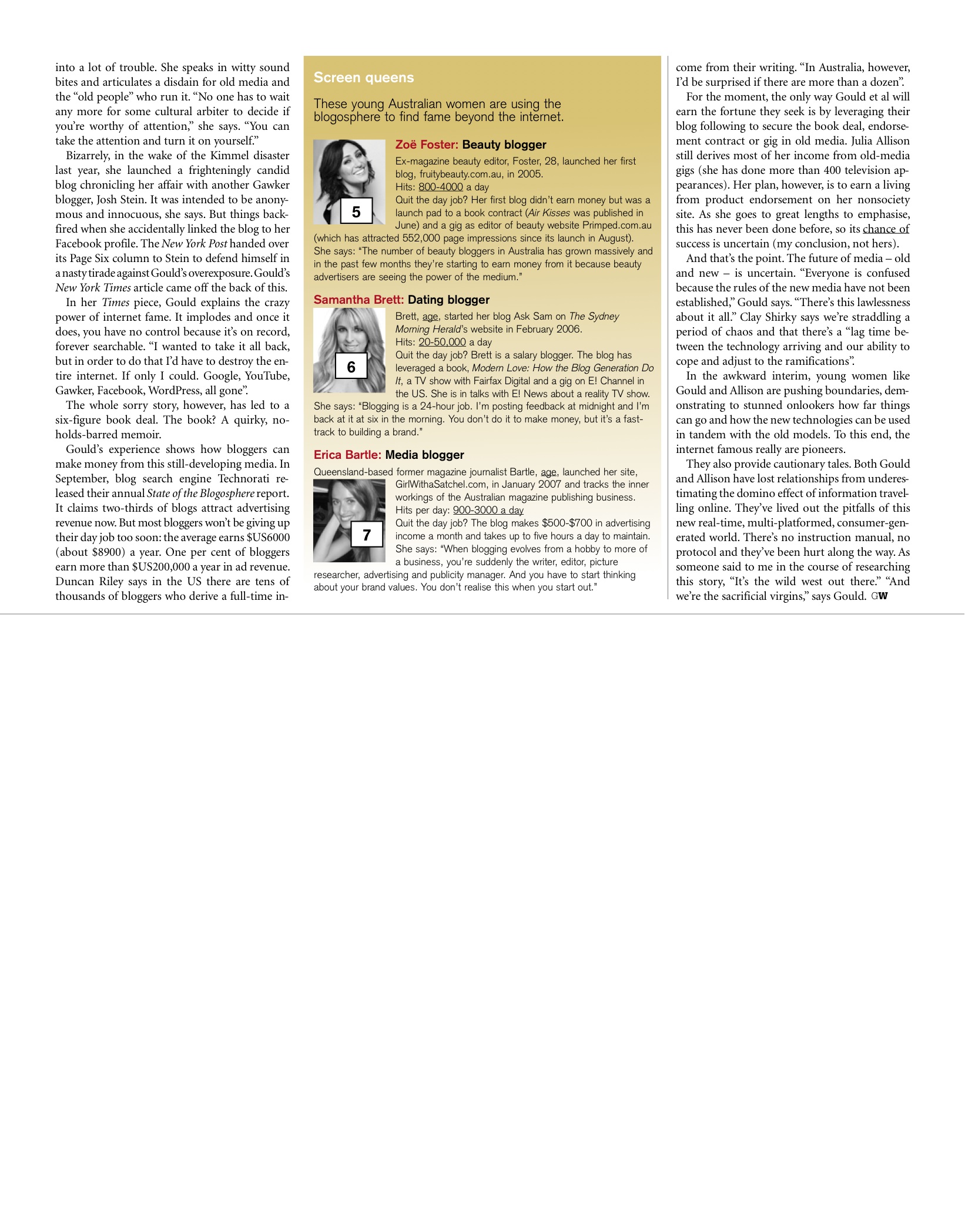
“I rejoice every time I see a woman ride by on a wheel!”

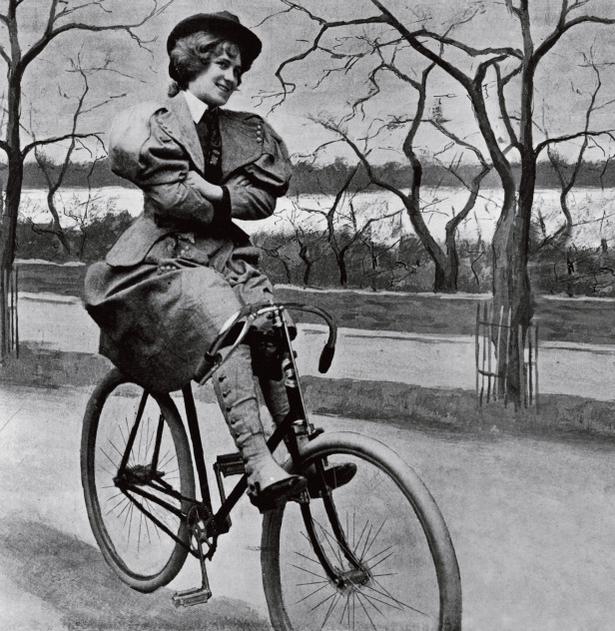
Hmmmm, I wonder how much I love this angle: bikes free chicks! My favourite (dead-set) tweeter Maria Popova alerted me to National Geographic‘s new book Wheels of Change: How The Bicycle Empowered Women.
wheelsofchange1

The advent of the bike “radically redefined the normative conventions of femininity”. For a start it got women straddling something, and not side-saddle. Then it got them moving. And active.

“From allowing young people to socialize without the chaperoning of clergymen and other merchants of morality to finally liberating women from the constraints of corsets and giant skirts (the “rational dress” pioneered by bike-riding women cut the weight of their undergarments to a “mere” 7 pounds), the velocipede made possible previously unthinkable actions and interactions that we now for granted to the point of forgetting the turbulence they once incited.”

Read more

how little acts of non-conformity make life better (Sunday life)

This week I do things at the wrong time

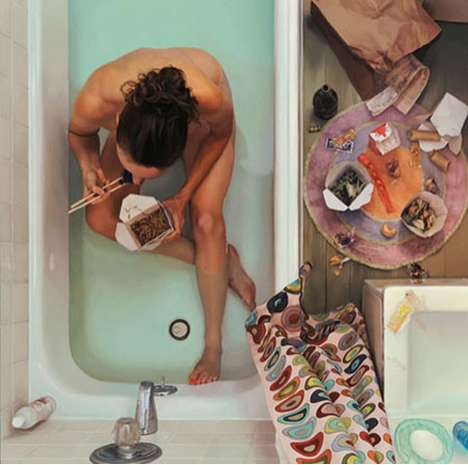
lee-pricePhoto by Lee Price

I take disproportionate delight from eating non-breakfast food at breakfast. This morning I ate mashed pumpkin with garlic. Sometimes I eat grilled sardines on lentils. Once I ate lamb chops.

In the comfortable, middle-class world I inhabit, such deviations feel like perverse acts of rebellion.  My grandmother, for 65 years, used to put out two Weet-bix in a bowl every night ready for breakfast in the morning. Bless Grandmother’s gentle soul, but my non-breakfasts say booyah to that!

Doing things at the right – or conventional – time can make sense. Turning up to weddings at the time specified by the bride and groom is always good. And getting your bikini line waxed is best done mid-afternoon, a week after your period, when the skin is least sensitive.

But this week I played with the idea that doing stuff when you’re not meant to is a tidy way to inject joy into life. At a purely pragmatic level doing things out of step with the masses is efficient. In the book Buy Ketchup In May And Fly At Noon, Marc Di Vincenzo makes the case for eating out at restaurants on Tuesdays

Read more

achieving with excitement

Ages ago I remember reading something by Leo Babauta about he’d given up goals. Instead he was achieving things with excitement.

when your hair stands on end...YOU'RE EXCITED

I’ve never really made goals. As in, “by 2013 I’ll be married with three kids”. Or, “in six months I will have the corner office”. In part because I’m never that certain about what I want to achieve. But also I’m not motivated that way. Goals seem so rigid and external and require different coloured textas and butcher’s paper and….

Sitting down to write “a list” of defined outcomes for down the track seems so dreary and admin-y.

Sitting down to reflect – or write – on what I want my life to feel like – that’s more like it!

Leo arrived at a similar point and said he gets things done by using excitement to lead him. Once excited, he takes action – he acts on the excitement immediately. Then he shares it (talks about it, tweets it). Then acts again. Keeps the excitement going. Acts a bit more and behold a “goal” is reached. Writing down goals, he says, can make you excited. But it’s only one way. And it’s not what gets you to the goal. Excitement does.

Let me tell you a story.

About six years ago I imagined up a scenario where I’m living in a place up high in trees overlooking the ocean. Hot, coastal, slightly tropical. I felt myself being there and felt myself working from there. Last week I took a look at where I’m living now, up here in the Byron hinterland in a little shed/cottage, and realised I’d landed myself in that scenario – trees, view, hot etc.

Read more

why i’m sending my kids to public schools

I’ve ranted about this issue before. I’m vocally against the principle of private schools. So is Justice Michael Kirby. Below are some of his thoughts from his interview with Fran Kelly on Radio National this week. But first…

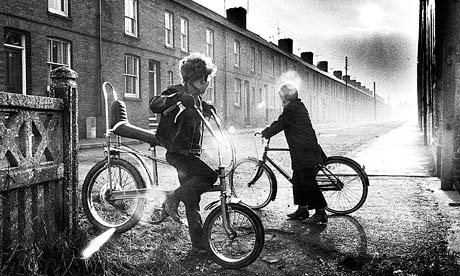
Children-on-bikes-1970s-006

I know parents want to provide the best thing for their own kids. And they feel that private schools provide a better start in life.

But two issues.

1. I don’t know that fancy pools and excursions to Tuscany make for a better education. When I got to uni I was surrounded by private school kids…I was one of a few public school kids studying law at ANU (I don’t think this is to do with grades alone…more that I think law is pushed more as a career at private schools…which ain’t necessarily a good thing). I remember being astounded by how much hand-holding my peers required to keep up with the course load. This is a generalisation that might offend. So let’s put it this way – I reckon the “self-led” approach required to get ahead in public schools sets a kid up well for life beyond school. In all kinds of ways. Not least of all that it instills awareness of a fuller spectrum of the human experience.

2. The “my kid deserves the best” attitude perpetuates the growing divide in schooling quality between public and private. While ever good, engaged, smart parents send their kids to private schools, it drains resources from public schools.

My beliefs are these:

* The two hallmarks of a just society are the same (high) standard of education and health for all. What chance does a kid have if these things aren’t accessible to them? With a decent education a kid that comes from nowhere has choices.

* Good, engaged, smart parents have an obligation to all kids, not just their own.

Read more

how to start a blog. actually, how to start anything.

A while back Clare Lancaster of Women in Business asked readers to share “the tips you would give yourself if you were starting up your blog today”. I get asked the same a lot.

98416_7_468

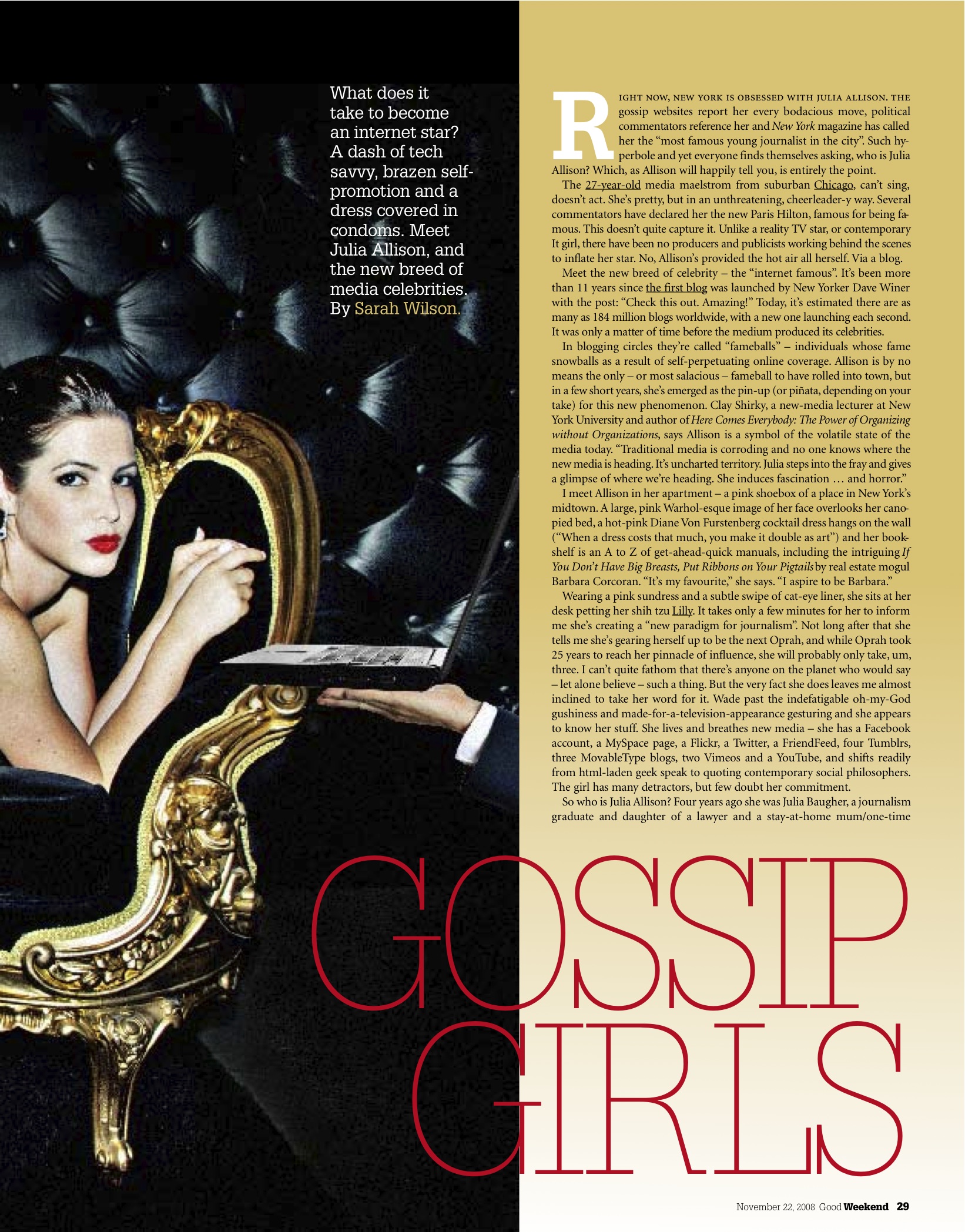
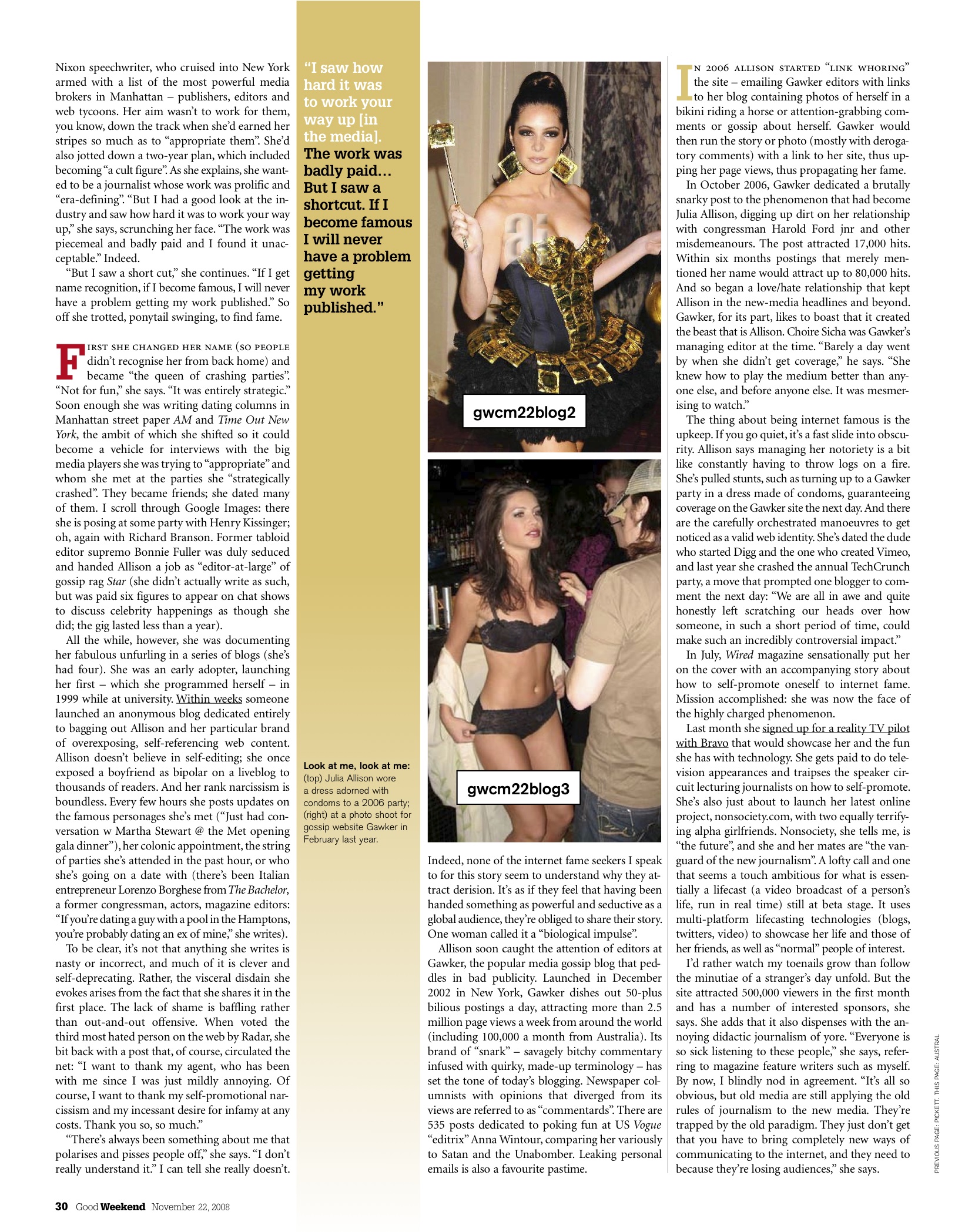
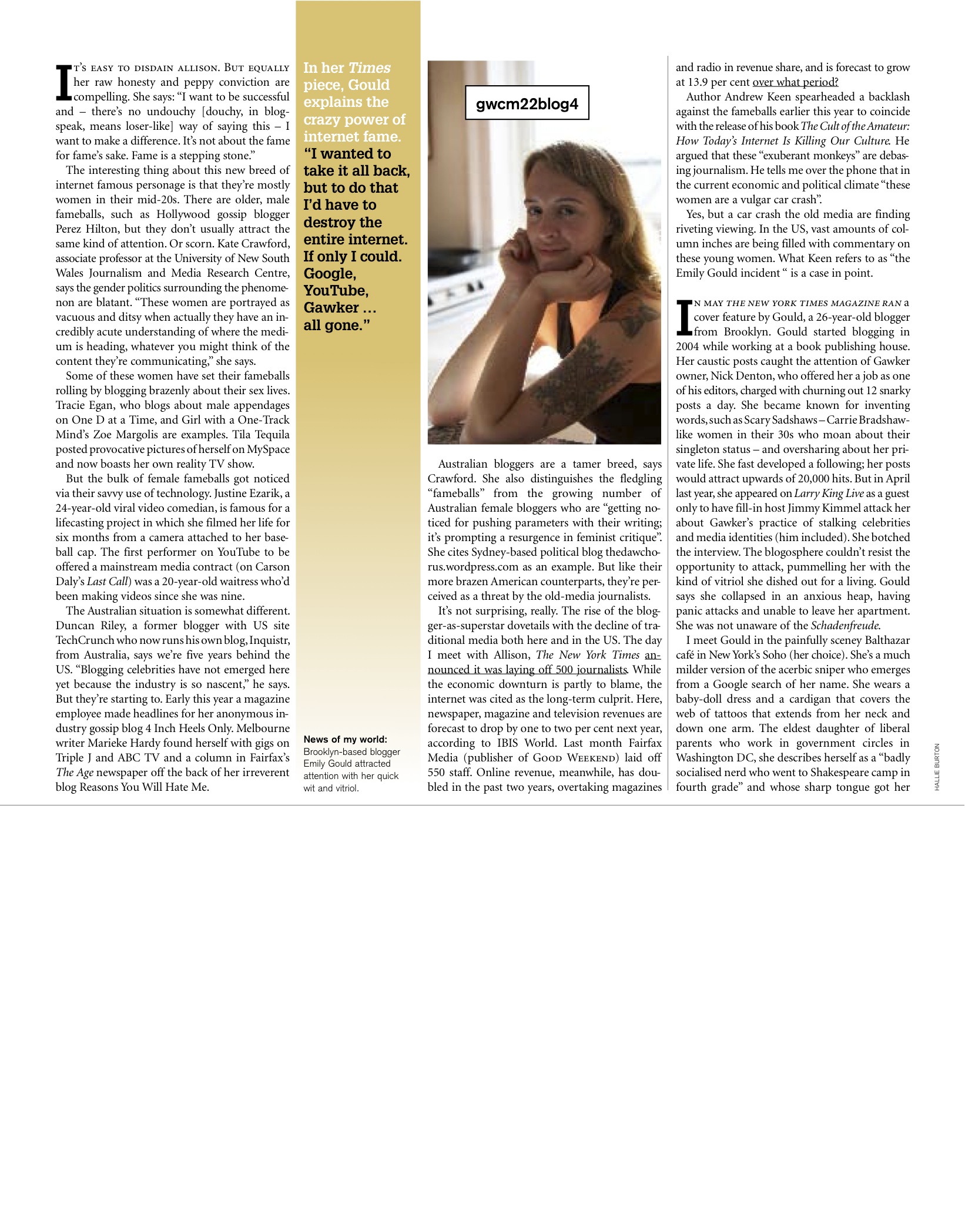
It’s funny because just yesterday I was thinking about a feature I wrote on the early blog sensations. This was back in 2008 when I was in New York. I interviewed Julia Allison (the first online megac-celebtrity) and Emily Gould (started the whole “snark” movement at Gawker.com) and Choire, who was just starting up The AWL. I also chatted to Problogger (Darren Rowse). At the time he was one of less than 10 or so bloggers in Australia who were making some money from blogging. Frontier stuff!

https://www.sarahwilson.com/wp-content/uploads/2011/04/goodweekend-dragged.jpghttps://www.sarahwilson.com/wp-content/uploads/2011/04/goodweekend-dragged-1.jpg

https://www.sarahwilson.com/wp-content/uploads/2011/04/goodweekend-dragged-2.jpggoodweekend (dragged) 3

I’ve been blogging for a little over 18 months now.

My tip would be for anyone starting out. Or starting anything:

Enter the fray. Step in, get messy, work it out from there. Just enter.

With blogging NO ONE knows what they’re doing. Even now, several years after it all took off, there does not exist a “person” out there who can show you how to set it all up, design it, get the perfect mechanisms in place. Everyone is sucking and seeing. It’s BLOODY frustrating. Not a day goes by where I don’t scream to the gods, “WHERE IS THE ONLINE BUSINESS THAT COMES IN AND SHOWS HOW ALL THIS IS MEANT TO WORK!??!?”. (If you are that business, do get in touch!).  All we can do is share little tips along the way that gradually build things in the right direction.

Read more

how to make easier decisions

I love this article on why easy decisions are so hard by the ludicrously young and authentic Jonah Lehrer, author of How We Decide and Proust was a Neuroscientist. I’ve mentioned it here on this blog a lot…that I struggle to make the simplest of decisions, like what toothpaste to buy. And other such”first-world problems”. (As an aside, for thyroid disease folk…indecision is a very AI trait).

98416_3_468

I loved, mostly, how Jonah confesses that he’s crap at making toothpaste decisions, too, despite being an expert on how we decide. He picks the research apart and finds that we stall with dumb decisions because we allow ourselves to be fooled into thinking they’re important decisions simply because they’ve been made complicated (mostly by too many options):

“Call it the drug store heuristic: A cluttered store shelf leads us to automatically assume that a choice must really matter, even if it doesn’t.”

The analysis paralysis makes us think the decision is important…which intensifies the paralysis. And around and around we go. It’s a very real issue for more of us. We’re bombarded with more stupid options daily.

This is how I simplify decisions?

my bike philosophy *plus* I’m giving away two nutcase helmets!!

“Life is like riding a bicycle. To keep your balance you must keep moving” – Albert Einstein:

A rippa of a quote. I live by it. Keep up the momentum, have a flow. In life, as on a bike, you only have to a) have the good intention b) activate your cells in flow. And then balance simple comes. In flow we balance. We get true.

Picture 8

Anyone who’s ridden a lot knows you don’t “steer” a bike. When I’m mountainbike racing, I don’t turn the handlebars. I look to where I need to be, keep peddling or tumbling down the hill, and the bike simply leans there. Intention. Activate. Flow. Balance.

Anyway. A giveaway.

Read more

a chat with Hugh Mackay about getting creative (sunday life)

This week I’m cruddily creative

tumblr_l3umwpjqrK1qzvvrno1_500

Every now and then I use the auspice of this column to meet people I’ve always wanted to sit next to on a long plane trip so as to pick their brains for fatty morsels on how to make life better. It’s not a bad perk of the job. So, on Tuesday I arranged to have afternoon tea with social researcher and ethicist Hugh Mackay.

Mackay is a man whose values and considered opinions I’ve gravitated to since I was a kid, like a little mollusk to a sturdy pylon in rough, swirling waters. He’s spent more than 50 years observing and reporting on what matters to Australians, the fatty morsels from which he’s collated in his latest bestseller “What makes us Tick“, I figure, as we order sencha, he might be able to answer this: what’s the one thing that works?

Having interviewed tens (if not hundreds) of thousands of Australians and spent decades reflecting on his own sense of wholeness, this is what he reckons makes for a better life: Being creative. And often.

We both agree that the pursuit of happiness is not much chop when it comes to determining a better life. It’s fleeting and only one emotional expression among many on the spectrum. A satisfying, full, purposeful and whole life is what we’re all after and to achieve this requires knowing ourselves, our true, “inner” selves, which is something Mackay and I both agree on, as do a long tradition of philsophers, theologians and eastern spiritual types. And the shortcut to this? Being creative.

Read more

four tricks to reduce mobile radiation

I have to share this. I was going to put it on Twitter but it’ll take too many characters.

100493_4_468

The New York Times has just run a story on all the studies that point to cells/mobiles frying the brain. The put a link to a list of the relative amounts of radiation various cellphone models emit, or their SAR (specific absorption rate). This number indicates how much radiation is absorbed by the body when using the handset at maximum power.

But more important than looking for a low-SAR phone is how you use it, they say.

So, some tricks.

1. Wait until after your call has been connected to put your phone next to your ear.

Phones emit the most radiation when they initially establish contact with the tower, making their “digital handshake.”

2. Tilt the phone away from your ear when talking and only bring it in close to your ear when you are listening.

Which always looks funny…but there’s method to the madness. The emission of radiation is “significantly less when a cellphone is receiving signals than when it is transmitting,” said experts at Rice University in Houston.

3. Be still.

Read more