A really bizarre trick for drinking coffee when you have hormone issues!

My mate Kate Callaghan is a nutritionist, personal trainer and author, specialising in hormone healing and fertility. Today I’ve asked her to share a trick she told me about recently for those of us who have hormone derangement, but who love coffee. It’s a common quandary…and it would appear Kate has a solution…
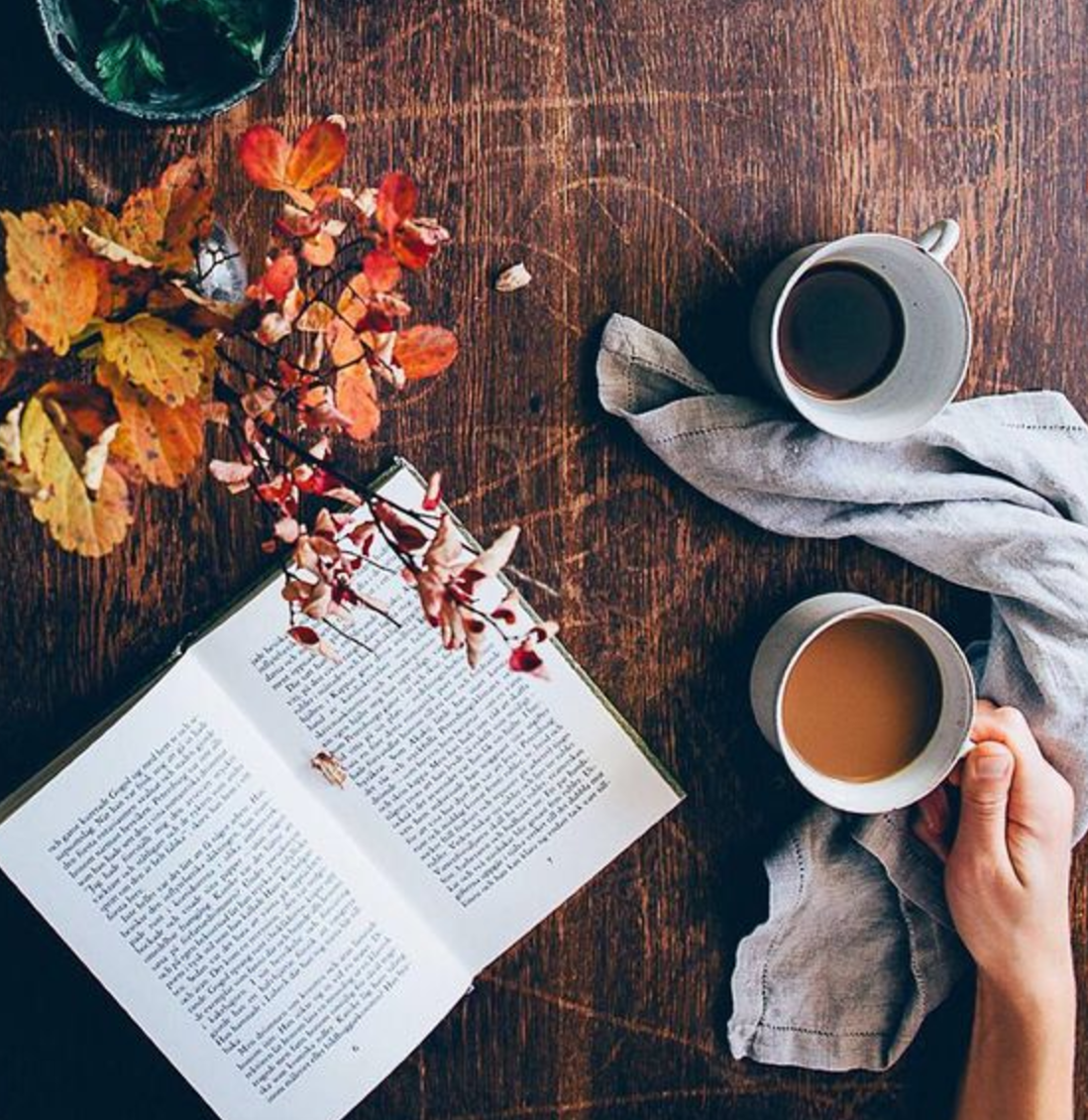
Image via teacoffeebooks.tumblr.com

Over to you, Kate…

To begin, is coffee good for us?

When it comes to supporting hormone health and fertility, it’s not something I recommend. The caffeine can prod your adrenal glands to release cortisol, your stress hormone, which signals to your brain to step things up a notch into “fight or flight” mode. This simultaneously gets you out of “rest, digest and reproduce” mode, and can lead to dwindling sex hormone production. Not only is this bad news for fertility, but can have other negative consequences, including menstrual irregularities, skin and gut issues, mood swings and low libido.

On the other hand, coffee has some quite well-known health benefits, including:

  • Improved insulin sensitivity (meaning reduced risk of diabetes and PCOS)
  • Reduced risk of liver disease (when consumed in moderation)
  • Improved memory and brain function
  • Increased ability to burn fat
  • Great source of antioxidants

[Sarahs add this: The upshot, pay attention to what your body is telling you. If you get jittery and jumpy from coffee, back off for a few days. Your adrenals are telling you they’re overloaded. Also, if you find yourself craving it and unable to go a day without, also back off. Give your body a chance to recalibrate.]

But Kate adds even more…

The weirdest coffee balancing tip ever

Fortunately, there is a way to get the best of both worlds – to enjoy your coffee without negatively affecting your
Read more

Sylvia Plath’s purple figs lesson

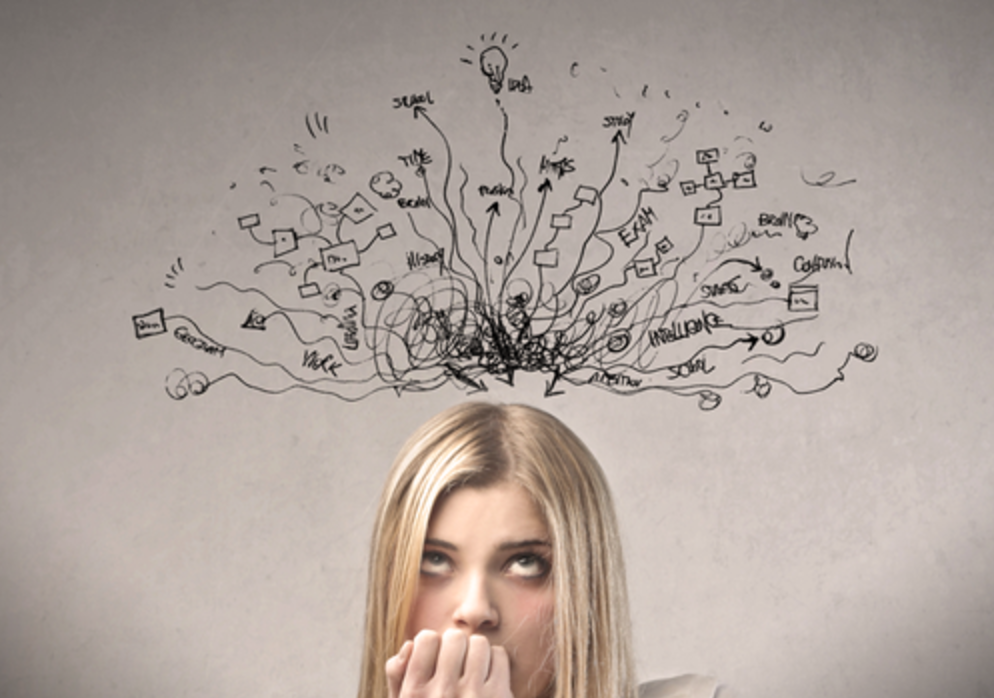
Hello. Are you like me? As in, do you really, truly struggle with making decisions? 

Image via Tom Turner

I think many of you reading this blog do. As I’ve written before, decision fatigue sees us do dumb things, like reverting to default or safe options, or to making decisions that keep our options open…which just prolongs the fatigue.

After a day spent making decisions, judges in the US were found to default to more severe parole sentences in the afternoon. They were decision-spent and subsequently set more conservative sentences that kept options open (they could always reduce them later). Another study found that when we have to choose the customised extras for our car, we deliberate conscientiously at the start of the form, then eventually “give in” to the default options (nattily, companies put the more expensive decisions at the end of forms).

I have many tricks and outlooks for dealing with the matter, like “just deciding” (because once we simply decide on an option, it becomes the right one), and enjoying the peacefulness that follows any decision, even the wrong one, and Louis C. K’s 70 per cent rule

But I came across this insight from Sylvia Plath (from her book The Bell Jar) just now. I’ve cut out some of the quote so you can get to the point (without having to decide what bits to skim… you’re welcome!):

“I saw my life branching out before me like the green fig tree…From the tip of every branch, like a fat purple fig, a wonderful future beckoned and winked. One fig was a husband and a happy home and children, and another fig was a famous poet and another fig was a brilliant professor, and another fig was…a pack of other lovers with queer names and offbeat professions, and another fig was an Olympic lady crew champion. 

Read more

Where can an anti-consumption approach fit when you own a business?

I’ve obviously contemplated this a bit. I personally don’t buy very much, but I sell things.

Image via Get The Five

Most of my wares are electronic and are educational tools to assist consumers to, in fact, consume less and, importantly, waste less.

I sell printed books, too. How do I sit with that? Quite well. Books are not disposable. They’re shareable (indeed, my books have been the most requested in Australian libraries for several years running). And if they’re written mindfully (as I like to think mine are), then they will be consumed mindfully. 

I also sell a range of bake-at-home products and cooking basics at supermarkets. How does this sit for me? Comfortably, too. You can read more here about the principles I adhered to in producing such a range

I was propelled to this train of reflection after reading a profile of Patagonia founder Yvon Chouinard. The outdoor gear creator is anti-consumption, pro-environment, too. But he weaves an interesting path through it all. What do you think of these observations?

* A few years back, Patagonia blatantly discouraged their customers from buying their products. They had an ad campaign that read “Don’t Buy This Jacket”, advising people, “Don’t buy what you don’t need”.

* Their “Well Worn” campaign published 40 free repair guides for popular items in late 2015 (just before Black

Read more

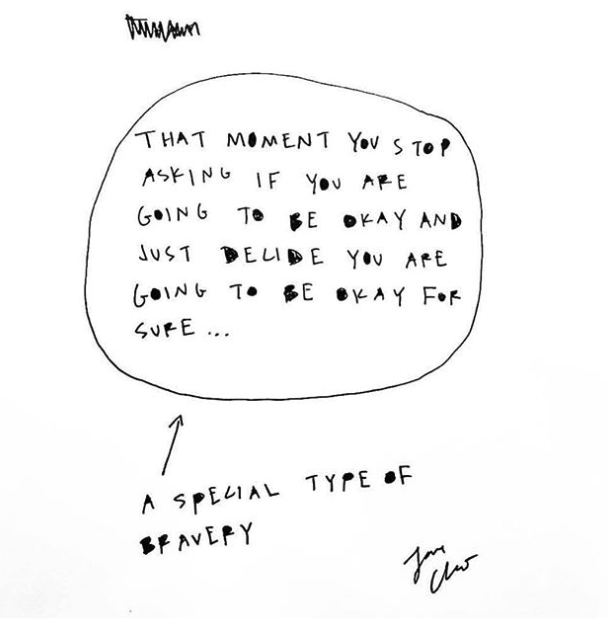
That moment you stop asking if you are going to be okay…

I don’t know if I can discuss this further. If I can add to it.

xx
Cleo Wade

Cleo Wade is an artist, poet and speaker. She often shares her poetry on Instagram. She nails life when she does so.

I guess the bravery she alludes to is one that we have to summon when the shit really gets real and hits fans and OMG THIS IS SERIOUS, MUM. Or when we reach a point where the doubt and fear and uncertainty just gets too much. It’s been too long. And it’s got boring. And something has to give.

We have to step aside and stop asking for advice, or thinking someone or something can save us. And we have to choose.

We have to choose to be okay. The pain will still be there, whether we decide this or not. But deciding it…it’s a

Read more

Here, my hacks for making less plans

It’s a bit of a recurring rant of mine. In these modern times we are flooded with opportunities, commitments, options and invites. Where success was defined by how many contacts you could make, and how much information you could collate, today it’s defined by how much of all this “input” you can shut out. Right?

Screen Shot 2016 10 24 at 9.54.25 AM Here, my hacks for making less plans
Image via madmimi.com

It’s an art. And one we have to perfect. Because no one else is going to protect you from the influx or from the 24/7 imperative. 

We get caught up in the trap, however, of thinking we have to respond and take part in everything. Which, down the track, leads to another phenomenon that I’ve also banged on about before

We’ve all become big fat flakes with each other. 

Particularly with our mates.

We make plans and cancel them habitually (I read somewhere that cancelling a plan has the same immediate effect as heroin). We sit on the fence. We give half-answers to invites.

We need to stop this. It’s horrible. It’s making us all feel wobbly and uncertain.

Thusly, my preferred ways to ensure I make an appropriate amount of worthwhile plans, with the right people, that I commit to:

* I only make two plans on weekends. The rest of the time I leave myself open to spontaneity. I’m not great with spontaneity. Uncertainty makes me anxious. But so does overcommitment. I have a crew of mates where we alert each other to “when we’ll be around” and it means we can reach out for a quick tea or walk or Sunday night dinner if we have the energy. A low-fi commitment, but one that’s firm and certain.

Read more

Do you rumble with the truth?

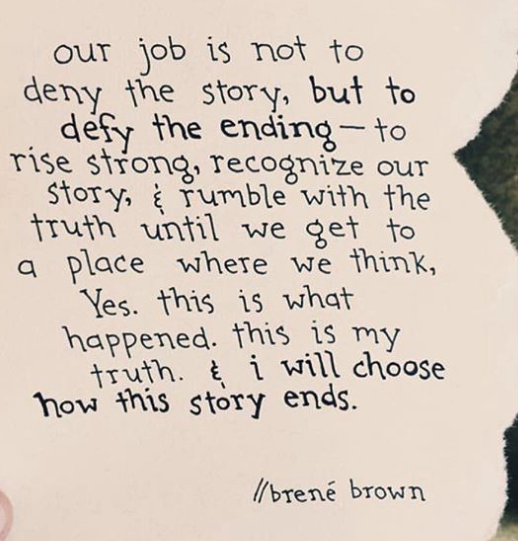
Brene Brown. I mean, how much do you just dig her? Of the various life experts that I’ve met over the years she is probably the most authentic. We cried when we met. You can read what she shared with me to prompt the tears here. Anyways, Brene shared this recently on Instagram:

xx

If we’re living consciously we rumble with the truth, don’t we. We don’t waltz with it, or sit calmly with it. We wrestle around with it and steer it and heave it, tirelessly, in more and more gallant directions. At least we do if we want the better ending.

We don’t want to accept an ending that’s beneath what we feel is the point of our existence. Actually, we can’t.

Do you feel there is more to this mortal coil than what is served to us on the conveyor belt? Sure, we can stick to

Read more

Dear Sugar Research Advisory Service

My mate David Gillespie pointed me to this video yesterday (the clip is below), in which advertising strategy expert Carolyn Miller (of TV show Gruen fame) provides marketing advice at The Sugar Conundrum Workshop, put on by The Sugar Research Advisory Service last year to dieticians. Yes, you read right. Dieticians. Miller uses me as an example of what, as David puts it, “the enemy” looks like.

The obligatory "Laughing with salad" photo as referenced
The obligatory “laughing with salad” photo, as referenced

The clip is more than a year old, but it remains relevant and enlightening.

I was intrigued to see how the industry views my calculated marketing skills. I was also struck by how baffled the sugar industry and dieticians seem to be by “wellness” and having a lifestyle. I shouldn’t be after all this time, and after witnessing the lengths both go to to discredit and hinder anyone who questions the vested interests of the sugar industry and the health impact of the stuff. You can read more on this here.

I decided to write the SRAS a letter. Better late than never.

Hey there Sugar Research Advisory Service,

Thought I’d reach out with an idea. Next time you hire someone to talk you through the calculated insider tactics of wellness bloggers and they use my (supposed) strategy for duping people into eating less sugar as a case study, maybe think about getting me in instead to talk you through things. You know, go straight to the horse’s mouth.

I’d be happy to show you that I don’t fit the profile you’ve given of what I presume you see as your nemesis. I’m not young and I didn’t grow up in the Eastern Suburbs. I also am not one to share my thoughts on unicorns and rainbows.

I just got very sick eating sugar. You can read about my very uncalculated journey here if you like. Don’t have time to read the details? (I don’t think Ms Miller did). Let me give you the topline: I have Hashimoto’s disease and sugar played a massive part in it. I had to adjust a number of wellness/lifestyle issues, as directed by my team of doctors and endocrinologists. I started blogging about it six years ago. For two years, I made no money from sharing my experiences and helping thousands do the same. I was just into it. No vested interest.

Read more

Are you really an introvert?

Ha! I quite love this. Just when we thought it was cool to be an introvert, we get a whopping great mirror held up to us that says, “get over yourself”.

Image via dailydoseofstuf.tumblr.com

I’d been cringing about this for a while with my mate Rick, observing that everyone around us was suddenly coyly declaring themselves an introvert to all and their sundries on social media (the preferred expressive outlet for introverts, apparently). 

Then, wonderfully, the New York Times stepped in with the proverbial reflective glass for us both.

In an article by KJ Dell’Antonia, we’re pointed to the introversion explosion, led by Susan Cain’s “Quiet: The Power of Introverts in a World That Can’t Stop Talking.” Suddenly. “A resistance to social intercourse became, not just acceptable, but cool, “ she wrote. Everyone started posting pictures of themselves in their pyjamas on a Friday night and sharing personality test results they’d done on Facebook.

I can be accused of doing the same. My schtick has been more to the tune of loneliness. And aloneness. However, I’ve definitely been known to chime in (at parties where I’m standing “awkwardly” by the door) that I’m a functioning introvert, while allowing for the possibility I might just be a dysfunctional extrovert.  

Read more

What should we give a f*ck about?

You might have heard of Mark Manson’s book The Subtle Art of Not Giving a Fuck? The guy’s a personal development blogger and hyped-up online marketing dude. I skimmed his book recently in a bookshop. And frankly, I think it should be called The Subtle Art of Giving a Fuck (leaving out the “not”) because, in some ways, this is the more pressing issue (knowing what to give a fuck about amongst all the fucks that fly our way).

Image via ShopRiffRaff

We’re all wanting to know where to draw the fine line on our fucks. And where to draw the line on the pain inherent in caring so much about so many things. Or at least the expectation to.

I pull out a point that Manson made in a recent interview on Mother Jones, a great political and cultural site you should subscribe to, BTW.

He points out the importance of giving a fuck:

“Pain is inevitable, and the only really reliable way to persevere or deal with (pain) is to find a worthy cause or a worthy reason for dealing with it.” 

He uses an example from his book: 

“If the biggest problem in my life right now is that my favourite TV show got canceled, that’s a pretty poor reflection of my values and the quality of my life. That’s a poor thing to care about, it’s not controllable, it’s not immediate, it has no immediate effect on the people around me or the people I care about. The highest priorities in our life should be something that’s grounded in being constructive toward the people around us, and something that’s immediate and we have control over.

“So if someone says they want to be a famous singer on TV, for example, it’s a poor value, because there’s so many factors that could influence that. The thing that will bring greater quality to life is something more controllable, more like, ‘I want to the best singer that I possibly can’.”

Read more

I have my freedom today because nothing really happened

I’ve been reading poet David Whyte’s The House of Belonging. In it is a poem, “It happens to those who live alone”. Which is a grand title for anything right there.

There’s a line in it that is particularly special…

Image via rebellesociety.com

“I have my freedom today because nothing really happened and nobody came to see me.”

This sings for me. The freedom that Whyte refers to lies in the happy acknowledging that nothing and no one needs to happen upon you for you to feel complete. You don’t need more. You are enough right now.

This is, indeed, freedom. When you’re no longer subject to the tyranny of “out there”, and you can rest comfortably in your own skin, little can harm or impede you. You already, and always, have what you need.

We need to practice this sitting in non-happeningness to be able to experience the freedom that comes with it. We need to sit in this still, alone shit when we start to fret that no one has

Read more