My fructose-free kombucha recipe

In my first kombucha recipe, one of the concerns some of you had was the use of sugar to feed the yeast and bacteria. As I pointed out, very little sugar is left behind. But if you’re drinking a few nips of the stuff per day, it can add up to several teaspoons. So I gave things a crack using rice malt syrup, which contains no fructose.
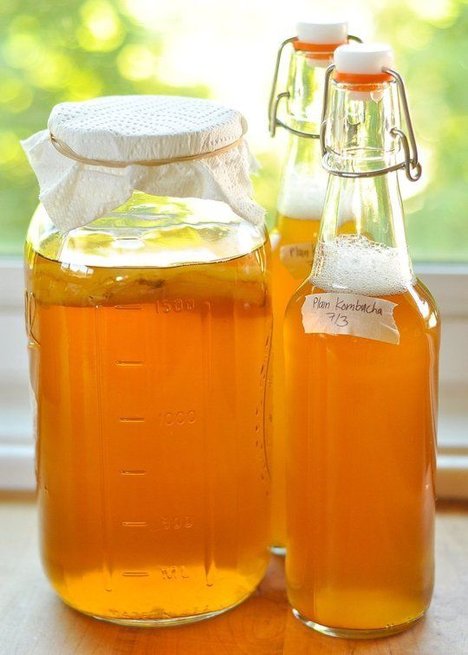
Image via the kitchn
Image via The Kitchn

RMS is a blend of complex carbohydrates, maltose and glucose. It’s fructose free, slow releasing and doesn’t dump on the liver like pure glucose. This recipe below was previously included in my fructose-free chai kombucha post, but I felt it was lost amongst the star anise and cinnamon sticks, so I’m sharing it here as a stand alone.

I’d read that honey doesn’t work when making kombucha – the theory being the antibacterial agents kill the SCOBY (symbiotic colony of bacteria and yeast). So I was a little concerned about rice malt syrup – it’s a fermented product and I had a picture of the different bacteria squabbling for attention in the bowl, eventually annihilating each other. Plus, I’d used RMS to make my Fermented Ginger-Ade and found it needed to be a

Read more

I’m out of here for a while…to shake things up.

It’s a polite thing to do, to let friends know when you’re taking off for a bit and ceasing communication. So, as a head’s up, I won’t be posting as regularly for a bit as I’m taking off for five weeks.

image via pintrest
Image via Pinterest

I don’t feel I need to say why and where. In fact, that’s kind of the point of it. Although, look at me, I can’t help myself…I’m veering into a sharing of the “why”. Indulge me briefly…

I’m taking off to be unattached for a month…as always, to see how that goes for me. I’m not taking my computer, I won’t be Instagramming, I won’t be (over) sharing. I’m going to just be on my own with nothing but nothingness for company. Well, nothing but my self. It’s possible I won’t be taking music. Or books. Or a pen.

I leave tomorrow. I’ll decide then.

This all terrifies me a little. But, again, this is the point. I hit stagnant spots in my life and feel obliged to shake things up. Doing wild adventures previously cut it. But even that’s

Read more

The importance of a moral struggle against yourself

David Brooks is one of my preferred writers. I’m currently reading his new book, The Road To Character, which chronicles his attempt to cultivate a deeper character, mostly by looking into what he calls “eulogy virtues”, the stuff you want your loved ones to say about you when you cark it, as opposed to your CV virtues.

rsz_moralstruggle1
Image via pintrest

Brooks has fraud syndrome. He is so self-aware that his humanity repulses him. This tendency seems to go hand-in-hand with having an overactive mind, don’t you find? And so it is that he finds himself shallow. And in need of a deeper character.

“I have to work harder than most people to avoid a life of smug superficiality,” he writes.

I’ll report back on the book’s worth shortly. Meantime, I’m intrigued by this initial thought bomb that he throws:

“It doesn’t matter if you work on Wall Street or at a charity distributing medicine to the poor. The most important thing is whether you are willing to engage in moral struggle against yourself.”

I agree. The most pious person can merely go through the motions of “being good”. It can be “surface good” only. Conversely, a financier can go home and take very good hard looks at herself each night and radiate her “give-a-

Read more

My favourite ways to have people leave me alone, via email

I like to collate these ideas and try them out from time to time. As I say often, where once professional success rested in an ability to accumulate information (research, data collate etc), now it’s firmly rooted in an ability to block it. 

rsz_laptop
Image via Pinterest

I say this, too: Where once life balance boundaries were delineated for us (via 9-5 workdays, respecting the Sabbath etc), they now have to be marked and maintained by the individual.

And this is something few of us comprehend. I truly think a lot of us are waiting for some hand of God to dip down and finally, concretely decide that It’s Bloody Time To Turn Off The Phone.

There are some bold types however who pop up with their own Deus ex machination. Here’s a few to perhaps inspire your own e-boundary maintenance:

1. Set an auto-reply that actually works. I start with the regular Out Of Office (OOO) that says Hi, I’m away, back on such-and-such etc. At the end, I suggest that if the matter remains important after my return, the sender re-sends their email then. Which effectively pushes the onus back on the sender to pin me down for an answer.

2. Delete your personal email account. Mat Honan, BuzzFeed’s San Francisco bureau chief, decided that the burden of personal e-mail was simply to heavy to bear. E-mails sent to his personal account now get a

Read more

You’ve been eating your turmeric all wrong!

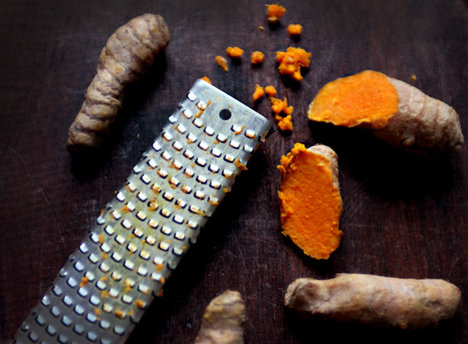
I’ve praised Turmeric before, the sweet salve to an inflamed, autoimmune, gut-compromised soul. It’s been used for yonks in Chinese and Ayurvedic medicine for digestive issues, inflammation, joint pain and blood purification.

Image via My New Roots

But with turmeric, it’s all about the curcumin…the bioactive ingredient in this golden root. And with curcumin, there are totally ineffective ways of eating it…and effective ones!

Always eat turmeric with fat

Curcumin is soluble in oil and insoluble in water. Got it? So, when eating turmeric, it must be eaten with good quality, saturated fat.

Eat turmeric with black pepper

Piperine, a key chemical in black pepper, is said to help with absorption, too. So we add pepper. And cumin. But, we can do even better…

Eat your turmeric fermented

Yep, this takes things further…and doesn’t have to be tricky. A study in the International Journal of Food Science and Technology found the bioavailability of curcumin increased when it was fermented. During digestion, curcumin transforms into different metabolites. It is these metabolites that can be easily absorbed by the body, rather than the whole curcumin molecule.

But what if your digestion is crap? Well, by fermenting

Read more

Why the new 8-Week Program Meal Plans are the most nutrient dense yet

With a new round of the 8-Week Program kicking off next week, I thought I’d address the common questions I receive in the lead up to each Program. In a post earlier this year, I covered what I keep in mind when developing the Meal Plans. Below, a rundown on why nutritionist and registered dietitian Marieke Rodenstein says the new 8-Week Program Meal Plans are the most nutrient dense yet.

from the 8 Week Program Omni meal plan
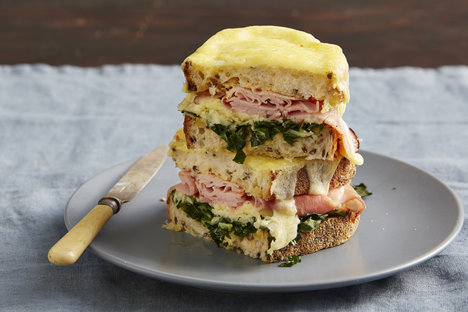
The Cheat’s Croque Monsieur

You’ll probably be eating more veggies than you ever have before. The IQS Meal Plans incorporate 6-7 serves of veggies a day. The Australian Nutritional Guidelines advise 5-6, but on average Australian’s only eat half the recommended intake. In the USthe guidelines are 2-3 cups of veggies a day and in the UK, 5 serves a day.

We use the right amount of carbs, fat, and protein. There’s no skimping. We focus on generous serves that are full of flavour with a balance of fat, carbs and protein to keep you feeling full.

You’re likely to lose weight on the Program. (In fact, almost 60 per cent of participants from our previous round lost weight.) However, we understand this is not ideal for everyone, so there are plenty of healthy snack options for quitting the white stuff while maintaining your current weight.

The Program is all about abundance. It’s not about restriction. The goal is to take eating back to the way we ate

Read more

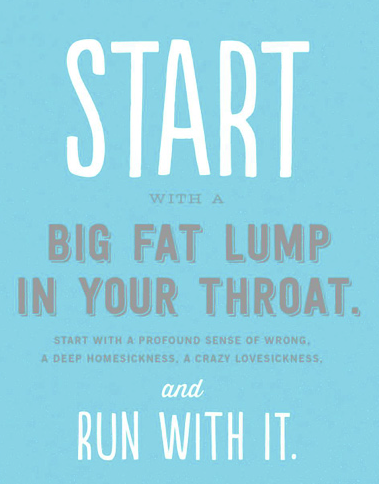
Start with a big fat lump in your throat and run with it

As an angsty teen I read Robert Frost’s The Path Not Taken and would feel all kinds of profoundnesses. I would also read the bible, looking for the same depth.

xxx

I’ve liked to think I’ve moved on from such binary thinking. But I recently came across a reference to Frost’s approach to poem creation:

“It begins as a lump in the throat, a sense of wrong, a homesickness, a lovesickness.” 

Illustrator Debbie Mailman then references this in her book, Self-Portrait As Your Traitor. She pivots her creative process from this notion: Starting with the big fat lump and then running with it. “Start now, not twenty years from now, not two weeks from now. Now,” she writes.

I totally know the fat lump in the throat, and the ill-at-easeness that Frost refers to. It means fear. It means dread. It means things are bigger than anything our little beings have previously encountered. And we cry out, “This is not right!”.

Read more

Got gut bloat? Here’s the ayurvedic cooking tricks I use.

Ayurveda is one of the most grounded wellness approaches around. The central thread of Ayurveda is balancing through food and energy restoration. I love this. Catch up on previous tips here and here.  For today, some Ayurvedic cooking tricks to ease digestion and cut the gut bloat.
Image by Philippe Halsman

1. Start your meal with a small piece of fresh ginger or a pinch of salt. Ginger is a rippa root for digestive issues. (Dry ginger is best for kaphas and fresh for vata and pitta.) It acts as a digestive stimulant, ideal for people with constipation, low stomach acid and weak digestion. (A pinch of Himalayan rock salt will do the job if you experience any burning with raw ginger.)

2. Eat warm food. According to Ayurveda, the digestive system works like a fire. Warm foods fuel the fire, while cold food put it out. Stacks of raw vegetables and greens take a lot of time and energy for the system to process, resulting in gas and bloat. Switch to warm, soft meals and see if you notice a difference. This is particularly crucial if you’re a vata dosha. Me, slow cooked stuff and soups are my friend. And I “warm and

Read more

The best toxin-free deodorant: an upfront guide.

I’ve been talking about it a lot, this toxin-free caper. Recently I’ve covered off toxin-free cosmetics, why I use oils in my beauty regime and toxin-free sunscreen. You can catch up on all my toxin-free posts if you’d like.

Via weheartit.com
Via weheartit.com

In terms of deodorants, I’ve used natural, fragrance-free deodorant for five years now. It’s been a long search. I’ve traversed all kinds of stinky cess pits and scaled heights of compromised comfort. But I’ve now found the ultimate deodorant. I share details below.

The difference between deodorant and antiperspirant

Antiperspirants stop you sweating. They do this via ingredients like aluminum and zirconium, which plug the sweat glands. Without sweat the bacteria found in abundance in your underarms don’t have anything to eat, so you smell less.

Deodorants cut down on what makes you stink when you do sweat. They work to counteract the smell that’s produced after the fats and proteins emitted from your cells come to the surface of your skin (in your sweat). Specific chemicals (like triclosan) make the skin in your underarm too salty or acidic to support the bacteria that are meant to thrive there. So without any bacteria to eat the proteins and fats delivered through

Read more

Have you contemplated the “Hard Problem” yet?

When I was 21 I got a scholarship to study philosophy at the University of California, Santa Cruz. I arrived with my mountain bike and a passion for German existentialism, lived with five lesbians and their eight cats and convinced the university to let me do their graduate course instead of the undergraduate stream. They relented and I signed up for Philosophy of the Universe with an Australian mathematician, David Chalmers.

rsz_conciousness2
Image via A Well Travelled Woman

That was 1995.

I’ve now just learned that the year prior Chalmers, a lecturer who supported me through a bunch of things at the time, had shaken up philosophy – existential and beyond – by presenting the world with what is known as The Hard Problem. This article by Oliver Burkeman in The Guardian tells the story and dives in deeply to the dilemma Chalmers posed and the controversy that’s pivoted from it since.

Chalmers presented the idea that there are many quandaries to do with the human brain and experience, but most are easy problems and, with time, we’ll no doubt solve them, much as we did the true surface of the earth.

The hard problem – what makes us conscious, or what is consciousness – is possibly one we will never “solve” as our brains might just not be capable of it. Actually, my memory of things was that he didn’t declare the unsolveability of

Read more