The Healthy Foodie’s Guide to Auckland

Whenever I travel I like to check out and then share great low-carb, sugar-free places to eat. As well as accommodation that doesn’t have a heaving ecological footprint and are… quiet and tranquil, suitable for thyroidy types. You can catch up on my New York, Byron Bay, Sardinia and Provence guides here.

Ortolana
A dish from Ortolana restaurant

I was in Auckland, New Zealand recently to speak at two conferences, Fizz and Low Carb NZ, and did a bit of research, calling out on social media and consulting a few like-minded Kiwis for tips. Here’s a cut ‘n’ paste rundown should you be heading over the Tasman soon.

1. Gather and Hunt – A good website, sort of the “Broadsheet” of Auckland, with lots of suggestions for eateries on the mindful end of the spectrum.

2. The Braemar Bed and Breakfast. I came across this place via the Googles (I search “environmental eco accommodation”). It’s in the middle of the city, but in a very quiet little pocket near some great jogging/walking parks. There’s only four rooms, host John is an absolute and wonderfully eccentric delight with a map and helpful directions and tips ready to go, and a cooked breakfast (mushroom, poached eggs and spinach) is included, along with brewed coffee, the papers and the company of the other guests (who seem to be regulars). Very much a home-away-from-home. Ask for the room with the massive claw-foot bath in it.

2. Wilder and Hunt. This is a Paleo cafe located in St Heliers. Funnily, I’d heard about it and was impressed with their focus on nutrient-dense, no grain, no sugar food. Then, at the low-carb conference, the two young women who started it approached me and very humbly told me they’d opened the cafe after doing my 8-Week Program. I didn’t have time to check it out, but wished I had.

3. Ortolana. A lovely indoor-outdoor restaurant in the Britomart complex in the city. The focus is on garden-to-table dining and they even have a natural wine produced on the owner’s property. Fresh food based around vegetables and herbs picked that day. Love it.

4. Little Bird Organics. A raw food cafe in Kingsland and Ponsonby areas. I’m not always a raw food  fan, especially when travelling (raw food can aggravate Vata and raw food cafes can be a bit grain and legume-heavy), but sometimes it’s a good way to get veggies into the mix. I noticed they offer grain-free and sprouted grain stuff.

The next few recommendations came from Mikki Williden, a nutritionist and senior lecturer at AUT University.

5. The Commons on Hurstmere Rd, Takapuna. You can request a Paleo degustation menu.

Read more

14 handy links for waste-free living

I’m passionate about this stuff. Sustainability. No waste. So I was very happy to be involved in Sustainable Table’s Waste Deep documentary, which is a gentle way of easing people into the issues and what each of us can do about them. I make an appearance – or three – alongside gardening guru CostaTim Silverwood and incredibly passionate initiatives like Second Bite and Buy Nothing New Month. You can watch it in full below.

Highlights from the doco:

  • Aussie farmers are doing it tough. We love it when we can grab our groceries on the mega cheap and our peaches look perfect, but the balance between what it costs to produce our food and what we pay for it isn’t always there. Many, many farmers walk off the land every year. And that ain’t a good thing.
  • We’re tossing out billions of pieces of plastic every year. Much of it comes from food packaging. Too much of it ends up in our oceans and environment, harming wildlife and polluting soil and water.
  • On average, every household in Australia throws out over $1000 worth of food each year. At the same time, we have over 2 million Aussies going hungry. Um…

What can we do?

1. Buy local. The more local the better. Food produced in your state, where possible. Is all the produce at your nearby greengrocer necessarily local? Maybe not, you have to ask. Asking encourages.

2. Get clever about reducing waste. I mention in the doco a few things I do to avoid food waste that also help to make my life incredibly easier by creating flow. On that note, this theme flows through my new book, I Quit Sugar For Life.

To that end,

a little listicle of links to help you live waste free:

1. Shop at a Farmer’s Market. Find a farmers’ market near you by checking this Australia-wide directory. If you’re in NZ, you can find a market close to you here.

2. Try Local HarvestFind food co-ops and organic stores near you. You simply pop in your postcode and presto.

3.  Check out Sustainable Table‘s overview of the variety of grocery shopping options available, from markets to box systems to farm

Read more

What’s wrong with this ad?

Someone on Twitter pinged this satirical ad for a new line of American “Paleo-esque” snacks to me. It’s a very clever pisstake of the latest health fads, specifically the Paleo movement. Self-referring pisstakes are always the best.

[youtube]http://www.youtube.com/watch?v=MPB8W1rEnAc[/youtube]

I love it all, except for the punch line, which is a sell for a fad-free health snack of nuts and cubes of cheese. I love this, too, except for…the plastic.

A bunch of basic snacks that anyone can package up themselves in a reuasable container at home is instead passed along an assembly line, packaged in molds and wrapped in plastic, shipped around the world and then marketed with expensive (albeit clever) ads. We get lulled into accepting this atrocious waste via a “good” ad message.

We’re going to see more of this: great messages masking atrocious means.

The world is waking up to great messages. And so manufacturers are catching on and catching up.

But none of us are getting the wastage thing. At all. This kills me.

I’m seriously finding it harder and harder to cope with our blindness to wastage, our acceptance of crass consumerism and our embracing of “hygiene phobia” (which drives a lot of the wasteful packaging these days).

We talk green, but accept the free snack on the Virgin flight and the plastic bag of hygiene accroutements.

We worry about the environment, but drive to work when it only takes 5 minutes extra to walk.

We carry our eco laundry detergent home in plastic bags.

It’s like we want to be associated with “good” but we don’t actually want to do anything ourselves. We just want to buy into it. We don’t want

Read more

Why I like my second book better

It’s here: I Quit Sugar For Life.

I Quit Sugar For Life, available now!

I see this as a follow-up book to help make cooking, eating and our health more elegant and joyous. A framework for simple, no-brainer health that supports sugar-free living. Which is what we’re after, no?

If you’re keen to get your copy straight away, simply click on the button below. If you’d like a little more info, read on.

Screen Shot 2014-02-25 at 12.37.46 PM

I’ve been asked a stack of questions from you all over the past few months about this new book. I figured it’d be good to tick off some of the most frequently asked, so you’re all In The Know…

Why should I buy this book if I’ve bought the first?

My first book was an 8-Week Program designed to help you quit sugar. With supporting recipes. This book (with an additional 148 new recipes) takes things a step further. I cover cravings and lapses, exercise and detoxing. I talk about maximising your nutrition, eating sustainably and ethically. I teach you how to live with flow and less fuss.

Can you sum up the new book in one sentence?

I can. In fact I can do it in one word. It’s about sustainability. In the environmental and economic sense, but also as a wellness code that we can all sustain permanently without fuss or pain.

Which of your two books do you like more?

I love this question! I think I like my second book more. It has allowed me to expand on my principles in more detail, and to share more of the things that matter to me, like sustainability, living without processed foods, eating simply…

I’ve got your last book and I love the recipes, but I’d like some structured menu plans to help me. Do you have any in this book?

Yep! There are a variety of menu plans in my new book. I cover menus for Busy Solos (people like me who often cook for one), Foursome

Read more

The Joy of Missing Out

Apparently 2014 is the year of joyfully missing out, or JOMO. You haven’t heard? I came across this new buzz term when a UK magazine editor wrote about it recently in a newspaper editorial.

Via Carla Faro Barros

Her piece referred to a growing trend among many of us that sees us go so hard during the week, running between commitments (work and otherwise), that we land at the weekend too pooped to do anything else. And so begins the process of pulling out of social engagements with friends and family. Usually at the last minute and by text. We just can’t cope with any more. We’re schedulely spent. Stressed. And a little anxious. (I wrote a post last week about why I think everyone’s feeling anxious right now, if you’d like to catch up.)

Of course, when we pull out of things, we often experience FOMO (Fear of Missing Out). And if you’re on the receiving end of the last-minute cancellation, you experience The Shits, especially if you’re single with no Backup Husband to Collapse on the Couch With.

But in both scenarios, missing out can provide an opportunity to experience joy. So goes the theory. Actually I’ll rephrase that and add my additional layer to the topic:

We must miss out to experience joy.

You might have noted my call to arms of late. I’m really getting heavy on the importance of taking responsibility for our own peace and happiness. It’s imperative that we reclaim ourselves and not seek answers from others and other things. Missing out – deliberately so – is part of this.

* Missing out, or actively doing less “out there”, allows space to explore our inner selves. It gives us the room to turn the focus inwards instead of constantly responding in our frantic Pavlovian way outwards. It’s like when we find ourselves with a flat iphone and time to kill on a train or at the airport. We have space to sit with our own thoughts. We unfurl. We get intimate and cosy with ourselves. Right?

* Plus there’s this: By deliberately turning down an engagement to have a quiet night in sends a massive “up yours” to the ceaseless pressure

Read more

how to make (almost sugar-free) fermented kombucha

When I was a kid my brother Ben used to grow mushrooms and raise axolotls in his bedroom (in and around my brother Pete’s feral mess and a pile of skateboards and BMX bits). I now realise these carefully reared mushrooms were kombucha “SCOBYs” and that his pre-pubescent experiments were quite ahead of the times. Ben was like that.

xxx
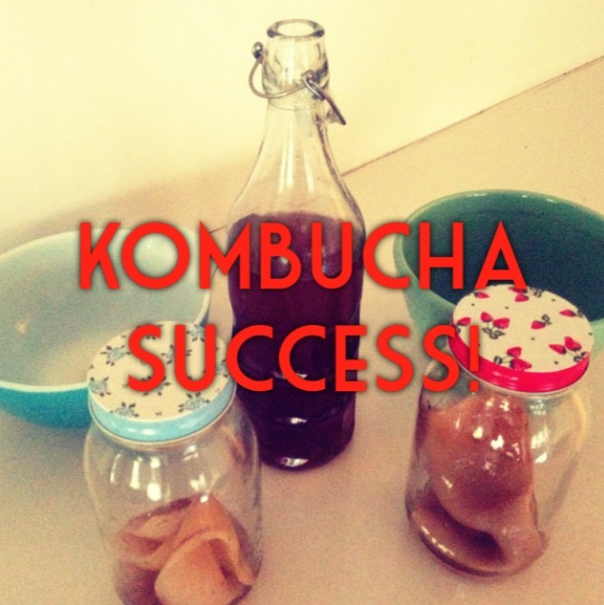
The results of my first kombucha experiment: about a litre of quenchable goodness with almost zero sugar and a secondary SCOBY…which I shared with Jordy in the IQS office.

Before this all gets too weird for the unfamiliar, I’ll point out that kombucha is my latest fermenting experiment. You can catch up on some of my others here and here. And learn about why you should ferment here. Kombucha is a slightly fizzy fermented tea-based beverage. And a SCOBY (AKA a “symbiotic culture of bacteria and yeast”), or “mother”, is the starter mushroom that activates and propels the drink (by eating sugar…yes sugar!!) to become an “alive” gut-healing beverage.

In this post I’m going to cover some basics for making your first batch at home in the simplest way possible (and it is DEAD SIMPLE).

Why drink kombucha

The stuff is brimful of probiotics and is stand-out stuff for digestive health, assisting with nutrient assimilation. I won’t go into great detail here on the other benefits (iquitsugar.com will be covering this shortly), but studies have shown it can assist in the treatment of arthritis, depression, and heart burn, is great for liver detoxification, improves pancreas function, increases energy and can be used to treat Candida.

How to drink kombucha

Straight from the fridge. About 100ml (1/3 of a glass) a coupla times a day. First thing in the morning before breakfast is fab (I have some before heading off for exercise…beautifully energising), so is after dinner as something of a digestive chaser. I like to team it with a dash of soda/seltzer for extra fizz.

The deal with the SCOBY

These things are ugly as sin – rubbery and spongy, floating at the top of your concoction, with brown stringy bits dangling off it. They’re the

Read more

If you don’t become the ocean you’ll be seasick every day

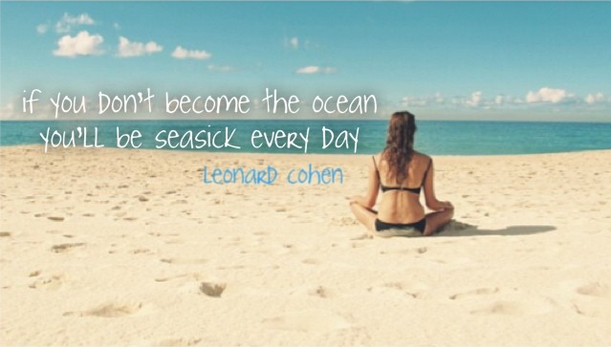
This is a Leonard Cohen line from his poem Good Advice For Someone Like Me.  Wonderfully, I came across it just after I’d swum across Bondi beach, alone, the other day. This swim – about 1km in open water, out past the surfers and breaks – has become a lovely habit. Whenever I’m off balance or particularly “thyroidy” I find myself craving it. I look up the surf cams on the Internet as soon as I wake to check the sea is not too rough (if it is, I swim at the nearby ocean pools). At the south end of Bondi there’s always a rip that carries you straight out. Dangerous and scary if straight out is not what you’re after. Once out beyond the people, I make my way north across the bay, slowly and methodically, the water like oil around my body and not a soul in sight. Just the rippled sand below.

Photo by @denoodle
Photo by @denoodle

Each time I do the swim I emerge calm, my inflammation pacified, my body tingling with a sense of satiation.

This particular day, an hour or two after I’d finished the swim, I was wondering what it was about this swim that cures and calms. And then this Cohen poignancy.

It’s the imperative tense of it that appeals. I’m going to say it. Once. Again. Returning to ourselves, lessening the constant “turning outwards” to Twitter, TV, pinging and piling up commitments on weekends, is imperative. For, it’s this forever-outwards movement away from our true selves that makes us sad and sick. We abandon ourselves each time we do it. And there is no lonelier feeling than when we abandon ourselves.

Plus, as I’ll say – Once. Again – no one is going to shift us inwards and cure our pain for us. We have to do it ourselves.

Consider this: turning outwards to someone or somebody else to take us inwards makes no sense. It’s madness. Literally.

So we have to become the ocean. Which is to become our true selves. Just as my eyebrow is not separate from my body (it’s just a cellular

Read more

My favourite recipe from the I Quit Sugar kids Cookbook!

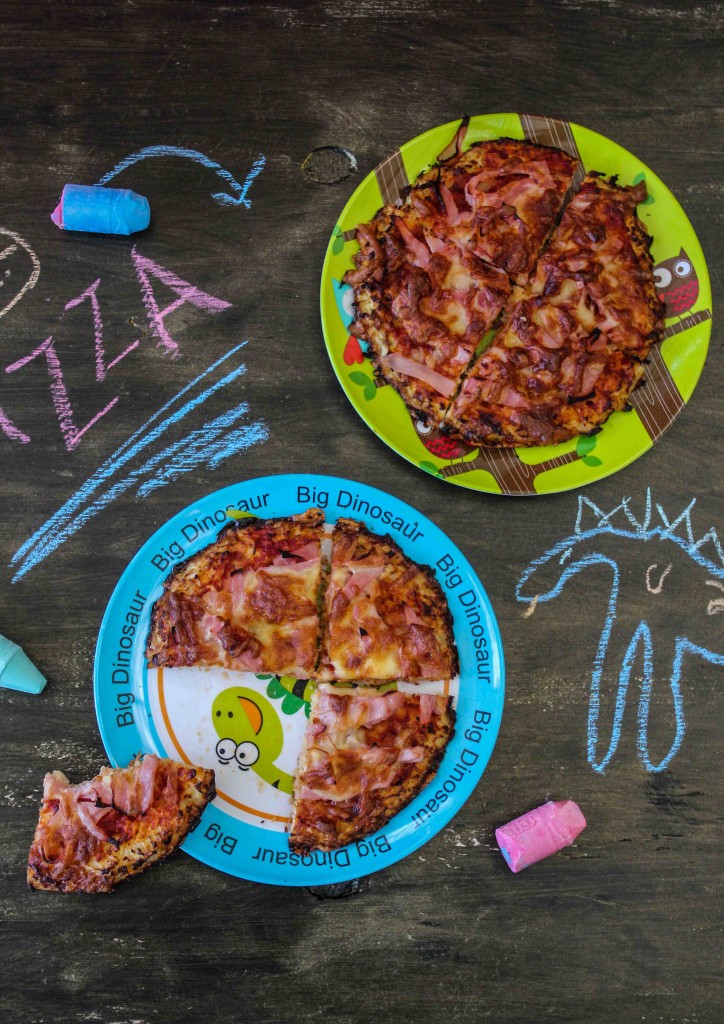
It’s here! The I Quit Sugar Kids Cookbook.  Today. Like now. A quick note: your enthusiastic feedback to me as I’ve shared the “making of” sneak peeks has been very much appreciated along the way. Just saying. So I thought I’d share one of my favourite recipes from the book: My Cauliflower Pizza (that’s it below…I bet you’d never guess it contains 1-2 serves of veggies). To give you an idea of what it’s all about.

Ham and cheese cauliflower pizza.

Which is…a bit of a manual on what to feed your kids, how to navigate school canteens, how to deal with lunch boxes when you’re a Parent Who Wants Their Kid to Eat Well Without The Drama.

The book includes:

  • 85+ fructose-free (or low-fructose) party recipes, breakfast ideas, lunchbox snacks and afternoon treats (some recipes do use fresh, whole fruit).
  • Handy conversion widgets, substitution charts, plus a shopping list generator.
  • Safe sweeteners and how to use them.
  • Tips and tricks from experts and other health-conscious parents.
  • Ideas to get the kids involved in cooking and growing their own food.

As with all the recipes in the book, the pizzas below are dense in nutrition with lots of extra veggies. They contain healthy fats for proper absorption of essential vitamins A, D, E, K. And your kids can build their own, too, which is a great way to involve them in preparing their own food, which, in turn, is the best way to get them eating well.

Screen Shot 2014-02-17 at 2.58.48 PM

Ham and Cheese Cauliflower Pizza

Cauliflower is such a versatile ingredient; you’ll find it pop up quite a bit throughout this new cookbook. This recipe uses cauliflower as a base instead of regular pizza bases. I suggest you buy a whole cauliflower and prep these in advance. It’s quick and easy. You can also freeze the

Read more

How bad are microwaves, really?

In my list of Top 100 Hairy Chestnuts I Get Confronted With When I Talk About Cooking, “But aren’t microwaves bad?” comes in at about #25. I’m a fan of getting more people cooking, first and foremost. For some this involves using a microwave. Thus, my short answer to the above question is: If it gets you cooking with real food, go ahead, use a microwave. Indeed, I use a microwave from time to time. We have one at the office for heating our lunch, for instance. The longer answer, however, follows here…

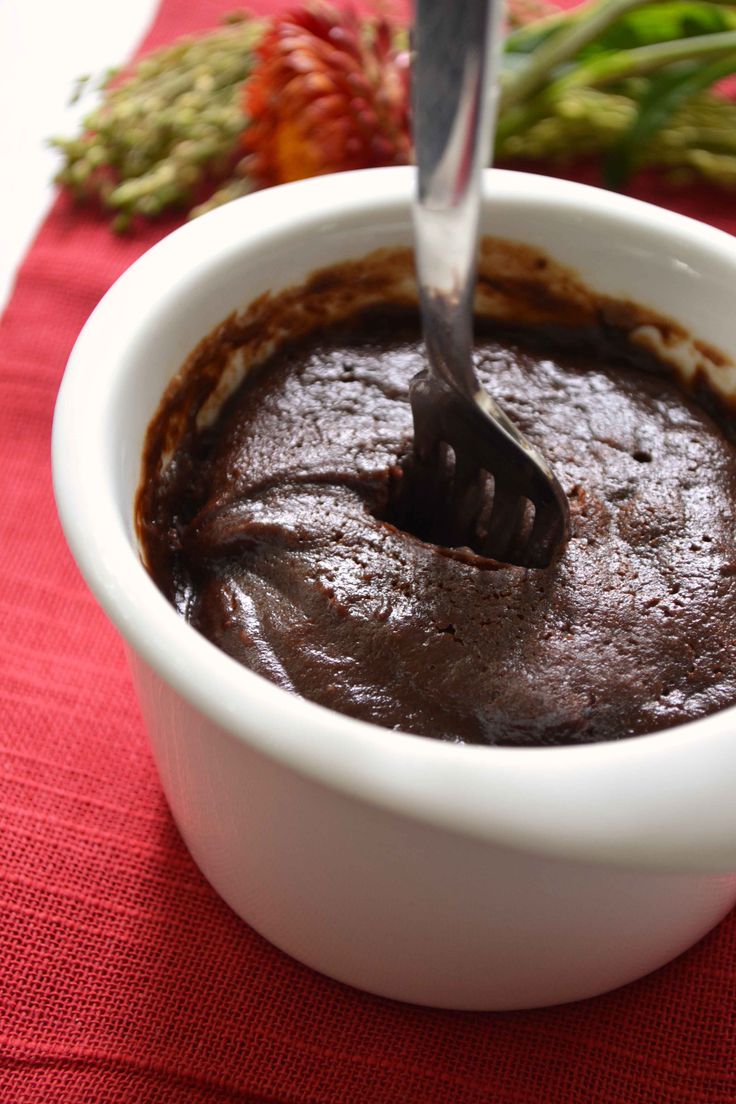
Paleo Choc Muggin: a one-minute microwave meal
Julie Van Rosendaal’s 2-minute microwave mug brownie. I have a sugar-free Paleo Choc Muggin (a muffin in a mug!) version, available from I Quit Sugar For Life

Microwaves don’t radiate you

Microwave ovens use radio/microwaves to make the water molecules in food vibrate, which produces friction, which heats the food. It uses a form of non-ionizing radiation (it can’t directly break up atoms or molecules). This means it can’t damage your DNA like, say, X-rays do.

But they do emit EMFs

Building biologist Nicole Bijlsma says: Microwaves do emit EMFs three types of electromagnetic fields: electric field (minimal), magnetic field (can be high from the digital clock and also where the transformer is located) and radio/microwaves. The electric and magnetic field (from the digital clock) will be present even when the microwave oven is not heating. The magnetic field will increase when the microwave oven is in use and will drop off to background levels within one metre. The World Health Organisation has classified radio/microwaves and magnetic fields in 2011 and 2002 respectively as “possibly carcinogenic to humans”. However, unlike the pulsing nature of the radio/microwaves used in the telecommunications industry (mobile phones and Wi-Fi), the microwave oven uses continuous wave fields so the biological effects are not likely to be as bad.

Do microwaves kill nutrients?

Any cooking will change the nutrients in food in some way. Low and slow cooking preserves the most nutrients, as I’ve shared before. The faster you cook (or heat) your food, the more nutrients and enzymes you destroy.

A study published in The Journal of the Science of Food and Agriculture found that the amount of nutrients lost depends on the duration and way in which the food is cooked – steaming broccoli in the microwave for 90 seconds is better than zapping it for 4-5 minutes.

Research from the University of Oslo found that microwaving carrots, spinach, mushrooms, asparagus, cabbage, green and red capsicums and tomatoes led to an increase in the antioxidant content of the foods (in that the antioxidants become more available for absorption).

Read more

Anxiety in your bones today? Here’s the practical fix

I feel compelled to share when I’m anxious. Or, more to the point, I feel compelled to share when I find a pithy solution that might just help others orbiting the same tetchy vibe in the Zeitgeist.

Image via Favim
Image via Favim

And even more to the point, I know that when I do share (from on tetchy high) so many readers on this site cry out saying they’re feeling the same way. And I reckon just this sense of commonality, of knowing you’re no Robinson Crusoe in the orbit, of feeling that “you’re seen” in some way, that there’s a special synchronicity to it all, helps us all. (The reader comments that follow the posts do this for me; call this a comment-bait post, if you like!)

A lot of people are feeling anxious this week. There’s a reason for this, and a fix, which I’ll get to in a moment.

For me, my current anxiety, which is causing me to not think straight and to have a permanent flutteriness in my solar plexus, is not pegged to any particular stressor. There’s no ostensible, external reason as such. Nope, it’s an anxiety that’s in my bones. I’m anxious at a cellular level, almost independent of my head and point-a-finger-at-it circumstances.

This is a really clear distinction to make. Why? Because we can get straight on with fixing – or easing – it. The fix isn’t dependent on external ducks that we have to get lined up. We don’t have to sit in our tedious tetchy orbit waiting for the meeting with our boss to address our work frustrations, or for the week to go by before we can make a credible ultimatum to our partners, or for the noisy neighbour upstairs to sort out their renovation plans before deciding whether it’s time to move out and finally get some sleep. We can cut to the practical fix and ease our cellular pain. Now. What a bloody relief.

So why are we anxious just now?

Vata is out of whack. Which, I know, sounds a bit whacko. I’ve shared about the very grounded and ancient ayurvedic approach to wellness before which works to three types (vata, pitta, kapha). And how we all have a dominant type. And how the vata type is notoriously anxious (I’m

Read more