“Busy”. “Flat out”. “So much going on.” That’s what I get back.
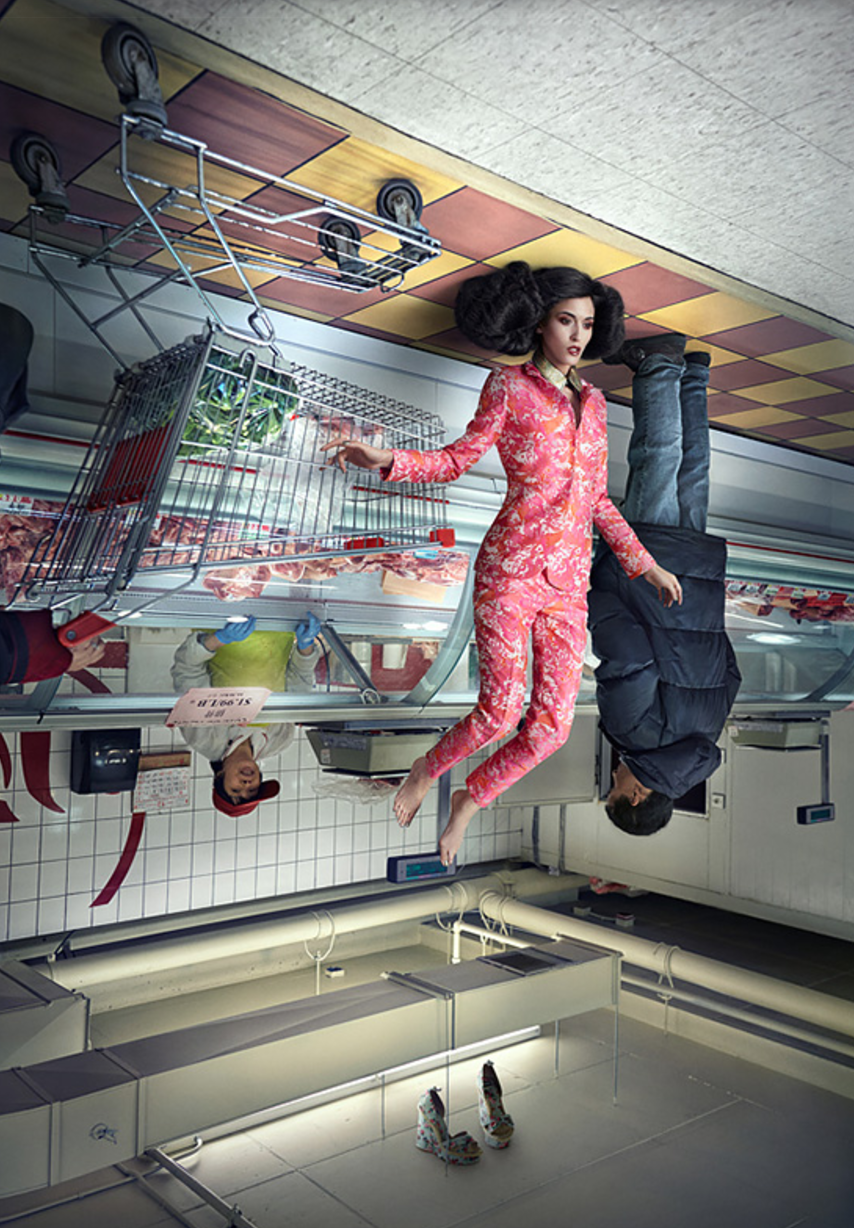
Photography by Martin Tremblay
We might be busy. But busy is a choice of mindset, if you think about it.
It’s funny, busy-ness is what creates our aching need for more self-care and a deep desire to live a life we actually want. And yet, it’s also the the thing that prevents us from having this life.
There’s also this. When I ask how you are, I’m not asking if you’re busy or not. The satiating, more connecting answer is a true description of where you are at, behind the busyness. The real you that’s always there, regardless of how much activity you’ve chosen to sign up for.
I read that Arabic for “How are you?” is Kayf haal-ik? In Persian it’s Haal-e shomaa chetoreh?
How about this for an idea? A mandated 30-hour work week? Recently in The Guardian leading UK social policy voice Anna Coote presented the idea as something that makes sense from many angles – social, environmental and economic.
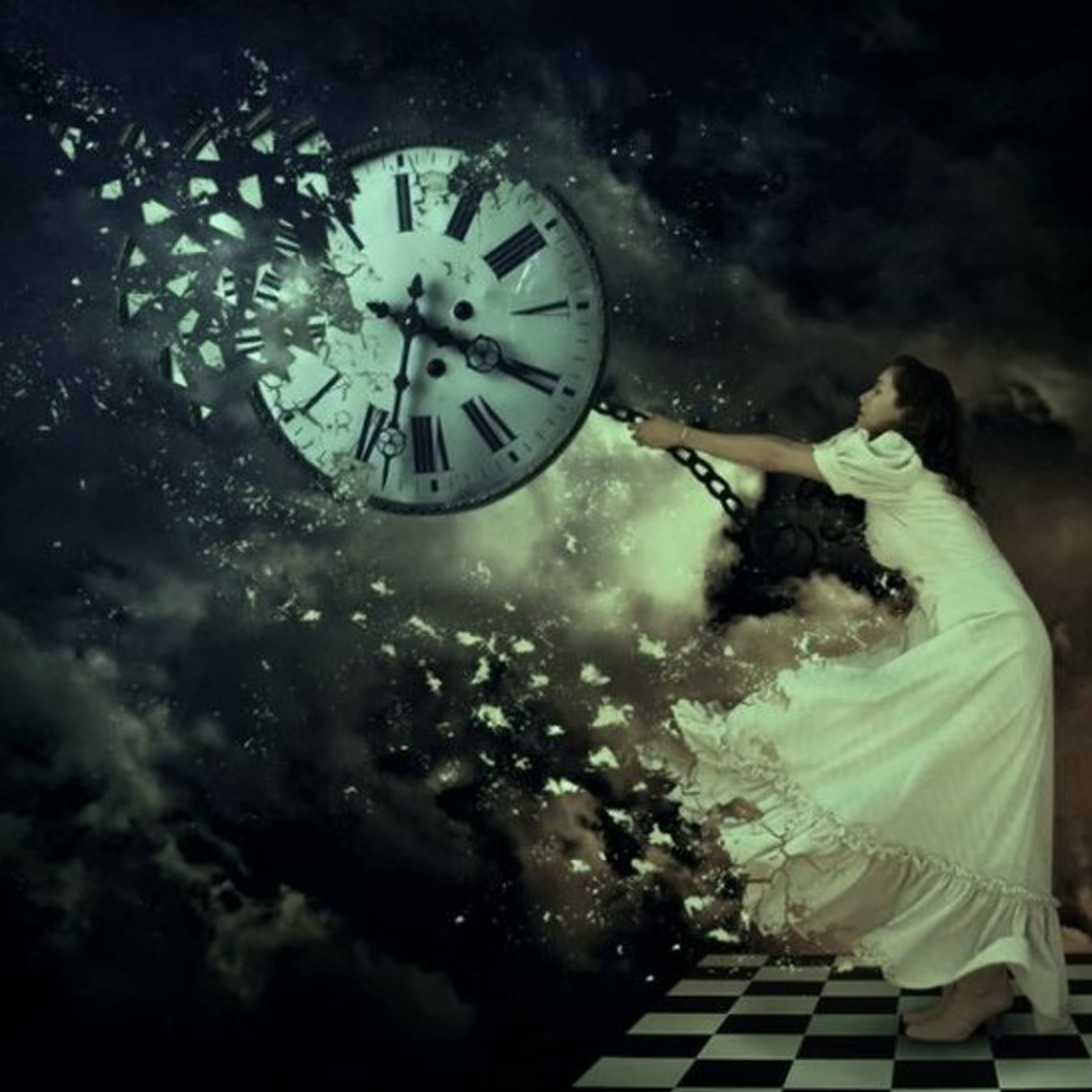
Image via Design You Trust
And yet we resist the idea. What are we all waiting for?
Technology and automation was meant to see us work less. So why are we working more? Why aren’t we making the call and pulling back from being so ‘busy’?
Me, I think it’s because we’re all waiting for someone to tell us we can. I’ve talked about the importance of creating our own boundaries many times before – we can’t wait for someone to lay out the red carpet for us. The world doesn’t work like this anymore.
But I do wonder if it’s time this critical matter (for our ‘busy-ness is making us sad and sick) might need to be mandated. If ‘someone else’ needs to step in in this instance.
Leonard Cohen is a man who lived with inner anguish, but did so gallantly. He celebrated the melancholy of life. He planted the truth of our existence (we die, my friends!) before us without apology. He wrestled with all this, but, again, without apology.
“Even before he had much of an audience, he had a distinct idea of the audience he wanted. In a letter to his publisher, he said…
“He wanted to reach ‘inner-directed adolescents, lovers in all degrees of anguish, disappointed Platonists, pornography-peepers, hair-handed monks and Popists’.”
The line is perfectly evocative. All six cohorts share the same desperate, grasping and well-meaning pain. All search for love and come up with… death.
Earlier in the week I shared how I longread. I flagged why it is such an important practice for our frazzled brains.
Today, I give you my list of favourite sources for finding long things to read that enrich my mind, make my heart soar, enhance my understanding of the world, while also drawing me in nice and close and focused and away from our terribly toggling world.
Image via polyvore.com
By way of a nice launchpad, my mate Katharine Viner, Editor-in-Chief of the the Guardian worldwide, wrote about the value of considered writing for keeping us true to truth in an incredibly rewarding longread a few months back (click on the hyperlink a few words back!), just before we met up in London during my last trip. So we chatted about the notion robustly, particularly in relation to the future of good journalism (pivotal to longreads). I quote Kath:
“My belief is that what distinguishes good journalism from poor journalism is labour: the journalism that people value the most is that for which they can tell someone has put in a lot of work – where they can feel the effort that has been expended on their behalf, over tasks big or small, important or entertaining. It is the reverse of so-called “churnalism”, the endless recycling of other people’s stories for clicks.”
I, too, believe that this is part of the importance of longreading to the human psyche. We relish demonstrations of effort expended. It reminds us we’re here for a reason. It rallies us to be more than our deadline.
Anyway,
A list of my longreads:
The Scientific American. I subscribe to their newsletter and buy digital copies of select issues. Many of their articles are free through their newsletter, however. This one on how we make sense of time was a recent favourite.
The Guardian. I follow their various sections on Facebook. I follow their Long Read section on Twitter at @gdnlongread, and their weekly email here.
Much of where we are feeling we’re going wrong lies in the speed at which we are moving, talking, toggling and…reading. I’ve shared one of my favourite takes on this, by David Malouf writing in the Quarterly Essay not so long ago.
Image via teachingliteracy.tumblr.com
Malouf suggests:
We are moving at a speed that’s not conducive to discerning thought.
We can’t keep up. We’re frazzled. We’re missing out on good, deep, mindful learnings. I agree and love Malouf’s way of presenting this idea.
Do you, like me, find it hard to longread? Which is to say, do you find it hard to read long, mindful articles that have been crafted carefully and go in deep, thus requiring more words and focus than a clickbait-y grab? Yes?
I’ve realised the importance of ensuring I do in fact longread on a regular basis. In part to train my brain into more discerning thinking.
This is how I do my longreads:
* I subscribe to and follow various channels specialising in considered reads on social media and via newsletter.
* I save them. I do this in a rudimentary way. I email them to myself (from Facebook or Twitter or email newsletter) and keep in a mail folder.
* I set aside time once a week to read. For a good hour or two. I make a big pot of tea. It’s a lovely ritual.
He discusses the same theme. Of being OK with nothing happening. He refers to our smartphone habit – how we grab for it when we’re anxious, sad, unsettled.
“You need to build an ability to just be yourself and not be doing something. That’s what the phones are taking away, is the ability to just sit there. That’s being a person.
Because underneath everything in your life there is that thing, that empty — forever empty. That knowledge that it’s all for nothing and that you’re alone. It’s down there.”
Bloody hell, yeah. My God, we’re losing our bravery don’t you think? The empty forever is there. We are all alone. And we die.
We don’t wish to have mindful conversations about this fear that we run from. We just want to keep toggling and distracting and hoping that we can connect and find worth in an Instagram notification or a Facebook reply or a Tinder swipe-right.
My mate Kate Callaghan is a nutritionist, personal trainer and author, specialising in hormone healing and fertility. Today I’ve asked her to share a trick she told me about recently for those of us who have hormone derangement, but who love coffee. It’s a common quandary…and it would appear Kate has a solution…
Image via teacoffeebooks.tumblr.com
Over to you, Kate…
To begin, is coffee good for us?
When it comes to supporting hormone health and fertility, it’s not something I recommend. The caffeine can prod your adrenal glands to release cortisol, your stress hormone, which signals to your brain to step things up a notch into “fight or flight” mode. This simultaneously gets you out of “rest, digest and reproduce” mode, and can lead to dwindling sex hormone production. Not only is this bad news for fertility, but can have other negative consequences, including menstrual irregularities, skin and gut issues, mood swings and low libido.
On the other hand, coffee has some quite well-known health benefits, including:
Improved insulin sensitivity (meaning reduced risk of diabetes and PCOS)
Reduced risk of liver disease (when consumed in moderation)
Improved memory and brain function
Increased ability to burn fat
Great source of antioxidants
[Sarahs add this: The upshot, pay attention to what your body is telling you. If you get jittery and jumpy from coffee, back off for a few days. Your adrenals are telling you they’re overloaded. Also, if you find yourself craving it and unable to go a day without, also back off. Give your body a chance to recalibrate.]
But Kate adds even more…
The weirdest coffee balancing tip ever
Fortunately, there is a way to get the best of both worlds – to enjoy your coffee without negatively affecting your
Hello. Are you like me? As in, do you really, truly struggle with making decisions?
Image via Tom Turner
I think many of you reading this blog do. As I’ve written before, decision fatigue sees us do dumb things, like reverting to default or safe options, or to making decisions that keep our options open…which just prolongs the fatigue.
After a day spent making decisions, judges in the US were found to default to more severe parole sentences in the afternoon. They were decision-spent and subsequently set more conservative sentences that kept options open (they could always reduce them later). Another study found that when we have to choose the customised extras for our car, we deliberate conscientiously at the start of the form, then eventually “give in” to the default options (nattily, companies put the more expensive decisions at the end of forms).
But I came across this insight from Sylvia Plath (from her book The Bell Jar) just now. I’ve cut out some of the quote so you can get to the point (without having to decide what bits to skim… you’re welcome!):
“I saw my life branching out before me like the green fig tree…From the tip of every branch, like a fat purple fig, a wonderful future beckoned and winked. One fig was a husband and a happy home and children, and another fig was a famous poet and another fig was a brilliant professor, and another fig was…a pack of other lovers with queer names and offbeat professions, and another fig was an Olympic lady crew champion.
I was propelled to this train of reflection after reading a profile of Patagonia founder Yvon Chouinard. The outdoor gear creator is anti-consumption, pro-environment, too. But he weaves an interesting path through it all. What do you think of these observations?
* A few years back, Patagonia blatantly discouraged their customers from buying their products. They had an ad campaign that read “Don’t Buy This Jacket”, advising people, “Don’t buy what you don’t need”.
* Their “Well Worn” campaign published 40 free repair guides for popular items in late 2015 (just before Black
I don’t know if I can discuss this further. If I can add to it.
Cleo Wade
Cleo Wade is an artist, poet and speaker. She often shares her poetry on Instagram. She nails life when she does so.
I guess the bravery she alludes to is one that we have to summon when the shit really gets real and hits fans and OMG THIS IS SERIOUS, MUM. Or when we reach a point where the doubt and fear and uncertainty just gets too much. It’s been too long. And it’s got boring. And something has to give.
We have to step aside and stop asking for advice, or thinking someone or something can save us. And we have to choose.
We have to choose to be okay. The pain will still be there, whether we decide this or not. But deciding it…it’s a