19 extra tips for fixing constipation

A few weeks ago, I ran a post by Dana from Hypothyroidmom.com on how she reversed her constipation. Boy, a lot of us are blocked up, hey!? (I’m really tempted to drop some poo puns in here…like how the response created a sh*t storm… but will hold it in… I mean refrain.) I’ve since put together a follow-up post for you with the extra tips shared in the comments – far from a comprehensive list, but some great ideas.

Image via Favim
Image via Favim

Some of the common themes that came through in the comments:

1. Cut back on dairy as it has a protein called casein which can sometimes slow things down.

2. Take psyllium husk regularly. Although, if you are going to go down this road, please up your intake of water. If you don’t, it will simply worsen the constipation. I’m personally not so keen on psyllium husks. If you get occasional constipation, it’s OK. But for many, the husks can actually form a hard “plug” that, well, is immovable. Slippery elm powder is a far better solution – see below.

3. Take some colloidal silver consistently for about a week. For those of you who aren’t familiar with the stuff, you can read more about it here. And here’s an opposing view stating reasons against ingesting it. I’ve not tried it myself.

4. Get a colonic. I have a range of thoughts on colonics. For anyone seriously stuck, it’s a neat way to re-boot. I don’t like the idea of using them as a regular “detox” tool – unnecessary, potential risks and not “natural” (Just Eat Real Food instead).

5. Eating clay. You can read more on the topic here.

6. Load up on seasonal greens. In winter, make green soups, put spinach in everything and have some spirulina with warm water and a dash of lemon juice.

7. Take bitter melon capsules. Reader Danni says: “I have a thyroid problem and have suffered many of the problems outlined above. I have been taking two bitter melon capsules (read more about them here) after each meal and have found

Read more

Hey, a Wool and The Gang knitting kit…give it a purl!

When I was a kid and complained to Mum I was borrrrred it would elicit precisely one of two responses.

  1. “I’ve got something you can do – here’s a basket of nappies you can hang out.”
  2. “Sarah, you need a hobby”.

Poor Mum was always on my case to do things with my time that didn’t have a point and weren’t achievement-orientated. To sit still. To stop dreaming up ambitious business projects and taking on more head-y obsessions (like analysing Jim Morrison poetry when I was 14).

As I’ve aged I’ve developed a deep respect for people with real hobbies. And have started to experiment with the idea myself.

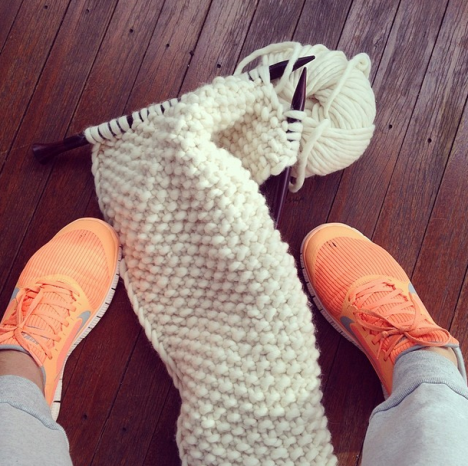
Project 1: a snood.
Project 1: a snood.

So, at 40, I’ve taken up knitting. Admittedly it was ahead of a trip to visit my parents who are at an age where they repeat stories. I figured knitting was a way to have something to do while I suffuse my explosive impatience during these kitchen-side chats.

Anyway, I went about it by buying in a few kits from Wool and The Gang.

I like them. This is why.

  • Wool and The Gang are sustainable and ethical. Their cotton yarn is pesticide-free, for instance, and the business is geared at supporting Peruvian communities (their wool is from Peru; also see The Crew details below).
  • They repurpose T-shirt off-cuts from factories, tearing them up to become their Jersey Be Good yarn. I’m about to

    Read more

Can you sit and do nothing (no phone included) for 15 minutes?

Last week my phone died and I paid a visit to – deep breath – the Apple store to have an over-pierced kid sort out my life.

After diagnosing my issue, The Kid (Him: “In my former life I was a piercing technician.” Me: “But you’re 21, you don’t have a former life!”) had to disappear with my phone for 15 minutes (which turned into an hour). So I was left to sit in the store for some excruciatingly empty time.

Photography by Nick Aitken
Image by Nick Aitken

Normally in such empty moments I would pull out my phone and e-fiddle – check mail, scroll Instagram, return text messages etc. But I clearly couldn’t on this occasion. So I just sat and did nothing. It was great, if painful.

I realized anxiety came up straight away. I broke it down further.

I realised I was anxious because I felt I should be getting on with things and not wasting time just sitting. Letting my mind wander off feels so indulgent. I’ll come back to this in a moment…

But I broke it down further. I realised the bigger part of my anxiety was attributable to a fear of being still with my thoughts and not having a “blunting” agent to distract me away from my worries.

Then, because I had the time (The Kid was still not back), I broke it down again. Thoughts are like banked up bubbles. The big ones  – our problems, our worries, our sadness, our loneliness – burst forth first when we allow an opening, ahead of the more banal, medium-sized bubbles. And, so, we don’t like it when we do find ourselves still because we know the sadness and

Read more

17 clever things to do with ice cube trays

Honestly, my go-to advice when anyone asks me for the smartest culinary trick up I have up my apron? I bulk-buy ‘n’ freeze. If you’ve been following me for a while, you’ll know I love my freezer and often share nifty ideas on how to use left oversstretch meals out or prolong produce by using this under-praised white good to its fullest potential (which is, in actuality, when it’s full – a full freezer is more energy efficient than an empty one, because solids freeze at a lower temperature than air, requiring less electricity.)

xxx
Puree your leftover greens to use in your morning smoothies

But today, let’s get nerdy with ice cube trays. Ice cube trays are handy little freezer gadgets. They’re great for the obvious, but also really helpful for storing leftovers.

Tip #1: I suggest you use silicone ice cube trays. They make it easier to remove things when frozen.

Tip #2: Once things are frozen, simply remove from the cubes and store them in ziplock bags, freeing up the tray for more foods.

But now…

Smart things to put in your ‘cube tray

1. Coconut water to use in your morning smoothies. Do the same with coconut milk or cream, and use in smoothies or add to curries. PS here’s why I prefer smoothies over juices

2. Peanut-butter cups in individual serves. Try my recipe from I Quit Sugar.

3. Leftover herbs. Fill each hole of an ice cube tray about half way full with chopped herbs and top with leftover stock or olive oil. They keep indefinitely and you can pop them out once frozen and store them in a ziplock bag. Toss them into soups, sauces and stir fries. Hard herbs like oregano, sage, thyme and rosemary work best for this.

4. Leftover avocado. Puree avocado with coconut water and/or cream and a little lime juice. Freeze in cubes to pop out and blend with extra greens for a nutritious smoothie.

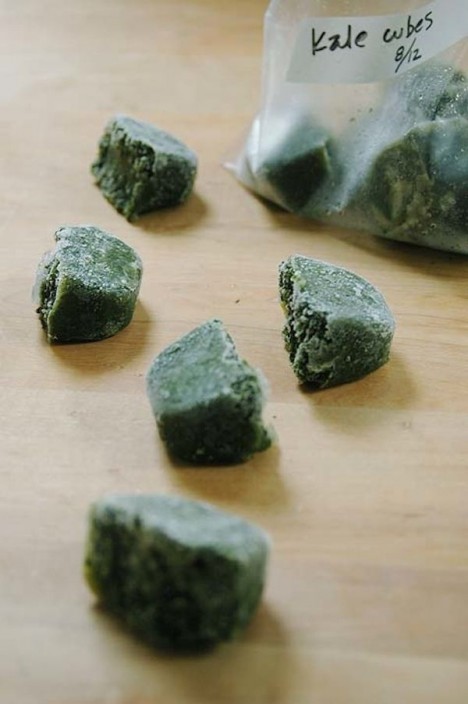
5. Goitrogens. I sometimes puree my par-cooked and frozen broccoli florets, kale and spinach and freeze in an ice cube tray, ready to add to a morning smoothie. Steamed cruciferous vegetables have a lot less goitrogens in them than when left raw.

6. Homemade chocolate. It’s the perfect size for an after dinner treat. (Find the recipe in my eBook dedicated to chocolate.)

Read more

Be totally glad for red men

I read a quote from someone from a book about a book about to come out, somewhere. Said quote touched on the idea of using the things that so irritatingly slow us down to…slow down. And to be grateful for the prompt.

Image via flickr.
Image via flickr.

The red man at the pedestrian crossing.

A red traffic light.

A queue at the Post Office.

The slow walker.

The delayed train.

We can use such modern irritants as an instant prompt to pause and reflect and sit calmly and look around and breathe deep. And to smile at our little impatient selves. Because there’s nothing like smiling at a little vulnerable, pained, simple version of ourselves to put things into an expansive, settled perspective.

I’ve written before about how smiling at ourselves is a great meditation technique.

So much of the “pain” – physically, psychically and energetically – in my life stems from my neck-strained, forced, rigid “plunging forward” into things.

I plunge forward with my dominant right leg, and have had multiple accidents on the right side of my body as a result.

I’m in a constant state of straining forward with my head, and have incredible issues with my neck (which is relieved whenever I “sit

Read more

Slow Food and Outdoors Guide to Perth and Fremantle

I’ve just come back from a jaunt over West. It was a quick one, but I got a very good feel for the scene there in just a few days. My bro’ Ben and I scouted the joint together.

xxxx
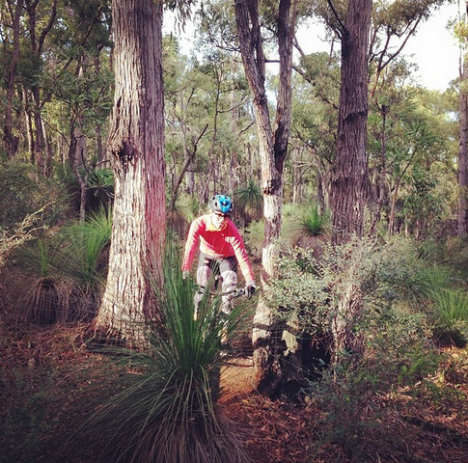
Riding the Kalamunda Circuit – possibly the best mountain bike trail I’ve done.

Perth and environs has some incredible produce and wine that fits to the “whole food”, locavore etc vibe. Interestingly, I’d say the city doesn’t really promote its paddock-to-plate wares as much as it could. Which, to be honest, is quite refreshing. The whole “local, hand-foraged basil leaf” palaver can wear a little thin after a while (isn’t a basil leaf just “picked”?).

As I say, I was there briefly, so my recommendations are limited. Thusly, I called on a few local hand-foraged “friends” to share their favourite spots, too.

Fremantle

* Bread In Common.  Even if you don’t eat bread, this place offers so, so much: slow-cooked options, locally sourced and house-made; communal tables; and a lovely heat coming off the big bread ovens where they make their very authentic sourdough (based on a mother culture that’s 25 years old). Check out the Bread In Common site. PS. Every full moon they have a long table communal dinner.

Read more

What I eat on planes

This is another one of those posts I do when the questions on a particular topic roll in too thick and fast for me to respond to on an individual basis. Every time I travel somewhere I cop this one: but what do you eat in the air?

Image via Favim.com
Image via Favim.com

I’ve covered off what I eat when I’m travelling, that is, what I eat in foreign countries when I don’t have access to a kitchen and familiar foods.

I’ve also touched on what I eat on the run, including toting my breakfast and lunch to work. But today we’re going to cover air travel in all its hyper-packaged, processed, over-salted glory.

I mostly don’t eat on domestic routes

On short flights I simply don’t eat. Honestly, all of us can survive 1-2 hours without food. Snacking is a confection of the food industry to get us eating more of their food. Up until the 1990s common wisdom was to eat three square meals a day. This is what our bodies are designed to do. They like to rest a good 4-5 hours between meals. But in the early 90s nutritionists modified this to the “5-6 small meals a day” prescription in response to their client’s crazy blood sugar issues (from eating too many sugars and cheap carbs).

My issue with snacking is also this: snack food is mostly crappy. And always so on planes.

Know this:

Because our sense of taste dilutes at altitude, plane food is jammed with extra flavourings and salt.

On international flights

On long flights, or if my transit and flying time is right on a meal time, I will generally pack my own food and eat it at the airport or mid-flight. This is what I do:

  • I use up veggies that will go off in the fridge while I’m away. I chop up red capsicum, beans, snow peas etc and put in a ziplock bag (these can be rinsed out, dried and rolled up taking up less room in my suitcase than a lunchbox). I tend to always have a wedge of avocado or cheese lying around. I put that in the bag, too (I always eat fat

    Read more

How to plan a great hike

It’s kind of funny being asked to explain something that comes as second nature to you. “Um, you just do it,” comes the reply from the nuclear scientist who splits atoms for a living.

Screen Shot 2014-07-23 at 10.04.09 AMBut given I’m so often hike-bragging (hagging?) all over social media under the pretense of encouraging more people to hike on their weekends and vacations (in lieu of shopping), I feel it’s my responsibility to actually break things down for those who are wanting to give it a go, some of you for the first time. Anyone doubting the incredible benefits of hiking it’s worth my flagging:

*Research shows that spending time outdoors increases attention spans and creative problem-solving skills by as much as 50 percent.

* Just one hour of trekking can burn well over 500 calories (if calorie counting is your caper).

* Hiking can lower blood pressure by four to 10 points, and reduce the danger of heart disease, diabetes and strokes for those at high-risk.

* Another study found that long distance hiking trips may improve antioxidative capacity in cancer patients.

* And this bit of boffinism shows that using hiking as an additional therapy can help people with severe depression feel less hopeless, depressed and suicidal.

In a semblance of order, here’s how I do it:

I make it all about the hike.

Some people travel to a city or region for a museum, or the café scene, or for the wineries. From there they experience other things (great food, sights, smells). When you really want to give hiking a go, go to where the best hike is and build in other experiences from there. It’s not a bad formula to adhere to. Great hiking scenery generally attracts great food and culture and other experiences. And like-minded people.

I use hiking as the raison d’etre of my travelling. That and eating.

Research your hike thus:

Google: “Best hikes in [insert name of area]”. If you’re really happy to travel anywhere in the world for a rippin’ hike, check

Read more

Being creative can be a lonely path

I loved reading about this new study into the connection between creativity and mental illness. It effectively found that creativity has little correlation with genius. While there is a connection with a highish IQ  (the “average” creative has an IQ around 120), the real nexus is with a touch of madness. But more specifically (and interestingly), a particular ability to see things others don’t.

Image via Favim.com
Image via Favim.com

The author’s final conclusion on the Thing that denotes creativity is this:

“Creative people are better at recognising relationships, making associations and connections, and seeing things in an original way—seeing things that others cannot see.”

He goes on to say that this ability to see things differently can be a very lonely experience…which, in turn, he feels, explains the mental illness nexus.

A quote from his own writing on the subject:

“When you work at the cutting edge, you are likely to bleed.”

It would appear mad to go to the cutting edge if it were only painful. But here comes my favourite bit, the bit that made me

Read more

Beautiful brave men

A little tale. One day, a few months back, I found myself in Somerset killing time after a three-day hike across moors and dells. I visited an antique fair where ladies with purple hair sold things that smelled of mothballs and the shoppers looked like a crooked-toothed host from Antiques Roadshow. It was perfectly quaint.

I just chatted a bit. A lady heard my accent and said, “I’ve saved this for you.” She grabbed my arm and dragged me to her pile of plastic boxes behind her stall of war memorabilia. “I promised I’d offer this to the next Australian I meet,” she said handing me this tatty little book…

Padre Gault's Stunt Book
Padre Gault’s Stunt Book

Padre Gault was an Australian Methodist minister who wandered the trenches in World War I providing guidance and solace. His Stunt Book was a collection of wisdoms and witticisms geared at providing solace to soldiers. I accepted the book, and paid her a few pounds for it and have been reflecting on it, sharing it with friends, since.

My favourite bits are where Padre asks the soldiers a question about life. The responses are so raw. He asks them about the sky:

“Why don’t they keep the moon for a dark night?” – Anon

And being a man:

“If the Australian soldier could attain a moral standard equivalent to his fighting abilities, it would approach closely to

Read more