I’m an online dater and it changed me

There are a few things you learn when you do online dating. You learn about the different faces of humanity’s heaving, aching loneliness. You learn just how lonely you are. You learn about the opposite sex. You learn about how much your ego can take (from the incessant rejections; on most sites you’re alerted to who is checking you out…followed by a loud silence when they don’t make contact; on one site one works their way up the “most popular listing” by responding to all contacts, which results in a lot of automated rejection emails). But mostly you learn about yourself.

Photo by Tierney Gearon

I first gave the phenomenon a go a few years back. And I approached it as just that: a phenomenon. With my journalist’s hat on, I used my need for a column topic as my excuse for entering the fray. But, really, my excuse was that I was lonely and the tactic, frankly, was cowardly.  In the resulting column I wrote about how online dating is a great way to learn to be thoroughly yourself. That is, the forms you fill out to join the various services are a great way to remind yourself of what you like doing, what your values are, and so on. I stand by my theory, even if the pretense was a cop-out.

But I learned more this time.  This time I signed on to two sites. I’ve been on them for two months.

About men, I learned this: they like to hold fish up high in the air, go to a lot of events on boats toting bottles of boutique beer, “hit the gym”, watch Two and Half Men and Shawshank Redemption and read the Sunday papers. They’re “laid back” and “easy going” and “down to earth” (what Australian man isn’t!?), but “don’t do the club scene any more”,  don’t have time to read (except for aforementioned Sunday papers and Bob Marley’s biography),  get into a bit of the Foo (as in, presumably, Fighters) like it’s 1997, and take “selfies” in bathroom mirrors.

I also learned that young men with tribal tatts wearing muscle tees living in outer suburbs with Mum and Dad (a detail I gather by the bathroom accoutrements I can see in the reflections of their selfie portraits) are overly represented in the single scene. Actually I didn’t just learn this. I already knew it. It’s just that on online dating I’m connected with them (they’re overwhelmingly my main pursuers on the sites). I’ve written about how educated, career-orientated women in their late 30s and early 40s are overly represented in the Western world today, while for men it’s this younger, blue-collar demographic. It’s the result of “hypergamy“. And it leaves a huge disconnect in the dating market. Although, frankly, I find this kind of bloke more authentic and open with their intentions and overall spirit than a lot of the polished men working in finance, divorced and in their late 40s and 50s.

I learned I don’t like internet dating, but I stick to it to see if it can surprise me. I find attending to “criteria” is not how I want romance to strike. And the point being, I want to be struck. I want to be pursued, courted. Knocked over. It’s going to take that…a real blow to the kneecaps from a guy who’s brave enough to come that close. Which leads me to…
Read more

How to buy toxin-free nail polish

*Updated March, 2016.

Let’s kick off with this: most nail polish is made with the same gunk used to make car paint. Yep, a toxic melange of solvents, film formers, resins and plasticisers. Whatever they are. But shall we move on? And see if there is some light at the end of this fumey tunnel?

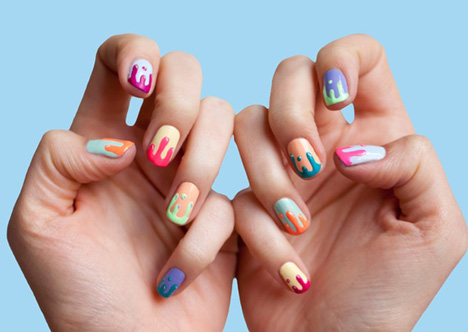
Image via Favim.
Image via Kester Black.

I’ve written before on toxin-free cosmeticssafe fake tan lotions and toxin-free sunscreen, so I figured it was time to take a closer look at nail polish. I personally don’t wear the stuff. This is my strategy for avoiding toxins in most beauty products. But I know many of you out there do, so consider this a bit of a community service post!

For this reason, too, I’ve asked some of my expert toxin-free friends to weigh in on this stinky topic. It’s a combined effort.

1. Know your nasties.

Maria Hannaford at Econest works for an environmental organisation researching the impact our food system has on the environment and our health. She says most brands promoting themselves as “safe” these days will list themselves as “3-free”. This means they’re free of the top three nasty ingredients listed below. She explains:

  • Formaldehyde. It’s the stuff they use to preserve dead things. I should know, I worked in a lab for many years and let me tell you, there is a strict protocol around avoiding getting it on your skin or breathing in its fumes! It’s a known human carcinogen and can cause ear, nose, throat and skin irritations.
  • Dibutyl Phthalate. It’s the most controversial of these ingredients; it’s a known reproductive and developmental toxin, and is linked to hormonal and long-term fertility problems in newborn males. It’s banned in the EU. [But is apparently safe enough for Australians? – Sarah]
  • Toluene. A possible reproductive and developmental toxin that causes headaches, dizziness and fatigue. It can cause liver, kidney and brain damage, as well as damage to a developing foetus.

Irene Falcone is the creator of Nourished Life, a site specialising in selling eco-chic natural and organic beauty, children’s and home and lifestyle products. Irene also suggests you avoid nail polishes with parabens, phthalates, solvents (ethyl acetate and butyl acetate), nitrocellulose, acetone and heavy metals.

What to do?

  • If this chemical info is all too much, simply look for “3-free” labelling PLUS ensure there’s no ethyl acetate – a known neurotoxin and the worst of the additional nasties Irene lists – in the stuff. Many of the brands labelled as “3-free” still contain it.

    Read more

how to slow cook lamb shanks #2 (plus 8 super easy recipes)

A few weeks back I shared my recipe for slow cooked lamb shanks with lemon and cinnamon. Have you tried it yet? Today, I’m getting slippery swift ‘n’ efficient and sharing a shank trick that’s fast, versatile and can stretch ingredients further. Oh yes, you’ll be shanking me for this shanky share!

Screen Shot 2013-05-03 at 11.35.40 AM
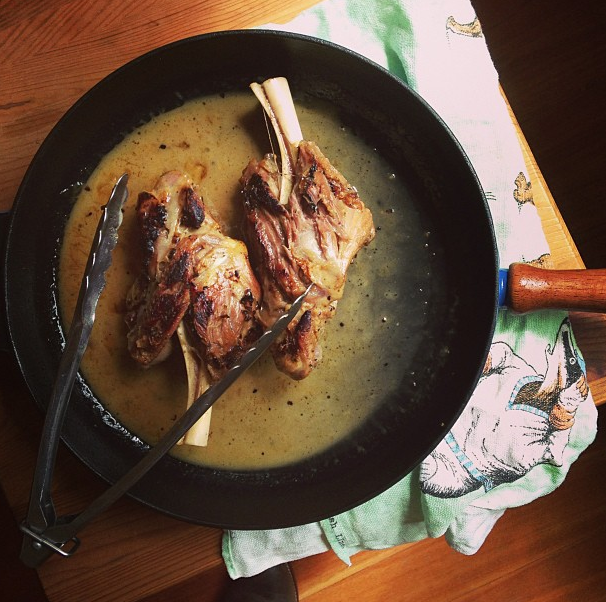
Par-slow-braised lamb shanks…recipe below

So. It works like this. Shanks can be rather large, often 400g each. Which, even when the bone is removed from the equation, I personally think is too much meat in one sitting, for both sustainability and health reasons.

Also, one often buys shanks in bulk and one might not want to cook up a whopping great casserole with six or eight of the buggers. One might, instead, want to use the meat in different ways. Or one might only have two shanks to one’s name, which you can’t really justify slow cooking for 8 hours in a slow cooker.

Which is why I’ve played around with this idea:

par-slow-cooking the shanks first…


…then splitting up the meat, freezing it and using it in a variety of dishes.

Yeah, I love the idea, too.

The recipe below uses three shanks, which can then make 5-6 different meals (recipes below). Here’s how to do it:

Par-Slow-Braised Lamb Shanks

  • 2-4 lamb shanks
  • 2 tablespoons olive oil

    Read more

my simple home: earthing mats

Brace yourselves, team. We’re heading into the kind of territory that brings folk out of the woodwork to throw the usual cries of “but where’s the vacuum-sealed, octo-blind, inreverse placebo, set-in-concrete scientifical study that proves what you say beyond a doubt?!”.  Yes, today we’re going to discuss earthing mats. Which sound like something that a dude in fisherman pants and a child called Forest Pxyiee would try to sell you, right?

Photo by Toby Burrows

Admittedly I did first hear about the idea while I was living in Byron Bay. And it was a dude in fisherman pants who waxed lyrical about the it will toting a chai. A few months back, however, building biologist Nicole Bijlsma brought the idea and the mats up again when she did a toxin audit on my home. She claims the mats will reduce body voltage created by the electric fields around you, and are particularly good for those who have electric hypersensitivity (EHS). You can see the video chats we did in my home here and here where we discuss the various sources of electromagnetic fields in the house and the solutions you can put in place to minimise them.

In a (cracked?) nut the idea behind earthing, however, is this:

The earth has a negative grounding charge. We humans build up positive electrons (free radicals) from EMFs, Wi-Fi etc.

Connecting directly with the earth equalizes things.

To earth is simply to walk barefoot on dirt or beach or grass. The effect is much like grounding electrical outlets to prevent build up of positive electrical charge. Health benefits, calmness, good sleep ensue.

How to earth:

* Walk barefoot. While we used to connect via our bare feet, know we have a layer of rubber between us and the earth, which insulates and prevents the grounding transfer. Get your shoes off and walk in a park on the grass or dirt, or along a beach.

* Walk on the beach. Wondered why you come back from a beach stroll so anchored and calm? Sand and salt

Read more

today I’m wearing a dirty white T-shirt

Today I woke with a plan to wear my white long-sleeved T-shirt. I’ve worn it twice already in the past fortnight and it has a little bit of makeup on the inside neckline and a little bit of a lived-in smell to it. Today I’ll be riding on my bike between meetings. A slightly uncrisp white T-shirt is appropriate.

photo

But there’s this: my white T-shirt is one wear off a wash. And I have a load of whites in the machine, waiting to be justified as a Full Load. Waiting for another white-in-need-of-a-wash. And so, wearing this white T-shirt today and washing it tonight (with a dash of bleach) will bring me a disproportional sense of satisfaction. Completion. It’s the Capricorn in me.

As I got dressed this morning (pulling on a short summery skirt because I like to “wear up” all my summery gear before I move into my cooler weather wardrobe), I wondered: Do other people have Little Life Processes like this? Little things that bring completion? Little thoughts and structures that fill their brains between more important thoughts? If so, what are they?

For it is in these Little Life Process Moments that I think so much about a person can be really seen.

These nerdy, particular, slightly odd-ball moments are so intimate. I fall in love with a person when I see them engage in theirs. It’s a moment of care. It’s a moment of uncensored them-ness. It’s a moment that exposes their needs, their vulnerability.

I know my need for completion and for “using things up” says oodles about my need to feel safe, to feel that I’m a

Read more

Early bird offer: pre-order the I Quit Sugar Chocolate Cookbook!

Update: The 500 Vital Vanilla Protein Powder sachets mentioned below have all been snapped up!

Hello. How’s your day? Mine’s good, thanks. Onto other matters…the I Quit Sugar Chocolate Cookbook: 74 Sugar-Free Cakes, Fudges, Truffles + Barks is almost here.  Since so many of you are rather keen to get in early, we’re taking pre-orders from today. And I’m sharing one of my favourite recipes from the book: My Fudgy Protein Bites. So healthy you could eat it for breakfast (and I do!).

Protein Bar
Fudgy Protein Bites, photography by Marija Ivkovic. Recipe below.

Hang on Sarah! Can you even eat chocolate when you go fructose-free? Yes,  friends, you can. You can!!

However, it does mean making your own real chocolate. I’ve been experimenting for over a year now with different techniques and ingredients, and this cookbook is the culmination of my favourite flavour combos, transformed into more than 70 fructose-free cakes, truffles, brownies, smoothies, mousses and barks.

If you’re keen to get in early, we’ve got a bit of an offer for the first 500 people who pre-order:

Pre-order today + get a Vital Vanilla Protein Powder sample. 


The first 500 to pre-order the I Quit Sugar Chocolate Cookbook will also receive a 7g Vital Vanilla Protein Powder sachet from VitalThese 500 sachets have already been snapped up!

For more information on the book – what bang you get for your buck – and how to pre-order, simply click this button below:

IQS choco pre-order-trim

I should say, I use the Vital Vanilla Protein Powder to make a number of the treats in the book, including my favourite, My Fudgy Protein Bites (above). This protein, importantly, is 100% Pure Pea Protein. The Vital Protein

Read more

My sugar-free ANZAC biscuits + 50% off sale

This post has been updated.

I’m getting older and more sentimental and this year’s ANZAC day is piquing some emotional spots. For readers outside Australia and New Zealand, ANZAC day is a national day of remembrance to honour the members of the Australian and New Zealand Army Corps (ANZAC) who fought at Gallipoli during World War I. (Today however, it goes beyond that anniversary; it’s now a day when we remember the service and sacrifice of all Australian servicemen and women from every conflict, past and present.)

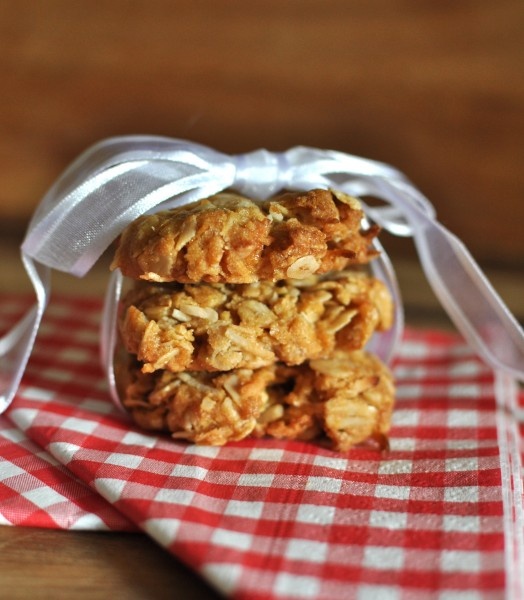
Image via Claire K Creations. Recipe for a sugar-free ANZAC cookie below
Image via Claire K Creations. Recipe for sugar-free ANZAC biscuits below.

Right now, I’m feeling much respect. Respect for oldies. For a generation who sacrificed. It’s this – the idea of sacrificing for a greater and largely unknown good – that touches me. My goodness, the faith!? Do we ever feel this?! Couple this with the fact that these very people who sacrificed are now so very out on their own. We don’t care for our oldies as they cared for the future generations. We don’t “do” this same notion of sacrifice. Somewhat sadly, we just don’t have the time. Or faith, somehow.

Our “way” is to give money. This is not the same as our time and intimate contact. Is it? But it’s still very much needed. Today, as well as running an ANZAC biscuit recipe, and a special sale offer, I’m giving $1 from every sale to the ANZAC Appeal. Next year, I hope I have the time to be more intimate.

50off

My Sugar-Free ANZAC Biscuits

Again, for readers outside Australia and New Zealand, these biscuits were eaten by our soldiers in lieu of bread and was a tooth-cracking combo of long-last foods that would withstand the journey via ship to reach the troops: oats, flour, golden syrup, coconut and bi-carbonate of soda. It was an incredibly hard wafer, leading some of the wives and mums back home to finesse things a little. Today, we make them on this special day to remember the Fallen. I invite you all to take a moment to reflect and

Read more

10 beefy reads for vegans + meat lovers

I want to get to a point straight up today.

Screen Shot 2013-04-23 at 4.18.33 PM
Photo by Stephanie Gonot

I’ve been travelling around learning about meat production and reading more and more on the subject. A few weeks back I shared how I eat my meat, which prompted debate and more questions. I’ve read some more…and more…and figured y’all might like to do the same.

First up, before I get to the great meat reads, I’ll clear a few things up:

* My food philosophy is always about how to get the densest nutrition for my ethical buck. This means balancing things up, making the best decision with every food choice. This means there is no “one right answer”. I value local over organic. I appreciate for many, a mainstream supermarket is their only shopping option (the closest bourgeois farmer’s market might be a two hour drive away). And I value sustainability first and foremost (both of the planet and of our food systems), ahead of my own hedonistic needs (taste, texture, convenience and even health).

* I’m not a scientist. I’m a journalist, a conduit. I take dense information and share it in a way that’s most appropriate to the readers here on this blog. And this is a personal blog where I make it very clear that these are my personal experiences and interpretations. As always, I keep reading and learning, with my eyes wide open. I encourage the same of everyone here.

*  I live in Australia where many of the stats bandied around about the amount of water and grain to produce meat are a moot point. I explain, why below (eg: the bulk of beef and lamb in Australia is grass fed, raised on arid range land that can’t be used to produce grain etc). Thus, most of the popular factoids do not apply to Australian meat.

So, to this end, some extra reading and ideas to digest:

1. The Vegetarian Myth: Food, Justice and Sustainability, by Lierre Keith

Lierre was a vegan for 20 years and switched to sustainable meat eating for ethical, environmental and health reasons. Indeed, this positioning makes her take very compelling. She has thoroughly explored every possible

Read more

13 very nifty things to do with chia seeds

Chia seeds are the new quinoa. The new ingredient to wriggle its way into the mainstream after a few decades as the fibrous, whole-mealy staple of the granola belt. I know many of you out there are still trying to work out what to do with the damn things once you’ve bought a packet. And since I hate the idea of anyone buying a packet of anything and having it sit there going to waste, henceforth a wee list of clever applications….

CASHEWYCHIAPUDDING_15
Cashewy chia pudding, from the I Quit Sugar Cookbook

I’ve written on why chia seeds are so healthy before if you want to catch up. They’re godsends when you’re quitting sugar. They help to control your appetite because they fill you up (with the addition of liquid they swell to 17 times their original size) and they’re a fabulous source of protein. They’re also full of nutrients – vitamins A, B, D, E, calcium, potassium, iron, magnesium – which help with the detox hell that some can suffer.

But today it’s all about how to eat them. Wrap your laughing gear around these ideas:

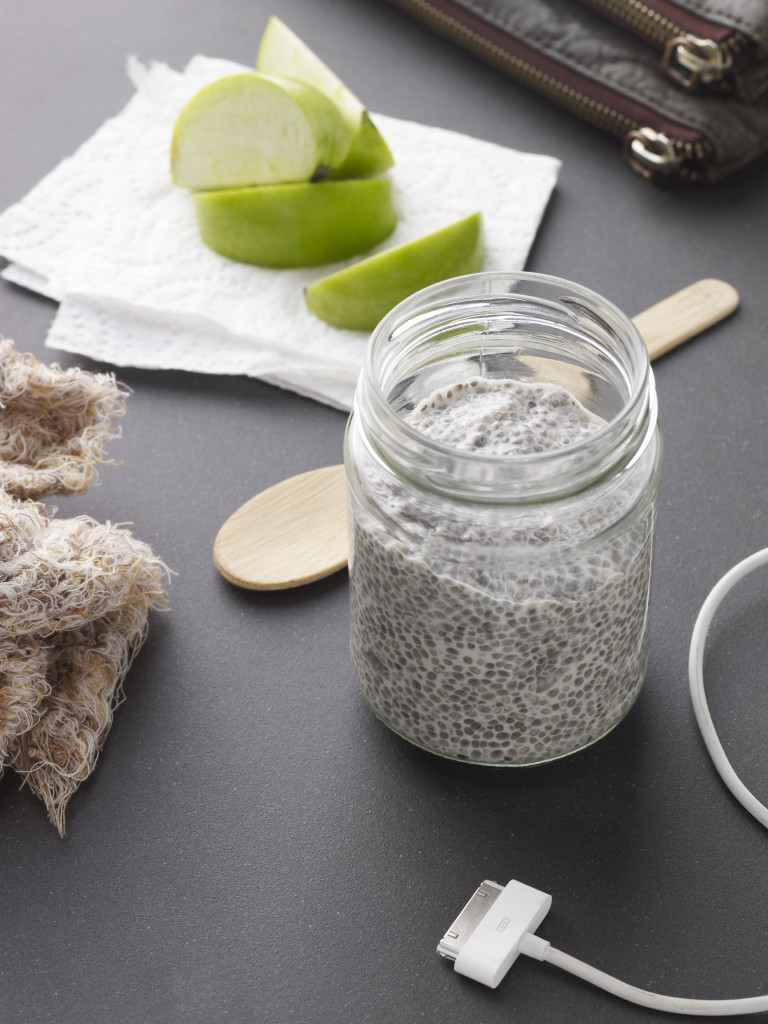
1. Make my healthy cashewy chia pudding from the I Quit Sugar book (image above). I make mine in a jar and carry it to the office, or on planes when I’m travelling. It’s filling, can be made the night before and is spill-proof!

2. Use in place of an egg in recipes.  Substitute 1 tablespoon of chia seeds (preferably finely ground) + 3 tablespoons of water per egg.

3. Thicken up soups or gravies. If you don’t want to use cornstarch or other thickening agents, add a teaspoon of chia seeds or chia bran at a time until you reach your desired thickness. Bear in mind it takes a minute or two for the seeds to swell and work their magic. Be paaaaaaaatient.

4. Sprout chia seeds to use in salads. These things are quite zesty…a bit like broccoli sprouts. Chia seeds are mucilaginous so you can’t use the usual tray or jar sprouters. Instead…

  1. Sprinkle a thin layer of seeds on the bottom of an unlaquered terra cotta dish or plate.
  2. Put the terra cotta dish in a larger plate of water.
  3. Cover with another plate.
  4. Small amounts of water permeate the terra cotta plate upon which the chia seeds sit, and provide exactly the right amount of water to sprout them.
  5. Day 2, lightly mist the seeds (or sprinkle)  with water.
  6. Day 3, they should be right to eat.

5. Or try this easy tuna spread idea: Dump a small lunchtime can of tuna and springwater or brine in a bowl with about 1 tsp chia seeds, then use as you normally would on sandwiches or in salads.

6. Add to a chocolate brownie or truffle recipe to turn them into protein bars. Throw in a few tablespoons of

Read more

My Crispy Roast Chicken: 5 reasons why it’s the smartest way to eat a chook

The past few weeks I’ve been digging around for the cleverest, tastiest most sustainable, healthiest and most economical way to eat chicken. You know, I get obsessed…

Screen Shot 2013-04-16 at 1.09.49 PM
I made my Cheat’s Crispy Roast Chook with an Inglewood Farm organic chicken (recipes below) for photographer Marija Ivkovic, food stylist Lee Blaylock and assistant Kim the other night after we finished shooting my next cookbook. Photo by Marija Ivkovic

I’m personally fatigued by the competing messages when it comes to weighing up the ethical v eco v health v hip pocket considerations and wanted to find a snaptight solution to buying and eating a damn chook that ticks off everything. You too?

After a little consultation and some Googling and kitchen playing I found The Solution. It lies in this technique, which can be summed up in a menu grab:

Organic crispy skin roast chook. With a side of broth.

There’s a full circle story to eating chicken. And it’s really worth knowing it from beginning to end (and back again). I’ll break it down into points…

And just so you know, this is a sponsored post, but opinions are all my own and I researched the topic and came to these conclusions myself. You’ll find my position on sponsored posts and advertising here.

1. The most ethical, environmental and economical way to eat chicken is to eat different joints.

I’ve written about why it’s important to eat the whole animal before. Meat should be eaten respectfully. Eating all of an animal – not just the fashionable cuts, such as the breast – is the most mindful and conscionable way to go about things. It also saves a lot of cash as some of the unfashionable cuts are cheaper (wings anyone?). I really suggest playing around with drumsticks recipes (for bonus health reasons as I outline below), or recipes that use all different cuts of the chook… to see what you like best. I’ve provided details below of how to roast cuts of chook, too (if you’re not into buying a whole bird). I also like this recipe, which plays about with different cuts. Buy up several at your supermarket and experiment.

2. Eating all your chook is best for your health.

Let’s break it down into some watercooler points:

Read more