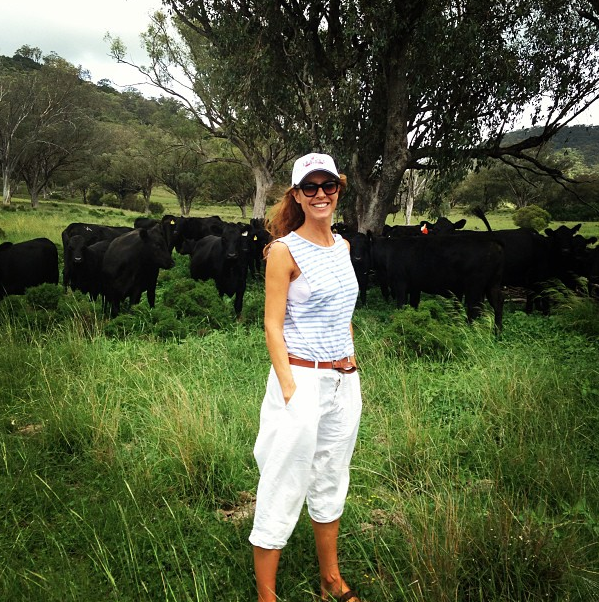
I sometimes see my personality quirks as highly expressive boils on the face of life. Too loud, too swollen, too festy. I’ve been feeling this way lately and have been backing away from things a little…to give the world a break from my boils. I could probably put this prettier. But it’s the picture that comes to mind. Many of us resent our quirks, especially those of us who’ve done “work on ourselves”. You know, all that “abandon the ego” stuff…But I’ve had a helpful insight today. I’ll explain….
Image via Favim
I was at meditation group Monday night, and my teacher Tim was sharing something about the different stages of transcendence or some such. I can tune out to such speak. I’m about 2984757 lifetimes off transcending. When I meditate I don’t sink blissfully into some ephemeral space where “Wow, I just zoned out…did 20 minutes and three semi-trailers really just pass by?!?”. I don’t drift off anywhere. Nope, my experience is a jerky, nervous, chattery one that is far from inspirational. I’ve written about this before here.
But Monday I tuned back in when Tim mentioned that one of the outcomes of steering oneself to transcendence entailed refining your personality quirks in a fresh way, such that you become more YOU and more LOVEABLE. Two bangs for the buck.
I have many personality quirks. I don’t know where to begin detailing them. I have a deep-seated inclination to flee. It’s a big part of why I ride a bike. So I can flee when the quirk strikes. I have to talk to strangers wherever I go. This always annoyed my mother.
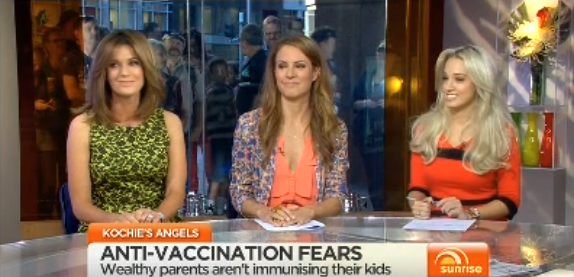
Each week I get asked to join Seven’s Sunrise panel to discuss various topical issues of the morning. This morning I was asked to comment on a news item that reported parents in Sydney’s wealthy suburbs were putting their kids’ lives at risk by choosing not to get them vaccinated. I went on air shortly after 8:30…
In the notes handed to me a little before I went on air, I was told Kochie would be asking me about the basis of the anti-vax movement’s argument. What was their premise? On air Kochie referred to the news item, mentioning that one of the reasons for the phenomenon was that wealthy parents miss the vaccination schedule due to being on holidays, and he asked for my thoughts. And so it was I waded into quite the storm.
I felt I should respond to some of the claims being made and answer the questions being asked on Twitter.
I’m going to be frank, however. I’m pushed for time today. And I’m not very well. Plus, it’s a topic that I’m not an expert in, nor does it touch me directly. And so I haven’t researched it as far as I might another topic that I would normally elect to speak out on.
But I don’t like leaving issues hanging, and I’d like to stamp out any confusion that could certainly be causing some parents upset. Below I share whether I would vaccinate my kids. But first…
* I was called on to share the reasons why some parent’s don’t vax their kids.
I managed to do some quick Googling before going on set to see if there had been any studies on this in Australia. It strikes me as really odd that parents would skip something as important as vaccinations simply because they were on holidays that day. And, surely, given it’s such an important topic, with so much parental engagement, I’d have thought schools would have contingency plans in place for parents who miss the schedule (if they aren’t actively anti-vax). Ergo, I displayed skepticism and shared some thoughts I’d come across online that suggested there were a number of other reasons for the phenomenon. An Australian study (albeit an old one) found that: “Older, highly educated parents form the basis of the [sic] anti-immunisation lobby”. More here, here and here. I shared this on air, in answer to the question.
* Do I have kids? No.
I say this upfront before discussing any topic like this, and did so this morning, too. I don’t want anyone to think I fully understand the challenges parents face with these kind of decisions. I’ll be frank.
I have an immune disease that means I can’t have kids. Very sadly.
* Am I personally anti-vax? No.
As I said this morning, “I’m not going to take a stance on this myself because I don’t know fully”. It’s a topic I’m not wholly abreast of. It’s a complex one.
I don’t like professing to “know” if I simply do not. I won’t speak out on it. Instead I engage in the debate and absorb, absorb, absorb.
If I could have kids, I’d probably look into the topic further.
And I’ll stress what I clarified this morning on air: “I’m just putting it from the perspective of the anti-vaccination movement’s perspective.” As asked.
I’m not a productivity fiend. Flaying about in chaos can be exhilarating. But I do like the sport of finding a smarter way to do things. And I love it when people share what they do. Is it a chick thing? I mean, it’s the secret to women’s magazines – sharing the kind of information our grandmother’s shared over the back fence. It’s pervy and helpful at the same time.
I get asked often what I do to make things smoother, faster. And when I do, I realise I do have a few things in place, most of them gleaned from my 2-year-long experiment chronicled in my Sunday Life series of columns. Here’s a bunch of things I do plus stuff a bunch of smooth, fast friends I have do…and I’m going to ask all of you to add to the list. I’ll do a second post of the best-ofs (with links to your various blogs/instagrams etc). Share away below.
I’ll kick off first.
1. I use Instapaper for long reads.
I’ve written about this great program here. I have a “read later” widget in my bookmarks and save links that I want to…read later…or to use another time. Then, once a fortnight or so, I’ll got through the stored links and read them, or file them in categories. If I’m travelling, I’ll open and download a bunch to read on the plane.
It’s the only (to my knowledge) free desktop that allows me to post to all (or a few) social media outlets at once. Again, I have a “hootlet” widget in my bookmarks and can share a link everywhere in an instant.
3. I use Siri a lot.
She likes my voice and does what I say. I use it for brain fart moments (I compose emails to myself) and writing long texts and even the copy on my instagram posts. Not sure if this is legal… but I find it useful when I’m driving or riding (which is when most of my brain farts come to me).
4. I use the keychain access function.
This is a Mac function. It’s a secure spot where you can put all your passwords for easy access. Open. Copy. Paste.
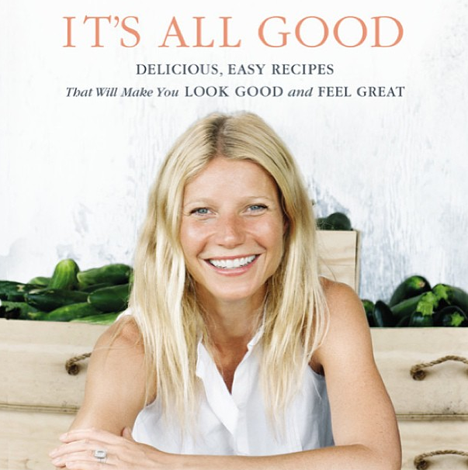
Oh, today we’re in for a treat! Gwyneth Paltrow this week releases her latest cookbook It’s All Good in Australia and – hoorah for us – I’ve been very lucky to be granted a sneak peak and an extract.
Perhaps she’s wearing makeup that makes her look like she’s not wearing makeup…either way, the shot is hot and fresh and pervily captivating.
Gwyneth and I are very much on the same page with food and lifestyle stuff and she contributed a recipe to my I Quit Sugar cookbook. You might recall her last cookbook, My Father’s Daughter, was a rippa…but it used sugar in the recipes; this time around, Gwyneth has switched most of her recipes to xylitol, rice malt syrup and stevia. We’re straddling a revolution, I tell you!
She’s also a fan of slow cooking. Anyone who follows my style of eating here will no doubt love the lamb tagine. The recipes are also hit with a “Vegan”, “Protein Packed” and “Elimination Diet” so you can choose your own adventure, with various modifications specified. Clever, hey?
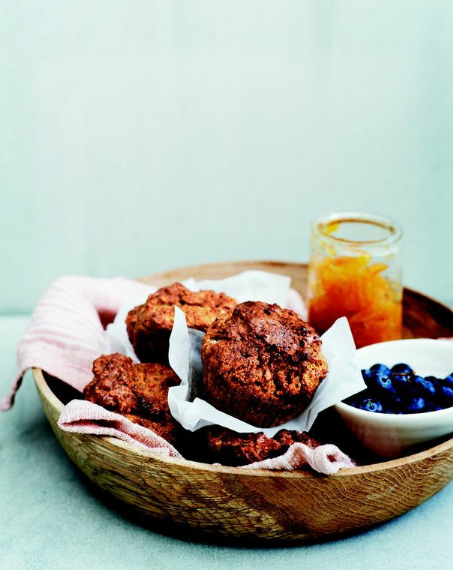
Gluten-free baking is not for the faint of heart. At first as we tested this recipe, we produced heavy or bizarrely textured muffins, but we finally hit the nail on the head with the perfect mix of ingredients. These muffins are super-tasty and are always a smashing success in my house.
Makes a dozen (vegan) muffins
1 large sweet potato
½ cup extra virgin olive oil
½ cup unsweetened almond milk
¾ cup xylitol
1 teaspoon pure vanilla extract
2 cups gluten-free flour (if the flour doesn’t include xanthan gum only add 1 teaspoon)
2 teaspoons baking powder
2 teaspoons baking soda
1½ tablespoons Chinese five-spice powder
½ teaspoon fine sea salt
Preheat the oven to 200 C. Prick the sweet potato a few times with a paring knife or a fork. Bake until soft (when a paring knife can cut through with zero resistance), about 1 hour. Set the sweet potato aside until it’s completely cool.
Peel the sweet potato, discard the skin, and mash the flesh in a mixing bowl with a fork. Whisk the olive oil, almond milk, xylitol, and vanilla into the sweet potato. In a separate bowl, whisk together the flour, baking powder, baking soda, five-spice powder, and salt. Fold the dry ingredients into the wet ingredients.
I have a dentist. His name is Dr. Ron Ehrlich from the Sydney Holistic Dental Centre. He gets it. He doesn’t eat sugar. He does exercise in the same way I do. He is actively engaged in the wholefood movement and shares more than just a fill-in with his patients. Over the years he’s shared some fabulously open-minded tips for wellness. I figured all my friends here would benefit from hearing them, too. It’s definitely stuff a dentist generally only shares with their friends…Over to Ronald…
Image by Greg Guillemin
1. Grind your teeth? Try to correct your breathing.
Ninety-five per cent of us don’t have enough room for the 32 teeth we have in our mouths. Not having enough room for your teeth means your airway is not as big as it could be and it’s now recognised that grinding is most often linked to “sleep disordered breathing” including snoring and sleep apnoea. So working on breathing through the nose helps for lots of reasons – including reducing the incidence and effect of tooth grinding, which results in premature wearing or cracking of teeth, broken fillings, headaches, neck aches or a sore jaw.
Which brings me too…
2. Forget mouthguards: tape your mouth shut at night. Serious!
Try using Micropore (3M) tape over your mouth….yes, I’m serious. You’ll be amazed how something so simple can make a difference. Using the 7-8 hours of sleep to practice breathing through your nose evens out your breathing and stabilises your body chemistry. And because it improves sleep and evens out your breathing, by that same reasoning it also helps reduce the grinding of teeth. [I tried four different – expensive – mouth guards, all of which didn’t stop me from grinding, before trying this tape method. It’s the ONLY thing that’s ever worked and costs a few dollars a month! – Sarah.].
3. Getting mouth ulcers? Avoid grains.
Mouth ulcers (aphthous ulcers) are a common problem. They are an autoimmune response. Try avoiding all grains for a few months. Grains produce a protein called zonulin (…look it up), that causes leaky gut that results in a whole range of autoimmune conditions.
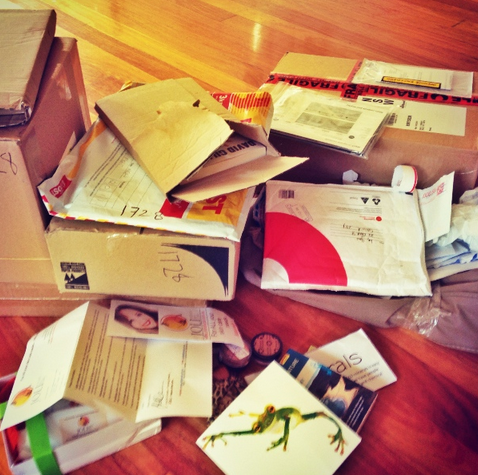
Take a look at the shot below. That there, my dear blog land dwellers, is my mail collection from one day. You’ll note it’s mostly parcels sent in expensive overnight bags and courier boxes. What you can’t see is the amount of guff inside the parcels (I don’t wish to expose culprits): elaborately written press releases, products, books, sugary snacks, padding, bubble-wrap, gimmicky invites (sand in a glass bottle?!) and…tinsel. What none of us see is the hidden costs: the labour, the resources, the carbon emissions to produce and cart such guff around the planet.
All of which gets me really upset.
Admittedly, the above represented a particularly large dumping. Although, most days entail carting at least 2-3 parcels back from the post office (please note: my physical carting of said guff is not the pivot point of my gripe).
Why does it upset me? I’d like to explain why, as a thinly disguised (and polite) message to those who might be thinking of sending me something some time soon.
In flat out terms: the above is a huge waste of resources. Unforgivably so.
Leaving aside the actual manufacturing cost of the product itself, there’s the work that went into the junior PR staffer writing the release (then getting it checked, legalled etc), the packaging, the postman’s time sorting and delivering the packages, the transport costs, the issuing of a notification in my box, the second reminder when I can’t get to the post office for a few days. And so on. All very well if the product is needed and/or useful. But in most cases it’s not. And these costs – specifically to the planet – devastate me.
Generally the sender doesn’t wear these costs. Their client does. And so there’s too little accountability or conscious thought going into the blind sending out of the guff. This is the unforgivable part.
In addition, it’s a huge waste of my resources. Every parcel in that shot above requires either a polite thank you note or a detailed email to the sender explaining I can’t promote the particular product they’ve sent me as it doesn’t fit with my message or ethics. Which in so many cases it doesn’t because:
I actively and vocally promote minimal consumption.
I get doubly upset that this ethos is not respected. Leaving aside the times the product in question is full of cane sugar or laced with toxic chemicals.
I’m going to soften the blow of my spray at this juncture by saying that often a lot of mindful care and
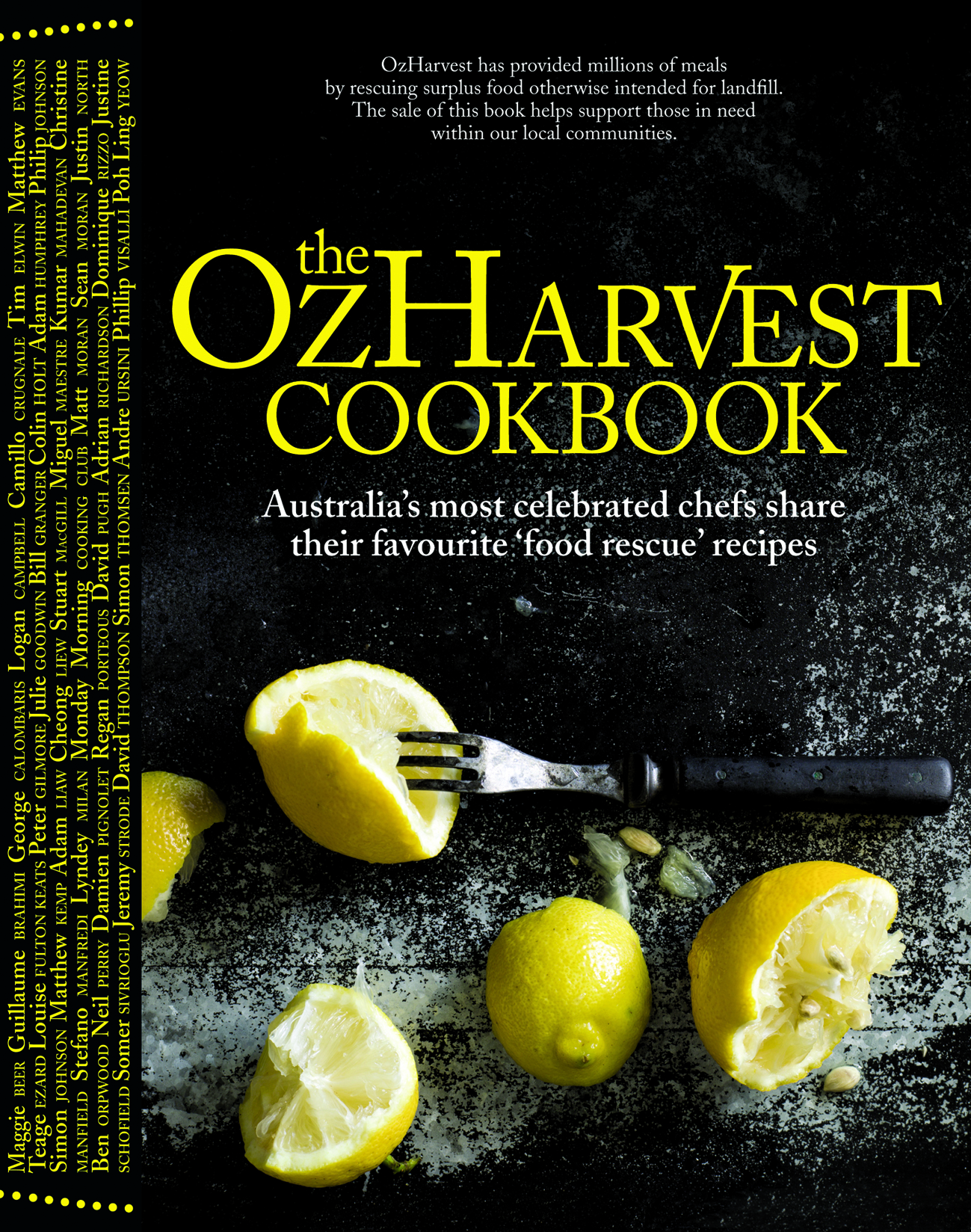
OzHarvest has released its first cookbook of “food rescue” recipes, which perfectly marries two things I’m passionate about: not wasting food, and creating simple meals with leftovers. I’ll be sharing a few of the recipes from the cookbook below, but also know this:
for every book purchased, more than 60 meals will be delivered to those in need.
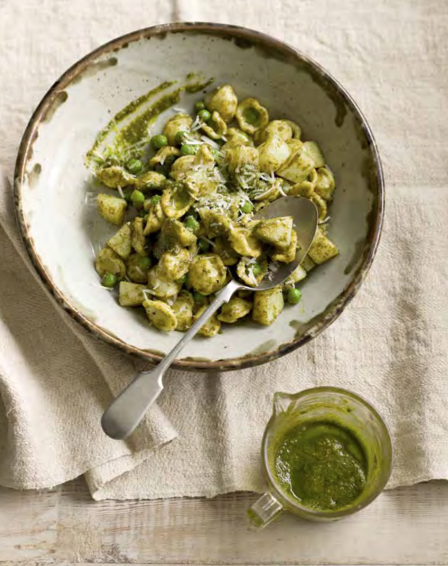
Neil Perry’s Orecchiette with potatoes peas & pesto, recipe below
There’s a great incentive to get the cookbook if ever I’ve heard one. You can buy the OzHarvest cookbook from David Jones’ stores nationwide, or from OzHarvest online.
Each year, $7.8 billion of food is thrown out and over four tonnes ends up as landfill (stats via Foodwise). And in any one night, one in ten people go without a decent meal. OzHarvest has been the conduit that links the two, picking up leftover food that would otherwise have been thrown out and delivering it to those who need it. OzHarvest has delivered more than 15 million meals and rescued more than 4,400 tonnes of food from ending up as landfill since 2004.
The cookbook includes 120 recipes dedicated to converting your leftovers into simply great meals for the family devised by 40 super chefs, including Maggie Beer, George Calombaris, Poh Ling Yeow, Peter Gilmore, Bill Granger and Neil Perry.
Her’s a peek at some of my favourites…
Neil Perry’s Orecchiette with Potatoes Peas & Pesto
Serves 4 (image above)
You can buy pesto or make it in the blender, but I promise that if you pound it by hand it’ll taste so good that you’ll never go back to the old ways. Pesto is perfect for using up wilting bunches of basil, and this recipe also uses last
I hope you all had a splendid Easter. Still in sugar shock? Resolute in your ambition to quit the sweet stuff after an indulgence fest? You might like to know that I Quit Sugar (the print edition) can be ordered right this instant, with FREE SHIPPING to anywhere in Australia (plus HALF PRICE shipping – … Read more
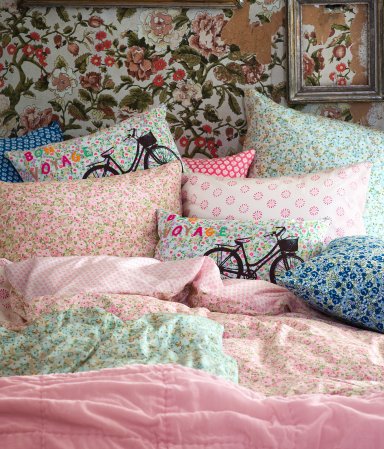
I struggle with sleep. It’s elusive stuff. It’s largely related to my auto-immune disease (although sometimes I wonder what comes first…). I’ve written about my insomnia here, and I’ve shared a bunch of sleep solutions you all sent in here. But at some point I had to look at my bed.
Image via Favim.com
I’ve been sleeping on a coil spring ensemble for 11 years. I’ve previously been told they ain’t great for you, especially for AI folk – they’re essentially EMF conductors. But I’m vocally and stridently against chucking stuff out just because a product no longer suits my principles or whatever. Thus, for many years it’s been a dilemma – replace or stay and burn?
But this is where I have arrived: my old bed is 11 years old and it’s generally advised you should replace a coil spring mattress after ten. Plus, I need a guest bed (my coil-y one will move into my spare room). All of which- now that I’ve weighed up the various factors – has given me a green light to get myself a new bed.
Please note: In this My Simple Home series I implore you to weigh up your own predicament at every turn as I have above. Please don’t chuck stuff out other than as a carefully considered last option.
I have researched my options for several months now and the Big Fat Conclusion I’ve arrived at is that…
a latex mattress with a wooden slatted base is best.
And just so you know, this is a sponsored post, but opinions are all my own and I researched the topic and approached The Comfort Shop myself. You’ll find my position on sponsored posts and advertising here.
So why latex?
It’s 100% natural. Latex – despite the scientific-y name – comes from latex vessels under the bark of the rubber tree. Which means…
It’s best for your health. Latex is hypoallergenic so it’s great for allergy sufferers or for people who suffer from hay fever, asthma and respiratory problems.
Oh, and it’s also anti-microbial. Rubber trees have a protective anti-microbial “milk” to protect it from damage. The milk forms a protective layer to
I think some of you noticed on my social media outpourings recently that I visited an abattoir in Tamworth. I want to explain why. And how. And what I came away with. For it was a deeply emotional and BIG LIFE thing to do on a sodden Friday afternoon. I hope I can fairly reflect it all here.
This is a paid role. But my opinions in this blog are my own. And I should highlight that I approached the organisation myself – for information – in the first instance.
This topic – meat eating and sustainability – matters massively to me. And I’ve been on a mission to get my head around the issues and the challenges that we all face – whether we eat meat or not.
So why go see an abattoir?
Because I want to make sure I really get what’s going on. If I’m going to rant on the topic, I have to see the full picture. This is where the world is at: we want transparency (because a troll or two will trip us up if we deliver anything but).
The Target100 crew asked if I’d like to see how the whole meat production picture works here in Australia. I said, “Right up I do”. And so we headed to Tamworth. To visit breeders (the Sprys farm), feedlots (where a lot of our supermarket meat comes from), the paddock-to-plate restaurant Graze (this place is worth a stop-off if you’re in the area…they grow, butcher and age their own meat and really know how to grill a rib eye steak), and the Teys Australia abattoir – or processing plant as they prefer to be called.
I can tell you, I’ve never seen anything like it.
Eat meat? Then you must explore.
If you eat meat, it’s unconscionable not to explore where it comes from. Equally if you don’t eat meat. For a vegan diet also relies on meat. Where do you think the fertilizer comes from to feed your soy and grains?
As a relevant aside, my food philosophy is squarely about sustainability.
We can care about organic v local v grain-fed v pasture-fed v farmer’s market-selected v supermarket-bought. But really, the discussion we need to have is about sustainability – both of the planet and its food systems, and ourselves. Because the reality is there simply ain’t enough food – meat or otherwise – to feed us all. I’ve spoken to