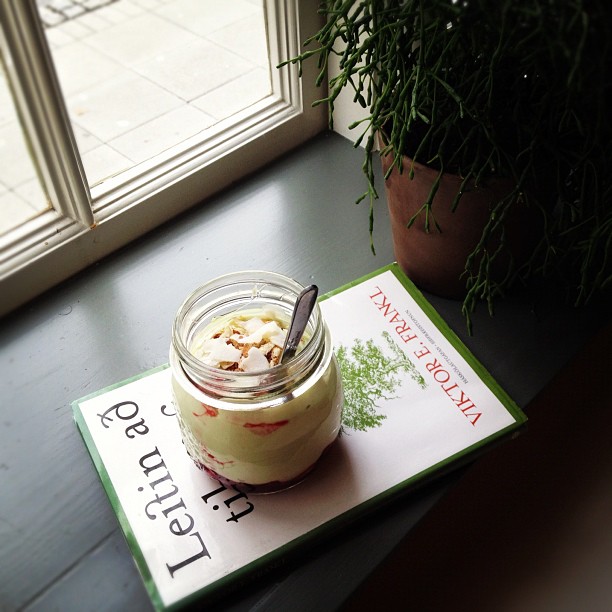
Iclandic skyr, avocado + coconut breakfast mousse!

I’m in Iceland and the food here is sublime. The country has totally rallied around their earthy, fishy roots and is producing phenomenal stuff, even in tiny little hotel restaurants in towns with populations of 200. The slow food movement here is very active. And there’s a heavy focus on organic, farm-to-table, clean food. I’m in a very specific heaven.
876eb5bae85511e195f322000a1d0ce4 7 Iclandic skyr, avocado + coconut breakfast mousse!

I met with the mover and shaker in the Icelandic Slow Food movement – Dominique Plédel Jónsson – and she gave me the full rundown on what and where to eat around the entire country. You can get more information on their facebook page, or look at their facebook group.

One of the classic products here is skyr, a cultured curd cheese made out of cow, sheep or goat milk. It’s like a slightly thicker and creamier yoghurt – very much like my homemade cream cheese – and brimful of great cultures.  I’ve been eating it like crazy. One cafe – Cafe Loki – makes an “ice cream” from it, mixing a fermented rye with skyr into a creamy mush. Oddly, they eat it on the side of a plate of herring. I’ve eaten skyr mixed with foraged berries as a dessert. And as a spread on toast. Much like my cream cheese.

The Slow Food Foundation for Biodiversity’s Ark of Taste cites two Icelandic products: the local goat and the traditional skyr. The original recipe – and culture – is in the hands of few (like, three producers). Special stuff.

Anyway. The other day I ate it at Aldin, a great Slow Food cafe in Reykjavic. It was mixed with coconut milk and
Read more

Take time: the Ikarian lesson that’s changing my life

On my last day in Ikaria Thea took me aside in her kitchen as I was making my morning mountain tea in a little tin pot on her gas stove and she was heating up the goat milk. “Sarah, I need to ask you one thing. When you go back to Australia and you’re busy and in your life, promise me you will remember one lesson from Ikaria. The most important thing you’ve learned here, try to remember this each day.”

ccbee940de1511e1920522000a1cdf49 7 Take time: the Ikarian lesson that’s changing my life

The most important thing. I knew what it was.

It’s best explained by this very Ikarian phenomenon which I touched on briefly here. Every day on every tiny, winding road, wide enough often for only one car, Ikarians pass by someone they know – on the street or in another car- – stop, wind down their window and chat. Animatedly, passionately and with love.

Traffic will bank up in both directions. But the other drivers never honk. They wait patiently, happily. Because this is what is done in Ikaria. It’s truly bizarre and took me a while to appreciate. I’ve been in the car and on the back of bikes many times when this has happened. I can’t understand what is being said during these middle-of-the-road chats. But I get the vibe and I’m told later what the gist was.

Traffic isn’t held up for gossip. The chat instead is more often to engage in the welfare of the other person. And it will continue for as long as it takes to connect with the other person and to convey one’s care. I’ve watched it many times now. It’s beautiful to observe. I’ve seen it in the street, too.

Two men will approach each other and hug. Really hug. And then hold each other’s arms and look into each other’s eyes and smile. They chat, they chat, they chat. Another hug. A big grin. And then off. “Ah! That’s my cousin. We haven’t seen each other since one month.”

The take-home, sound biteable lesson from this? The most important thing I will remember every day back in Australia?

Take time. Give the time required.

This is not the same as taking your time. As in relaxing, or going siga siga (slowly, slowly). It’s more than this.

Read more

have you missed the point of this life joke?!

I need to share this. But first some context. While in Ikaria I stayed at Nas Beach where, perched on the cliff overlooking the beach, is Thea’s Inn. Thea is a delight and looks after anyone who comes into her orbit. More on her and her inn soon… but you can learn how to make her soufiko here.

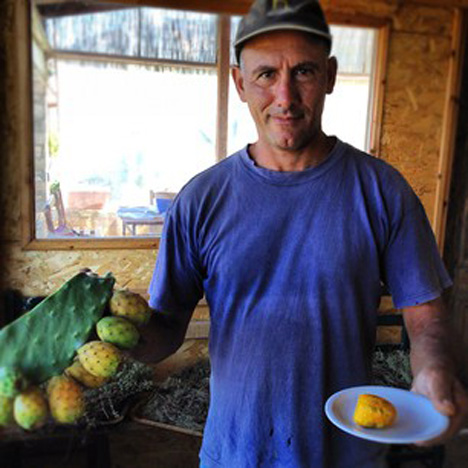
Meantime, Elias is Thea’s husband. A farmer who brought me his goat milk each morning while I was in Ikaria. And cactus fruit. And cucumbers. And always knew when I was about to walk into Thea’s for dinner. He walked outside to greet me, often with a wisdom perfectly suited to my mood.  He’s somewhat psychic. Deeply heart-based.

f09d8a4adbb511e1a0c81231380ff428 71 have you missed the point of this life joke?!

Elias told me this “joke” while he drove me to put petrol in my motorbike the other morning (I’d run out and hitched home the night before). We were screaming along a dirt track and he was yelling back at me in his broken English:

A simple Greek fisherman finishes his day at the taverna and is drinking some Tsipouro (a Greek grappa). A German (it’s always a German in these Greek jokes) leans over and says, “Why only catch two or three fish on a single line when you could catch more… and with the money you earn you can buy a boat? It will make your life easier.”

The Greek takes things on board and the following year both men are drinking in the taverna at the end of the day and the German leans over and says, “OK, I see you’ve bought a boat. You’ve been successful. But why only one? Fish some more and buy another. And get some workers. You will become very successful. Life will be better.” It goes on for a few years in this way.

Finally, the Greek is drinking and socialising in the taverna and the German is back once more for his annual holiday. He says, “You’re here all day now. Why are you sitting around socialising all day. You should be out working!”. The Greek looks at the German incredulously and replies, “But wasn’t this the whole point?!?”

Yes, the whole point! Isn’t the whole point to work hard and do all the right things so you can stop and rest? Why would you do it otherwise?

I love this.

The tragic and telling German/Australian/American/(insert uptight nation of choice) ending, of course, would no doubt see the fisherman no longer able to enjoy a Tsipouro at the end of the day because he’s too stressed and busy managing his fishing fleet and staff.

This is the sad reality for many of us. It has been for me for 30-odd years. We lose sight of something so simple.

Read more

How to live to 100: eat no sugar

I’ve been sharing a few posts on why the people in Ikaria, Greece, live so long. Why it’s a “Blue Zone”. You can catch up here and here on the gist (and there’s more to come). The really big question that dangled during my stay here, however, is where’s the sugar issue sit in all of this?

In his bestseller The Blue Zones, Dan Buettner really doesn’t tick off the issue, but he was pretty keen to hear about my thoughts on sugar and longevity while we were in Ikaria and we debated it – robustly – over the week. I outline things in these two videos that Dan’s National Geographic team shot with me:

[youtube]http://www.youtube.com/watch?v=I7XPaAf84r8[/youtube]

[youtube]http://www.youtube.com/watch?v=0c-RktgF1F0[/youtube]

In short, the people here do eat sugar.

Today many put 1-2 teaspoons of sugar or local honey in their coffee or frappes. And they can drink several of these a day.

They also eat honey. They advise a teaspoon of their thyme honey in the morning on an empty stomach. You then eat something a good hour after that. They also eat yoghurt with honey, as well as “sweet fruits” – whole fruit jams made from sour cherries.

But several things:

  • Traditionally, sugar has been a treat, consciously eaten and honey was a delicacy, consumed in small amounts.

Read more

how to make breakfast fava

Here’s a really simple dish that I ate in Ikaria many mornings for breakfast. Because why not? And aren’t we always after a new breakfast idea?

41cd0b06e17011e189de22000a1e95dd 7 how to make breakfast fava
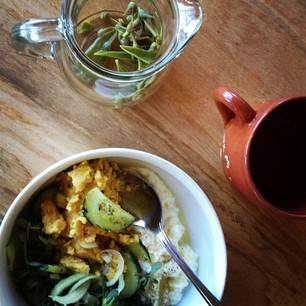
Fava with some cucumber, purslane, feta and mountain tea: a perfect breakfast

Fava is essentially pureed yellow split peas and is served as a meze or side dish. But I found it a super day-starter. (Note: Greek fava is not the same as fava beans…confusing, I know.)

I’m not a big fan of eating too many pulses…they are quite hard to digest and the phytic acid and other toxins can be rough going for folk like myself with digestion and autoimmune issues. Which is why I make my own sprouts.

But while I was in Ikaria, my health was so good that I read my body and knew I was fine to eat some beans. This is how I work. Feel how my body is feeling. I don’t like food rules.

Fava is super cheap to make. You can store it for some time in the fridge and it can be eaten cold or warmed.

I like it with some yoghurt, cucumber and olives. Or feta. And always serve with chopped onion or eschalots and

Read more

Aspiring journalist? Blogger? Writer? you might like this free event

Media is in trouble. There are 29384792387 Communications graduates competing for the three jobs still going in the industry. Which are generally taken up by the girl whose Daddy is mates with the CEO. Right?

MediaTalksFeatureImageWeb Aspiring journalist? Blogger? Writer? you might like this free event

Without a doubt the media landscape has changed in the past few years. And if you’re a hungry communicator things could be looking bleak. How to get a toe in? Should you give up now and become a corporate lawyer? And blogging – how the bloody hell can you make a living from it?

Good questions. Big questions. And the fact the answers are so elusive is why my good friend Faustina Agolley (you might know her as Fuzzy from such programs as The Voice) has put together Media Talks, a public event where a few wise old media souls will be sharing their advice and answering the good big questions.

Fuzzy and I spoke ages ago about how we truly feel for everyone trying to get ahead in the game today. We know, because we found it tough back in our day. And we both believe if you have knowledge that can help others, then it should be shared. Fuzzy is a girl of her word and has put together this event.

The Event

Media Talks:

A Panel Q and A with Faustina Agolley (TV Presenter), Auskar Surbakti (Journalist, ABC), Darren Rowse (Problogger, Renown as Australia’s #1 blogger and most influential Twitter user), Sarah Wilson* (Journalist, TV Host and Blogger) *Appearing via Skype, Megan Miller (Features Writer, Herald Sun) and Rachel Moor (Television Executive Producer)

When: Thursday August 30th, 6pm for 6.30 start – 9pm finish

Where: Rokeby Studios, 90-94 Rokeby Street, Collingwood, VIC

How to apply: Free registration online here. (Registrations close Wed August 22nd)

Just a heads up: the event is geared at those about to enter, or are attending university. But all are welcome to take part!

Get your questions answered

This is the good bit. Faustina is inviting everyone – even those who can’t make the event – to submit their questions now … which will then be answered by us all on the day. You can do that here.  

Read more

live with your rags

I’ve just finished reading Henry Miller’s The Colossus of Maroussi – one of the finest travelogues ever. It chronicles Miller’s year out travelling around Greece just as World War ll broke. He describes Greece with such fondness.

6c4e57a2d89e11e1b5561231380f91a6 7 live with your rags

It echoes where I’m at. I’ve been to Greece three times now – the first time was 20 years ago. I had no money and I hitchhiked all over. Old men on the islands gave me food. I hiked. I swam. I ate. I was 18 and lost and philosophical and seeking life. I came, again, 10 years ago, with my partner at the time. He’s Greek-Australian – from Kythera – and the experience was much the same. No, the sensation was the same.

Each time I’m here I feel a pounding connection. Like the place grabs me from my insides and says, “Hey, sit down a while. You’ve arrived safely.”

What is it exactly about the place?

It’s the light. It’s honest and raw. And the smells. The wild thyme, fig trees and mountain herbs, the brine of the sea, the dry-earthiness of the heat hitting dust and rock. It stirs something inside, something that yearns to be freed and expressive. And yet it doesn’t demand the expression. You can just sit quietly with it.

It says, “this is how life is meant to be”. This is why history is preserved here and the Greek ethos remains unmoved: life arrived and stayed.

Millar’s reflections on Greece very much mirror my own. He arrived in Athens in a heat wave and during a time of incredible poverty; the day I stepped into Syntagma Square it was 47 degrees. The country has just had a whopping 40 per cent cut to wages and families are starving all over the country. Miller was taking time out from writing for the first time in years; ditto me. Miller travelled with few possessions, ditto me.

“I’m glad I arrived in Athens in during that incredible heatwave,” he wrote. “Glad I saw it under the worst

Read more

How to Live to 100: eat pork

During my time with the Blue Zones/National Geographic team, I had the highly satisfying experience of having something that I do instinctively, passionately and naturally confirmed as A Good Thing.

How to Live to 100: eat pork
Ikarian lemon pork…and the rest

I learned that eating pork can make you live longer. Or, more scientifically, one of the dietary staples that the various communities in the Blue Zones around the world had in common is pork – read more on that here.

Pork is a protein-rich substance that clears the skin, protects the liver, detoxifies the lungs, even cleanses the system of cholesterol. Okinawans – lauded as the longest lived people on the planet – are the only Japanese to eat pork. The Japanese as a whole do not rate high on the life expectancy stakes. Only the pork eaters.

Dan Buettner and I talked a lot about meat consumption. He’s a reticent meat fan. But I think we agree: meat is great. But eat more… and less (see below), is my mantra.

Dan says:

“Pork is interesting. It’s an anomaly and I would not have guessed it, but I can’t deny it. One Okinawan scientist studied this. His theory, and I’m not sure I agree with it completely, is that because pig is the most genetically similar to humans, there’s something in the pork protein that helps repair arterial damage. What he cites is that in America we die of heart disease and the Japanese tend to die of strokes, but in Okinawa they have fewer strokes. This is part of the reason they live longer. The doctor theorizes that it’s because they eat more pork than any other prefecture of Japan, and pork protein serves almost as caulking.”

This trip I’ve celebrated pork everywhere. I’ve craved it, my body has benefited almost immediately from it, I’ve been thoroughly grateful for it. In Spain it was Iberian pork – roasted, as a prosciutto type tapas, as salami, in

Read more

A slow food and hiking guide to Provence

I passed through France a week or two back, specifically Provence. Embarrassingly, Peter Mayle is responsible. I stumbled on one of his Provence books as I was deciding where to head after Spain and followed the “sign”. I had a perfect time there. A splendid blend of comfort and rusticness and, as always, a focus on food and hiking, in a slow, considered “This is What Life Is Meant To Be About” way. Je mange, je marche. Je pense.

8b8150acc81811e1a8761231381b4856 7 A slow food and hiking guide to Provence
The prettiest breakfast at Les Rosees

What area did I go to cos Provence is rather large? Cote d’Azur…the mountains behind Nice and Cannes. The area is a wonderfully smelly place – nearby Grasse is where the book Perfume is set. Also, a psychic once told me I belonged in this mountainous area. I remembered this as I deliberated… so, Bam! That’s where I was to land.

Isn’t Cote d’Azur glitzy and bit “white chinos”? Yep, but head just an hour inland and it’s the most fabulously rustic, artistic region around (film stars, artists, poets have all converged on this area over the years).

Any tips? Hire a car so you can see different areas. And hike. Because boy are there some views! And rewarding foodie experiences on the other side.

Oh, and also… As life would have it, JUST as I set off from Spain, I was contacted by Mr and Mrs Smith*,  a luxury-with-edge company that sets folk like me up with unique hotel experiences. Folk like me? Yeah, people after places that put care into their food, into providing an authentic experience with a “story”. They have a number of great properties in Provence from which to base an eating and hiking adventure.

But, now, once again, a list of highlights, should you like to follow in my hiking shoe-steps.

Mougins

  • I stayed at Les Rosees. Can I tell you…you should, too. And I will be again.

Not just for the authentically decorated rooms set in a 400-year-old stone homestead. Not just for the view out over the garden and lavender fields. Nor the silence. Nor the chemical-free pool.

Read more

A Friday giveaway! 6 chia seed packs worth $162

Another Friday, another wholesome flinging out to you of some damn good food stuff! This time it’s some of my favourite little packages of goodness: chia seeds. Yes,

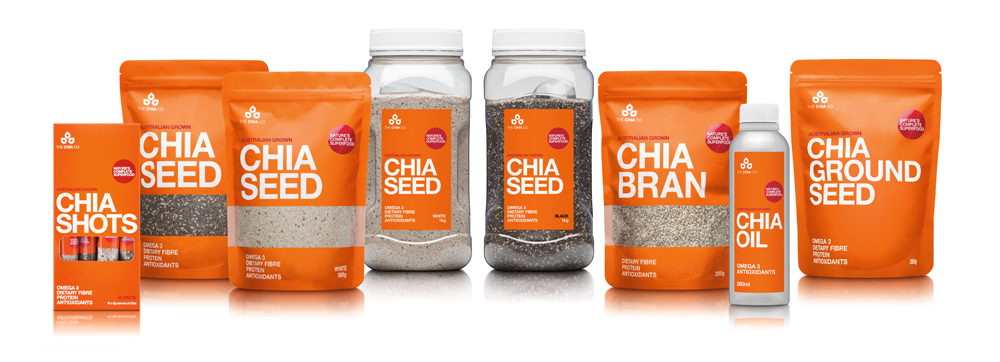
Chia Seed Co are giving away 6 x chia seed “runner’s packs”, each worth $162

Screen Shot 2012 08 02 at 7.16.35 PM A Friday giveaway! 6 chia seed packs worth $162
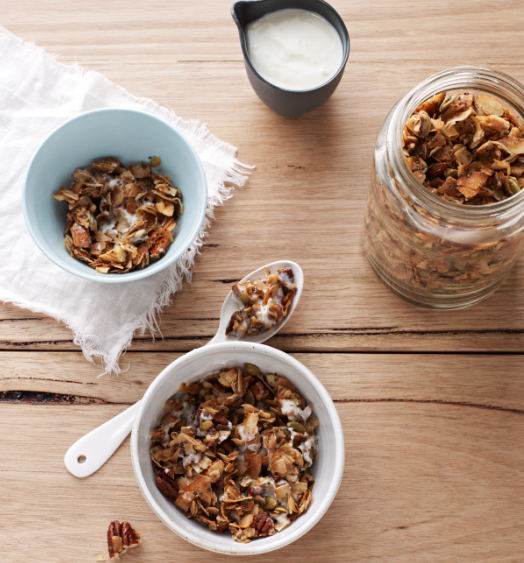
Coconutty granola
Photography by Marija Ivkovic

Chia seeds are a source of many vitamins, minerals and fats, and are higher in antioxidants than blueberries. I’ve written about them here. They also provide oodles of energy. Forget energy goobs. Ancient Aztecs carried chia seeds as food when they went into battle. And modern Tarahumara Indians, who are accustomed to running for days at a time, carry ground chia seeds as sustenance for their long runs.

They are one of the key ingredients in my I Quit Sugar program and feature in a stack of recipes in my I Quit Sugar Cookbook. So I’m guessing a few of you wouldn’t mind a stash for creating some of the recipes, like the one above?!

Chia group email A Friday giveaway! 6 chia seed packs worth $162Each Chia Seed Co “runner’s pack” includes:

  • a 500g pack of white chia seeds
  • a 500g pack of black chia seeds
  • a recipe card
  • a copy of Born to Run by Christopher McDougall
  • a 2XU running singlet
  • six months’ subscription to Runners World

I personally use Chia Seed Co white and black seeds, as well as the chia bran for my grain-free porridge in the winter. And, as you might recall, I carry a few chia “shots” when I’m travelling, to sprinkle on breakfast, in smoothies, on my dinner…to keep me regular and healthy.

Also, I have to say that McDougall’s Born To Run changed my life. It’s a cracking yarn and motivated me to start running in shoes without padding. Seriously, it’s the one book I’ve passed around to loved ones most (admittedly, loved ones who like running!).

To be in the running (haw, haw!)  for this giveaway, simply:

Read more