cooking sugar-free with xylitol

As many of you who follow the I Quit Sugar journey know, my preferred sweetener is rice malt syrup and stevia for a number of reasons, which you can catch up on here. But I’ve also mentioned before that xylitol is one of the very few safe sugar alcohols and works a treat for baking.

Our I Quit Sugar friend Nat Kringoudis is a xylitol fan, and I’ve asked her to share why this is the case, plus a few very pretty sugar-free recipes from her new book Eat Fat Be Thin. Go Nat!
Screen Shot 2012 11 06 at 10.59.20 PM cooking sugar-free with xylitol
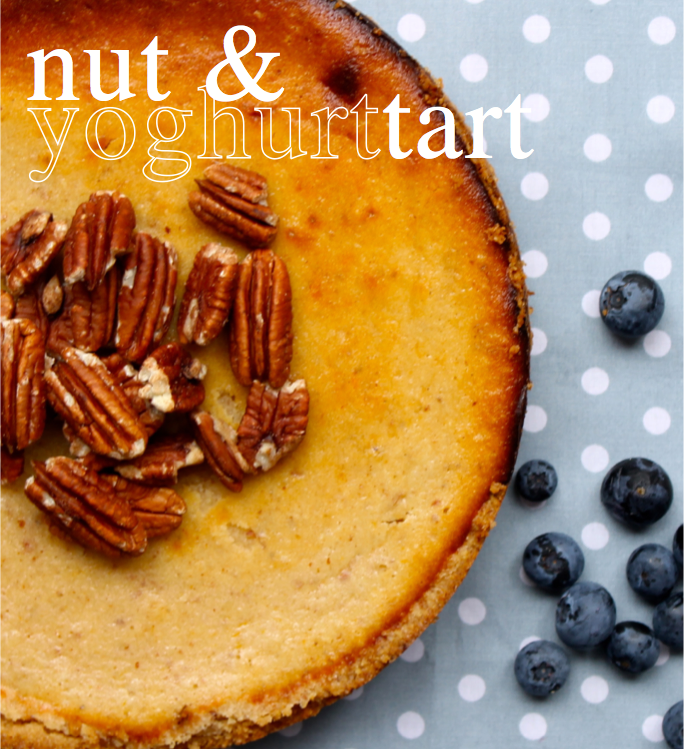
Nut and yoghurt tart, recipe below

Nat is an acupuncturist, herbalist, natural fertility educator, writer, blogger and natural health expert…and mum!… and has often helped us with our I Quit Sugar programs, most recently helping to answer questions on our I Quit Sugar Facebook page program. Nat has been following I Quit Sugar from the start, and also lives sugar free. In her new book, Nat has joined forces with Andi Lew to inspire women of all ages to be healthy by eating plenty of healthy fat.

Nat says: Xylitol is another alternative to sugar and artificial sweeteners, and may be used safely in small amounts. Derived from the birch tree:

  • it is widely used in chewing gums as it inhibits bacterial growth and reduces the incidence of cavities.
  • it tastes exactly like sugar, and is especially good for diabetics and those who are hypoglycaemic.
  • it’s safe: a 1986 study verified Xylitol’s safety and it received the highest and safest ADI (acceptable daily intake) rating.
  • it can be purchased from health food stores and you can use it as a sweetener in drinks and baked goods.
  • it has 40% less calories than sugar.
  • it’s also plant-derived, which means it’s natural, unlike aspartame, which has been known to be carcinogenic and affect the digestive system.

Xylitol like anything is really safe in small doses and like with all our recipes, these were created as ‘treats.’  Xylitol in larger doses (more than 50gm per serve) may have a laxative effect, just like many fruits would – so be aware that overdoing may see you visiting the loo more than usual! There are no other reported problems associated with xylitol in healthy doses – and like all foods we encourage our readers to eat a variety of fresh whole foods.

Nat has also shared two xylitol recipes from her Eat Fat Be Thin book.

Nut and Yoghurt Tart

Read more

45 tips for saving $1036

Last week I chaired a food wastage forum – Whatever Happened to Waste Not Want Not – as part of the Sydney Festival. It was a joint initiative of Target100, a beef and lamb industry sustainability program, and EPA’s Love Food Hate Waste program (I’m the ambassador to both). The forum raised so many points, the aim of which was to encourage everyone in the audience to reduce their waste by 50 per cent.

Screen Shot 2013-01-18 at 11.54.02 AM

A few factoids for you:

* By 2075, there will be 3 billion more mouths on the planet to feed, requiring 70 per cent more food than is available now. We can’t feed the planet now…what the hell are we going to do?

* The BIGGEST environmental issue facing the planet right now? According to many experts it’s food wastage.

* More than 50 per cent of all food produced doesn’t make it to our gobs. It’s wasted at the farm, in storage, transport, at the supermarket and then in our homes.

* The BIGGEST wasters in that cycle? Consumers. Yep. We toss out 20-50 per cent of our food each week. The average Australian household wastes $1036 worth of food a year.

* And the WORST offenders? 18-24 year-olds and those earning more than $100K a year. The young and the rich!

* Australian farmers, in particular meat farmers, have some of the most sustainable practices in the world. A meat-inclusive diet (as opposed to a vegetarian one) is the most sustainable here in Australia. I’ve touched on why here, but will be posting more on this soon.

At the forum, we asked everyone to try cutting their food wastage by 50 per cent. Totally reasonable. The European Parliament has resolved to reduce food waste by 50 percent by 2020. About 60 per cent of all food waste is entirely avoidable.

And we asked people in the audience to share the tips (from us on stage and their own) on Twitter on the hashtag #wastenot. The hashtag #wastenot went viral, and trended in Australia, and there are some fantastic tips on the tag. I’ve shared some here, but for more, simply do a little read through on the hashtag.

Screen Shot 2013-01-18 at 10.55.29 AMScreen Shot 2013-01-18 at 10.55.44 AMScreen Shot 2013-01-18 at 10.55.52 AM

For more tips, here’s how to eat your scraps.

Read more

yes, I eat fruit. and, no, I’m not misleading Australia.

You might have caught last night’s A Current Affair segment on the telly about sugar? I popped up as a sugar-quitting expert, along with my mate David Gillespie. However, I was used mostly as a voice of extremeness via some quotes I’ve made to ACA journalists previously, repackaged in rather extracted form. In particular, I was presented as being anti-fruit. You can catch the clip here.

Image by stephaniegonot

A few people today have got outraged on my behalf (fired up that my quotes seemed to be placed out of context), or just outraged that I would diss fruit. I don’t tend to get upset by these kind of things. ACA presented an interesting take on the subject. And besides, how splendid! I now have a great opportunity to clear things up nice and crystal-like.

1. I eat fruit. One of the ACA grabs sees me listing the high-fructose fruits, as requested by the journalist at the time (during an interview a while back). I recommend eating the low-fructose fruits where possible: kiwi, berries, grapefruit and so on. If you’re doing my 8-week program, I advise cutting out fruit for 6 weeks. This is to break the sugar addiction and to recalibrate our bodies, just for that short period. I then, at the week-7 mark, invite everyone to reintroduce fruit and read how their bodies take to it.

2. I make the point over and over, based on the only comprehensive research I’ve found (by the American Heart Foundation):

we are only able to handle 6-9 teaspoons of sugar a day. Which is about the amount contained in 2-3 pieces of low-fructose fruit.

Many experts in this area – cardiologists, endocrinologists and nutritionists without vested interests in the sugar industry – confirm this amount as being appropriate. I personally find it’s the amount my body can handle before I start to feel the effects.

3. If fruit is your only source of fructose in a day, then 2-3 pieces of fruit is fantastic. If fruit is treated as a treat…which is how I was raised to eat it, and our parents and grandparents were raised to eat it…then bloody fantastic. But do you eat fruit as your treat? Do you eat fruit instead of chocolate or ice cream? Or as well as?

4. Know this: fruit today is MUCH sweeter than it was only two generations ago. They’re being bred this way because

Read more

Hello! A Sydney I Quit Sugar book signing!

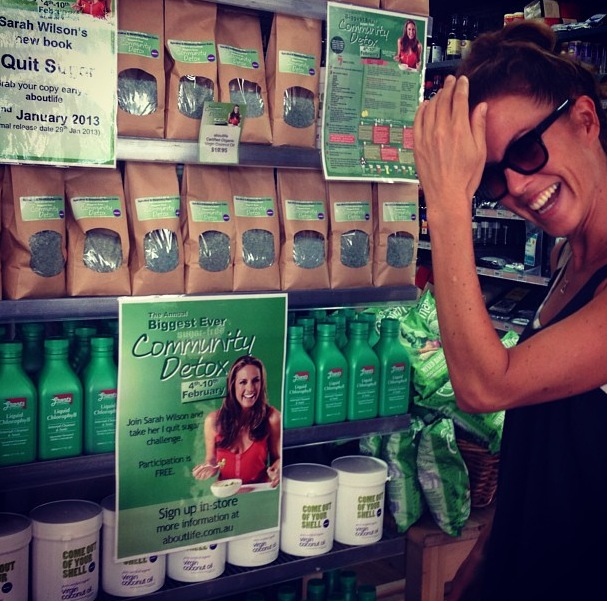
Just a quick note for a Friday. I’m chatting all things IQS and signing copies of my I Quit Sugar book at aboutlife Monday February 4, as part of their biggest ever community detox week…which you might just like to sign up to.

photo
I visited aboutlife Bondi Junction at the weekend, only to find that I was already there. Everywhere!

Let’s cut to the proverbial chase:

Where: aboutlife, 605 Darling St, Rozelle

Date: Monday February 4

Time: 6:30pm

Cost: $40*

* Forty bucks includes a copy of my brand new I Quit Sugar print edition book (valued at $34.99), and samples of some my I Quit Sugar recipes, prepared by the aboutlife kitchen for the night. I’ll also be sharing some of my top sugar-quitting tips and tricks. And just milling about having a nice time.

Read more

my simple things

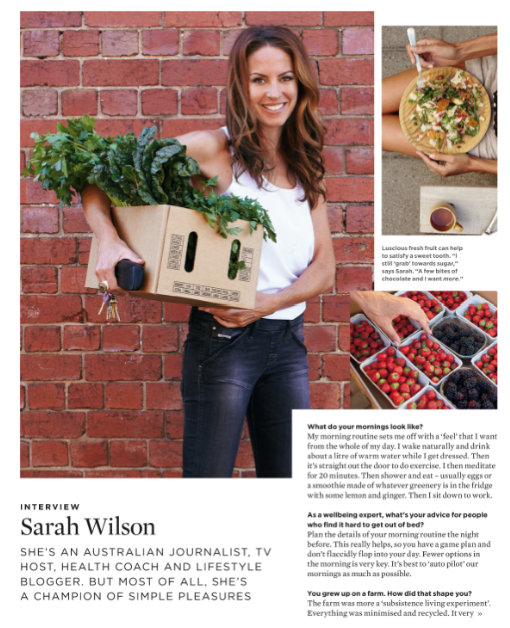
Simplicity is going to be a big theme in many people’s lives in 2013. Just you watch. UK magazine The Simple Things recently interviewed me on how I make my life simple and it appears in this month’s issue.

Screen Shot 2013-01-10 at 12.14.04 PM

If you don’t get around to grabbing it, how about I help you out. These are a few of the ways I keep my life simple, as I shared with The Simple Things:

1. I stick to my morning routine. It’s probably the best thing I do for myself all day – it sets me up and sets me off with a “feel” that I want from the whole of my day. I wake naturally and drink about a litre of warm water while I get dressed. Then it’s straight out the door to  do exercise. I exercise every day, but it’s not a militant thing and I don’t push myself. It might just be a 20 minute walk and stretch. I do yoga, swim, walk or run once or twice a week. I mix it up according to the weather and my mood. The “doing it every day” bit is what counts. That way I don’t deliberate with myself whether “today is an exercise day” or not. Less options in the morning is very key. Studies show we have limited decision making energy – also that decision making depresses us – and that it’s best to “auto pilot” our mornings as much as possible so we can eliminate as many angsty choices. I then meditate for 20 minutes. Then shower and eat…usually eggs or a smoothie made of whatever greenery is in the fridge with some lemon and ginger. Then I sit down to work.

2. I meditate.  Meditation “forces” me to connect with the simplicity of “what is”. I’m a very cerebral person and the simple act of sitting and getting really – let’s face it – bored, brings me back to what it’s all about.

3. I don’t go to the shops. I grew up on a farm, which was more a “subsistence living experiment”. Everything was minimised and recycled. It very much instilled a visceral abhorrence of waste and consumerist culture. We simply didn’t go to the shops and as an adult I’ve come to realise that this very simply idea – just don’t go to the shops – is perhaps the most effective approach to having a simple life.

Read more

I’m an insomniac, get me out of here

You haven’t really lived until you’ve experienced insomnia. As in, really felt the darkest, loneliest, nothingness core of existence that really only strikes around 4am when sleep eludes and sunrise is an hour away.

As in, descended to such a pit of wall-punching, stomach-clawing despair, and then risen again as the currawongs emit their forlorn caw, thoroughly aware of every fibre of yourself, the person next to you, the neighbours, and, in fact, all of humanity. Honestly, I feel closer to insomniacs than good sleepers because of the shared experience of this particular despair.

Image by Julia Fullerton-Batten

Image by Julia Fullerton-Batten

I’ve been an insomniac since I was 21. Actually, I was eight when I first became scared of the night – not of the dark, but of the task of switching gears to sleep. When I was 21 insomnia sent me mad. I was living in Santa Cruz, California, and….oh, there were things going on…and I wound up spending five months grabbing no more than 3-4 hours a night. They were the good nights.

Most nights it was a 15 minute snatch of delirium around 5am. Fifteen minutes in which I was able to give in to the night. Or, rather, the dawn. It was anyone’s – God’s? – guess as to whether I even got that snatch. I was at the mercy of…God? Fate?

This kind of vulnerability is particular to insomnia. You’re imprisoned, defenceless. You can’t control your destiny. You’re denied the freedom to “turn on sleep”. And why? A reason doesn’t seem to exist. And so it all seems so unfair.

At 4am you oscillate between anger (“This is unfair”) and grief (“I must have done something terribly wrong to deserve this”) and loneliness (“What am I missing? What handbook to life didn’t I get???”).

The extent of the madness back when I was 21 is for another story. Suffice to say at the end of the five months I no longer functioned and George, a loved one, came to collect me and take me home. I got my first auto-immune disease off the back of this, actually.

Read more

7 ways to cook with five ingredients or less

I e-met Jules Clancy just recently. She has a degree in food science, lives in Cooma (not far from my home town) and blogs about how to make great meals using less, and in less time, over at The Stone Soup. A noble aim! The girl is on my page!

Screen Shot 2012 11 29 at 10.47.08 AM 7 ways to cook with five ingredients or less
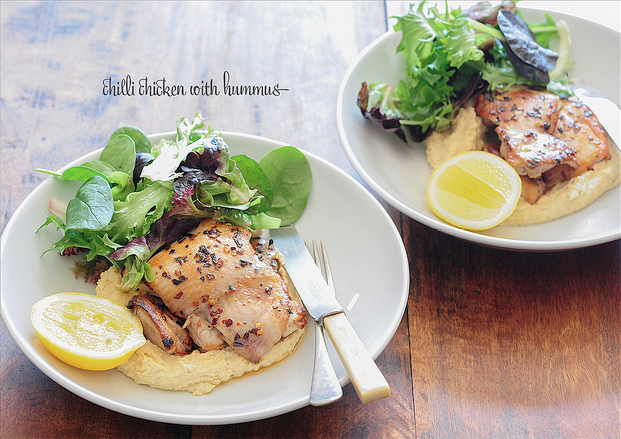
chilli chicken with hummus: see the recipe below

Today I’ve asked her to share her favourite tips for making cooking dead simple and brimful of nutrition. Over to Jules!

1. Use five ingredients or less.

On my blog and in my books I pretty much always stick to a 5 ingredient limit.  Of course you don’t have to go that hard core, but keep an eye out for recipes with few ingredients, like my chilli chicken with hummus.

Chilli Chicken with Hummus

From The Tired & Hungry Cook’s Companion

Hummus is one of my favourite ingredients. It’s wonderful here as a cross between a sauce and an accompaniment. You can get some decent commercial hummus these days so don’t feel like you need to make your own from scratch.

enough for 2

  • 4 chicken thigh fillets
  • 1 teaspoon dried chilli flakes or powder
  • 8 tablespoons hummus
  • 2 large handfuls washed salad leaves
  • 1 lemon halved lengthwise

Read more

pre-order the print version of I Quit Sugar!

* This post has been updated.

I’ll be quick. I don’t want to take up your time. So. This:  the print edition (hard copy) of my I Quit Sugar book hits bookstores from January 24. And because of the huge demand, and because many of you don’t have access to Australian bookstores, I decided to sell the hard copy through my site as well, and I made it available as a pre-order for  two weeks.


I Quit Sugar

But I wasn’t quite ready for the response …

Sadly, we sold out of our initial order that ships on the 24th of Jan (the publication date).  The book has gone to reprint before it’s even come out, due to the high demand from bookstores. And as of this afternoon (Tuesday) your order will be shipped from the reprint which is due to arrive mid February.

Postage is fixed at $7 for Australia, and $17 to anywhere else in the world. Just click below.

preorder-print-button2

If you’re super keen to get started on quitting sugar NOW, you can pre-order the print edition, and I’ll send you my two ebooks (I Quit Sugar: an 8-week program, and I Quit Sugar Cookbook) for an extra $10 (save $20). Just click below.

Read more

our brains love being grateful

A quick thought, prompted by something interesting I read during the week…It’s about gratitude. I often wonder why I should be grateful. I mean, apart from the virtuous and religious premises. But, the visceral goodness of it all??? What’s that meant to be about? Is there an inherently worthwhile point to striving for gratitude, one that steers us to be so from an evolutionary POV?

124206 6 600 our brains love being grateful
Image via http://www.hartmanfineart.net/exhibition/gallery/36/7/

I feel there should be. I’ve touched on how being grateful helps my life before, and found that gratitude:

“….creates a congruency between our goals and their fulfillment. This moment of recognition that things are geling cooperatively makes you feel synchronicity and oneness with the flow of life. Which feels good, really good.

It’s like in that moment of gratefulness, everything makes sense. We realize all is OK and the world and the people in it are working perfectly, and we don’t need to interfere for it to do so. This is a massive, gulp-for-air feeling, I find. The bigness of life whacks us in the solar plexus.”

But I read a quote from Alex Korb’s book The Grateful Brain in Brainpickings and it builds on things further. Korb explains that:

“Gratitude can have such a powerful impact on your life because it engages your brain in a virtuous cycle. Your brain only has so much power to focus its attention. It cannot easily focus on both positive and negative stimuli. It is like a small child: easily distracted…

On top of that your brain loves to fall for the confirmation bias, that is it looks for things that prove what it already believes to be true. And the dopamine reinforces that as well. So once you start seeing things to be

Read more

10 things I love to do with my leftover herbs

Stuck with ideas for what to do with leftover herbs before they wilt and die? Hate the wastage? (You know I do. I’m a LoveFoodHateWaste ambassador). Be stuck no more! Herewith, my handy listicle of how to use ’em.

universe
Parsley and cheese rind soup,  recipe below.

1. Make a herb oil. Use thyme, or rosemary – drier herbs are best for this one. Add some garlic and black pepper if you like. Use it on eggs or as a pre-dinner bread dip.

Thyme and Garlic Olive Oil

from Joy the Baker 

  • 1/4 cup olive oil
  • 2 cloves garlic, smashed and skins removed
  • 2 tablespoons fresh thyme leaves, rubbed from their stems and coarsely chopped
  • about 1/2 teaspoon coarsely ground black pepper

Combine all ingredients together and store in a small, airtight container.  Be sure to store this oil in the refrigerator when you’re not using it. I find it best to label and date the jar. Oil will last up to 5 days in the fridge and then needs to be thrown out.

2. Make a herb butter. Take some butter, soften it, and then stir in your chopped up herbs. Your herbs will keep for weeks this way. Garlic herb bread?! 

3. Make some herb ice cubes.  I got this idea from The Kitchn. Fill each hole of an ice cube tray about half way full with finely chopped herbs and top with leftover stock or white wine. They keep indefinitely and you can pop them out once frozen and store in a ziplock bag. Toss them into soups, sauces and stir fries – the liquid quickly boils down and cleverly leaves behind your herbs.

 4. Pop into a puff pastry. I personally can’t eat puff pastry, but figured many of you would like this one. Serious Eats says: Pastries are another great vehicle for herbage. If you have puff pastry and cream cheese (or fresh goat cheese in a pinch) lying around, this is a cinch. Just roll out the puff pastry,

Read more