This week in Sunday Life I visit a witch. Yep, a witch.
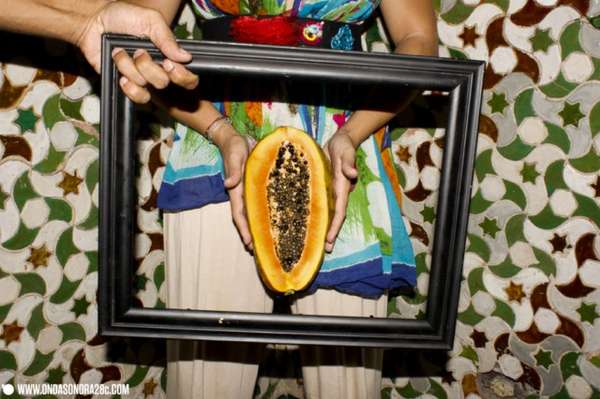
photo by Carlos Gotay
On long road trips, in the back seat of the family Ford Falcon XB, my five siblings and I played the hypothetical game “how much would you have to be paid to…”. How much would you have to be paid to, say, drink a cup of warm sick? Sit in a pond of leeches for five minutes? Ten minutes?
You know how it went. Before Wii, we all played a version of it. It was deliriously fun and simultaneously flexed our little moral compasses, preparing us for real life.
So, let me put this hypothetical quandary to you: if you could be given a vision of your future, but it could mean learning some seriously dire news, would you sign up?
A while back I learned of a witch who’s reportedly one of the best tarot readers around. The caveat is that she tells it as it is, warts and all. Ly de Angeles is the high priestess of the international Coven of WildWood Gate. She’s been practicing as a witch for 30 years and she once told a young woman, “Looks like there’s a death in the family… No, it’ll be you.” She detailed it was going to be in a plane crash. And so it came to be several years later.
I wavered for a while, and was warned against it, but curiosity pulled me in and on Tuesday I fronted up to her dark basement abode to get slapped with my destiny.
Every now and then I answer a question from a reader that I figure best to answer en masse…here’s one that struck me recently:
I recently dug up this question from reader Dharma. It was in response to my interview with Brene Brown on vulnerability. It’s a doozie.
Ok, I have a question for you. And I am only asking this because I have been basking in some pretty painful vulnerability for the past six months. The area of vulnerability for me is my fertility, it’s drifitng away from me. I try to be optimisitc, sometimes I fail. I went through searching for answers through friends, family and experts only to learn no-one else has the answers either. I have learnt to let go, my life is far less in control than it was a year ago. I am learning to be ok with this, to understand not everything works out the way to plan.
But, I still struggle with, how, when you are in this state of being do you make tough decisions? How does being deliberate come into play when the risks are high and you don’t know what way to turn?
I’m a spiritual person, I meditate, I practice yoga, I do any number of things. I TRY to trust life. But when those flashes of vuneralbility do come in, it can be hard to trust.
– Dharma
OK. This strikes chords right now. For all of you who’ve followed my thyroid/hashimotos/autoimmune journey, you’d know I’ve had ups and downs. Two weeks ago I had a bit of a down. I found out I’ve got some serious complications with my hormones. Again. Sadly, things have gone wonky and so my body has reacted. Mostly to tell me to slow down. Again. I’d been travelling well, but my anxiety crept back in and BAM! my body reminded me I’d pushed things too far once more. I’m working on getting things back working again with Chinese herbs. I believe I will. I know I will. This is not the first time.
So Dharma, I answer you intimately. Because I appreciate “fertility drift”. I think the hardest thing about the issue is the uncertainty. During my 20s and early 30s, having kids was something I just knew I’d do. So it all felt safe and certain, albeit “down the track”. Now, it’s a big fat unknown. Or seems to be more so because the volume on the uncertainty is turned up by this idea of “running out of time”. And this is the bit where vulnerability comes in. Because as Brene said in my interview with her, wholehearted, life-enhancing vulnerability “means actively letting go of certainty”. And I know you’ve said you’ve been working on this. But you’re finding it tough. Fair enough!
The second hardest bit for women – and men – in this predicament, I think, is having to reposition yourself.
Today. This. Dedicated to Pete. [youtube]http://www.youtube.com/watch?v=8UVNT4wvIGY&feature=youtube_gdata_player[/youtube] I saw Gotye play live a few months back. The most sublime experience. He played about six or seven instruments during the gig, dancing between each one. It was a dance, I tell you! More than six million people have viewed this on Youtube, so apologies if you already … Read more
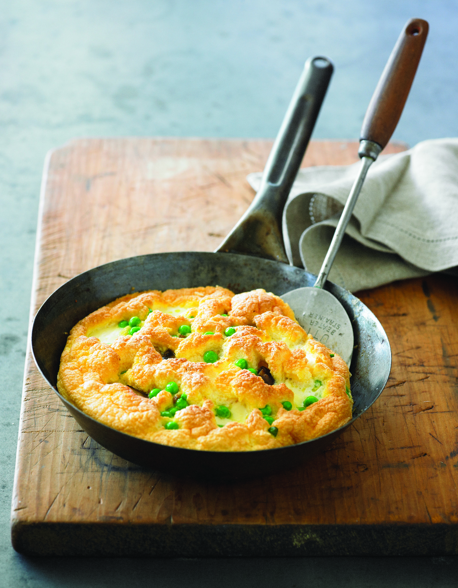
I have an obsession with frozen peas. I add a small handful to almost every meal. They are instant sweet starch and can balance out rich salty kicks like olives and anchovies (which I consume a lot), and pad out all kinds mish-mash meals, like curries and omelettes.
I tell you, I’m yet to find a meal that can’t be improved with a frozen pea!
Anyhow. I was recently sent a copy of chef Michael Moore’s Blood Sugar and was elated (!) to find these two recipes brimful of peas. I first met Michael when I filled in for Kerri-Anne one day, and then again hosting the Morning Show. He’s owned big restaurants around the globe (including Summit in Sydney) and recently collapsed from a stroke at a dinner party. He had diabetes. Which fired him up to develop the Blood Sugar lineup of nutritious recipes. He’s kindly offered to share two very pretty lunch recipes here (he’s used fresh peas…feel free to substitute with frozen). I’ve also posted a few of my favourite Things to Do With a Pea below. Feel free to contribute to my homage…
mushroom, pea and bocconcini omelette
1 tablespoon olive oil
1 clove of garlic, crushed
120g mushrooms, quartered
90g fresh peas
3 egg whites, lightly beaten
2 egg yolks, lightly beaten
sea salt and freshly ground black pepper
4 baby bocconcini balls
Heat oil in a small non-stick skillet and cook garlic and mushrooms for 2-3 minutes. Add peas and cook for a further 2 minutes.
Carefully fold beaten egg whites and yolks together. Season with salt and pepper. Pour over mushrooms and peas and allow to set for 15 seconds on the bottom of the pan.
I own a power drill. It has moved house with me – shifting from one shelf under the sink to the next – three times. And you know how many times I’ve used it in our five years together? Twice. Which is normal apparently. The average drill emerges from under the sink for 12 minutes in its lifetime.
This sad statistic confirms a festering sentiment out there in the world: owning stuff is annoying and increasingly cluttery and inefficient. It’s like that itchy jumper you had to wear as a kid. It scratches at you incessantly, prompting a violent desire to strip.
But buying stuff is only a fraction of the equation. The real pain is living with it – storing the waffle maker in the bulging corner cupboard, servicing the lawnmower, packing up the Barbie campervan when you move house. And how can I explain it…it’s also the way it all just sits there idle, making you feel guilty like a dog needing a walk.
As Rachel Bosman author of What’s Mine is Yours: The Rise of Collaborative Consumption said when we spoke via email this week, “you don’t need to own a drill, you just need a hole in the wall…so borrow the drill, don’t own one”. Beautifully put. And indeed neighbourhood share schemes are popping up everywhere – in Australia there’s The Sharehood and Landshare, which launched in February and connects people wanting to grow veggies with folk who have a spare patch.
In March, sharing – instead of owning – was dubbed one of Time magazine’s Ten Ideas That Will Change the World. Since then much as been made of our itch to “live light”. Bosman confirms it’s not (just) an ethical or environmental crusade. It goes deeper than that.
This week I gave the concept a crack by signing up for car sharing, mostly because I find owning a car incredibly annoying. I also find this statistic staggering: on average we use our cars 8 per cent of the week. The rest of the time they hang about idle accumulating duco damage and parking tickets (at least mine does).
A while back I asked what technique or course or mantra or philosophy or book or practice or sport or “thing” you’re engaging in that’s making life richer and deeper for you, and facilitating a deeper connection to what matters. You sent through the most mad responses and ideas. Thank you thank you thank you!! Time to share….
Sian: Reading “Born to be Free” by Jackie O’Keefe
Robin: I started a ritual every night, where I light half a stick of incense and honor the day that just passed (whether it was “good” or “bad”), this moment, myself and all life. I felt a little silly doing this at first, but it has really woken me up – forcing me to realize that there are only so many days. Sobering.
Ann: We re-joined the rock climbing gym last week. My husband and I met there 6 years ago, and then when we got married and my kids got busier, we stopped going and let our membership lapse. We are really loving the time together and I am reminded of why I loved rock climbing from the first time – it makes you be in the present moment to solve a problem, focus on technique, push yourself past the limits you think you have. It’s physical and spiritual at the same time for me, a lot like yoga.
Jodi: Writing to my friends, family and loved ones. I write at least five letters a week. It makes me feel close to people and I do it without expecting anything in return. People LOVE letters or any kind of mail that isnt bills or something that makes them feel bad.
I write about breakfast a lot. My breakfast choices stray left of the cereal box. I eat meat muffins. And pumpkin with sardines. And stirfried sprouts with egg. And so I’m often met with the reaction: but that’s not what breakfast is meant to be, that’s not how breakfast goes?!
Isn’t it?
photo by Sarah Illenberger
I personally think that fat and protein are best at breakfast and that sugar should be avoided at all costs because it sets the day up for a rollercoaster ride of cravings. A protein-less breakfast leaves you unsatiated. And yet that’s the kind of start to the day we’ve been sold. Reader Dani alerted me to this article by Anneli Rufus. It’s a good succinct overview of a lot of material I read about how:
breakfast = dry cereal dripping in sugar in LARGE part because big corporations have sold us into believing such an equation.
But know this:
Breakfast foods are dictated by corporate interests + masturbation paranoia.
Breakfast is a much politicised meal. Rufus writes “Cold cereal, donuts and orange juice are now breakfast staples because somebody somewhere wanted money.”
cereal as we know it was born out of a desire to produce something that would stop us masturbating! Not. Kidding. Seeking to provide sanitarium patients with meatless anti-aphrodisiac breakfasts in 1894, surgeon and anti-masturbation activist John Kellogg developed the process of flaking cooked grains. Hence Corn Flakes. And Rice Crispies.
in pre-Corn Flakes time, breakfast wasn’t cold or sweet. It was hot and hearty.
pre-industry, we loaded up on protein-rich eggs, sausages, ham and belly-fat bacon along with ancient carb classics: mush, pancakes, bread.
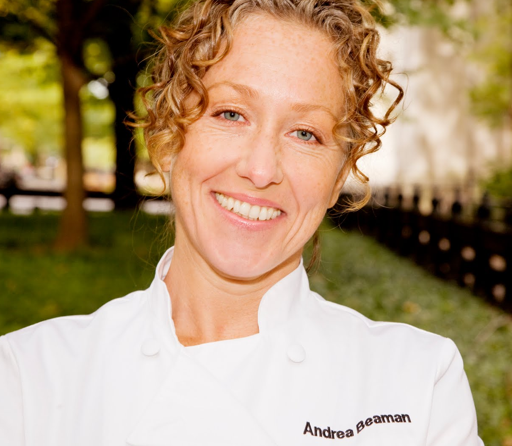
This excites me no end. The other week week I got to chat to Andrea Beaman. Andrea is a US chef and health coach. She appeared on the first (and fifth) series of Top Chef. She’s the food expert on CBS News and she trained with INN, as did I. Just to put her in context. She knows food, OK.
But this is the thrilling bit: Andrea healed her thyroid disease with… food.
Yesireee. She refused to take medication and, after two years of careful, healthful eating, she was fixed. I remember reading about this a while back and getting so heartened. I’ve always believed this should be possible, despite being told by countless specialists that I’d been on medication for life (they also told me I was infertile, but goddamn if I didn’t turn that around).
I had to chat. So we did. I figured you’d like to hear what we shared…(and let me just say, there’s no need to tell me that I um and ah a lot. I know. It was early and I hadn’t slept.)
[display_podcast]
The concept is friggen fabulous. It fits with everything I believe in. I haven’t got there yet. I’m trying. I lapse. My stress still puts spanners in works for my progress. As do my hormonal fluctuations. But stories like Andrea’s inspire me. As you might know, I believe my thyroid disease is a symptom of the way I lived for a long time. I damaged my body with my previous lifestyle habits. Ergo, I believe, I can fix it with better ones. This is why I do what I do (bang on about sprouts and bone broth and quitting sugar).
The key bits I took from my chat – and that I believe work, too – are flagged below:
* you need to experiment with different eating styles. Andrea played with macrobiotic eating and it worked for her for a while. Me, I’m finding a grains-free approach better.
* cholesterol-rich foods are needed for thyroid health. Eggs! Eggs! Fat! Eggs!
I have two seemingly unrelated theories about life.
First, successful people eat boring breakfasts. Crude, but true. Look around the busy exec-y types you know – they eat vegemite on toast, or porridge. Every day. And don’t put any further thought to it. It’s only ratbags like me who deliberate wildly between boiled eggs, quinoa porridge and left-over Indian.
The second, kids – despite their protestations – don’t actually want to be asked what after-school activity they prefer for next semester, or what they’d like on their sandwich today. I don’t have kids, but I was talking about this with friends-who-are-parents last weekend. As one said, “It was better, wasn’t it – for everyone – back when we were told ‘hey, kids it’s devon and tomato sauce today’. We’d move on to wrestling with our sister. What have we done?” We’ve bludgeoned kids with decisions, that’s what.
I’ve touched on this issue before in this column: the chore that is making decisions. But, seriously, it’s the sexiest topic doing the psychology rounds at the moment and so I thought I should re-penetrate with the latest findings. They all say the same thing: we’re a society suffering “decision fatigue”. The New York Times magazine this month ran a long feature on the subject and there’s emerged a spate of books to choose from about the art of choosing. At every turn, we have to make more decisions – whether to reply to an email, to pay for extra legroom, to subscribe to the weekly newsletter. We’re expected to have an opinion on everything and it’s leaving us choicely buggered.
A study earlier this year found, unlike, say, running fatigue – which sees us hit a wall – decision fatigue sees us do dumb things, like reverting to default or safe options, or to making decisions that keep our options open…which just prolongs the fatigue. After a day spent making decisions, judges in the US were found to default to more severe parole sentences in the afternoon. They were decision-spent, so set conservative sentences that kept options open (they could always reduce them later). Another study found when we have to choose the customized extras for our car, we deliberate conscientiously at the start of the form, then eventually “give in” to the default options (nattily, companies put the more expensive decisions at the end of forms). Or, of course, we put off deciding.
But, friends, I’m interested in solutions here. And preferably ones that are dictated to me. Because this is the point: the less pithy decisions we make, the more decisive energy we have for the important ones.
Fix #1: set your life up to make less decisions.
Eat the same breakfast. Wear a suit. Buy the same brand of frozen peas.
…and I thought I’d tell you about it in advance of it’s release in a few weeks. And to give you the chance to sign up to be alerted when it arrives.
Basically, because so many of you kept asking how I quit sugar eight months ago, I thought it best to put together a bit of a guide.
It’s one of those issues that just grabs at people. I think most of us know we eat too much of the white stuff…and we wish we didn’t…and we wish there was a short-cut, simple way to get on track…that wasn’t too painful. I get stopped at markets, at the bank, on planes, and am asked about how I quit.
It’s an issue that hurts people. I think everyone is very hard on themselves about how much of it they eat. And would like to be freed of the bind, even just for a while.
Anyway, I’ve spent several weeks (months?) writing up answers to everyone’s questions and compiling an 8-week program. I reckon it takes two months to quit, and there are specific steps that I took – after researching all the material – that make it effective and (relatively) smooth.
If you want, enter your email here and I’ll send you a little email alert when it lands.
(I promise your email won’t be used for anything else!)
And so…the I Quit Sugar ebook
It includes:
* an 8-week program with weekly things to do to get sugar out of your system, and that best beat cravings – both emotional and physical – and detox issues
* an overview of why quitting sugar is a good idea (the scientific explainers that you can hold up to your mates when they think your bonkers for even trying the idea out).