A bone marrow custard recipe… Plus a giveaway!

There’s a lot about this recipe that gets me excited. Bones. Marrow. Warm, dense, nutritious custard. And a breakfast food not based on grains. I realise the combined effect could be a little challenging for some, but I invite everyone to think openly and consider the incredible health (and environmental and ethical) benefits of eating like this.
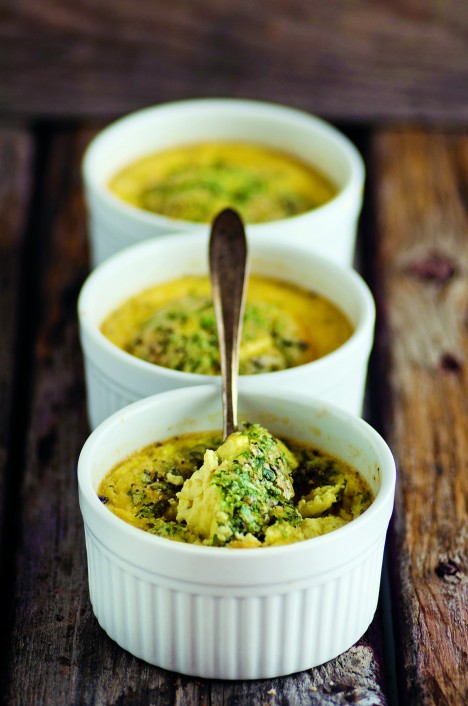
Bone marrow custard, recipe below

I should flag, the recipe comes courtesy of the lovely Jenny at The Nourished Kitchen who recently sent me her new book, by the same title. I’ve been following her blog for years and love her informed and clever approaches to healing foods. If you’ve been enjoying my kombucha recipes and other fermented foods, then you’ll get a wholesome kick from going the next step with her culinary inventions…kombucha vinaigrette, chicken foot broth and stewed beef heart with root veggies and porcini mushrooms!

This cookbook is a compendium of how-our-grandparents-used-to-eat recipes that do the farm to table fan-dangle. It’s very much aligned with my philosophy: whole and real foods, with value placed on quality and nutrient-dense foods, eating local and caring for the environment. It also includes organ meats and raw dairy, and a chapter on salt, time and the art of fermentation – one of my favourites!

Bone marrow can taste a lot like browned butter, which is why you’ll often find it in sweet custards and desserts in older cookbooks. Long leg bones provide delicious, buttery marrow. Purchase them pre-cut, or ask your butcher to cut them 1-3 inches (3-8 cms) thick to make scooping out the marrow a little more manage-able. While you can remove the marrow from the centre of a raw bone, roasting the bones significantly improves the flavour of marrow and makes it a bit easier to remove.

Bone Marrow Custard with black pepper and parsley

Jenny: “Cream and eggs nicely complement roasted marrow in this simple savoury custard, while the fresh flat-leaf parsley adds a clean, bright flavour to balance the richness. I often serve this custard for a late but substantial breakfast
Read more

11 interesting ways to pimp your kombucha

I’ve shared how to make plain kombucha, how to make a fructose-free Chai flavoured version and how to get carbonation. But my experimenting continues. Feel free to follow along and get just as obsessed by this very healthy addition to your gut-giving regime.

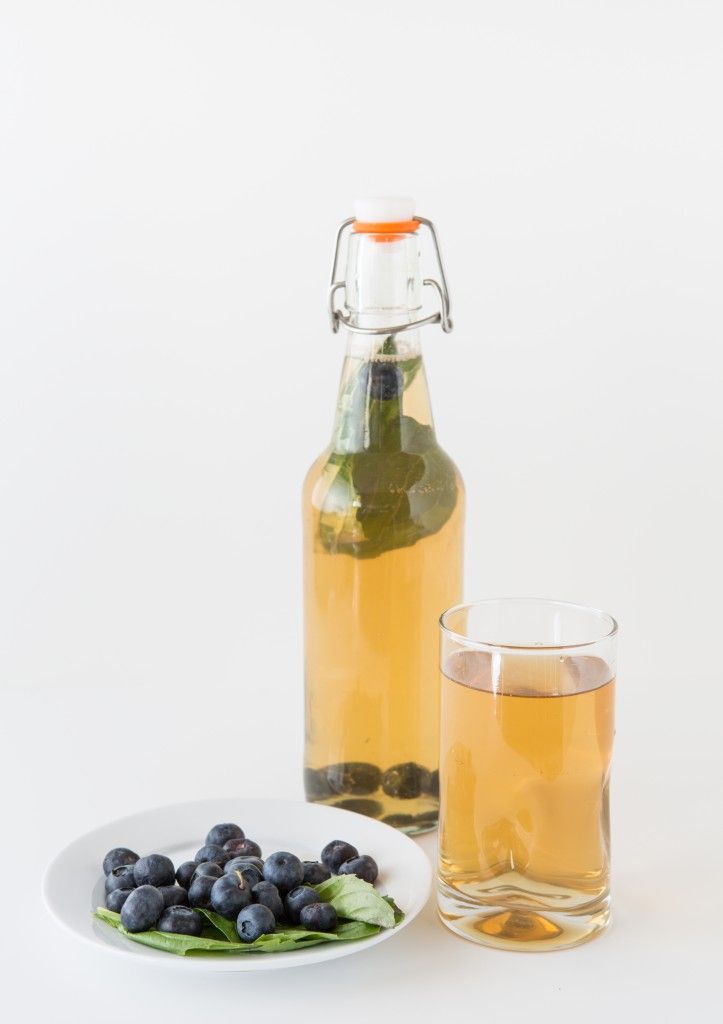
Image via Civilised Caveman Cooking

1. Add fruit.

Once the initial fermentation period is done and the SCOBY removed feel free to add fresh or frozen fruit – berries, stone fruit work best – or some lemon or lime juice.

For a kombucha base of about 3 cups, use about 1/3 cup of fruit or juice.

Remember, when fruit is added the sugar feeds the yeast in the second ferment, so again, very little sugar remains.

2. Add herbs and spices and all things nice.

In addition to the fruit, feel free to thrown in some flavourings, like vanilla, almond, lemon and orange extracts or fresh herbs or spices. To flavor kombucha with an extract, brew and ferment according to the basic recipe.

For a kombucha base of about 3 cups, use about ¼-1/2 teaspoon of extract.

For a kombucha base of about 3 cups, use about 3cm fresh ginger cut into matchsticks or grated (you might need to add extra sugar if only using ginger and you’re after fizz).

3. Add apple cider vinegar.

Jenny at Nourished Kitchen shares this: “In my favourite wintertime version of kombucha, I flavour it with sweet spices and a

Read more

I need your help with I Quit Sugar in America!

I start by apologising: I’m about to ask a favour. I don’t normally do this kind of thing and I’ll try not to make a habit of it. But I would love your help on this occasion.

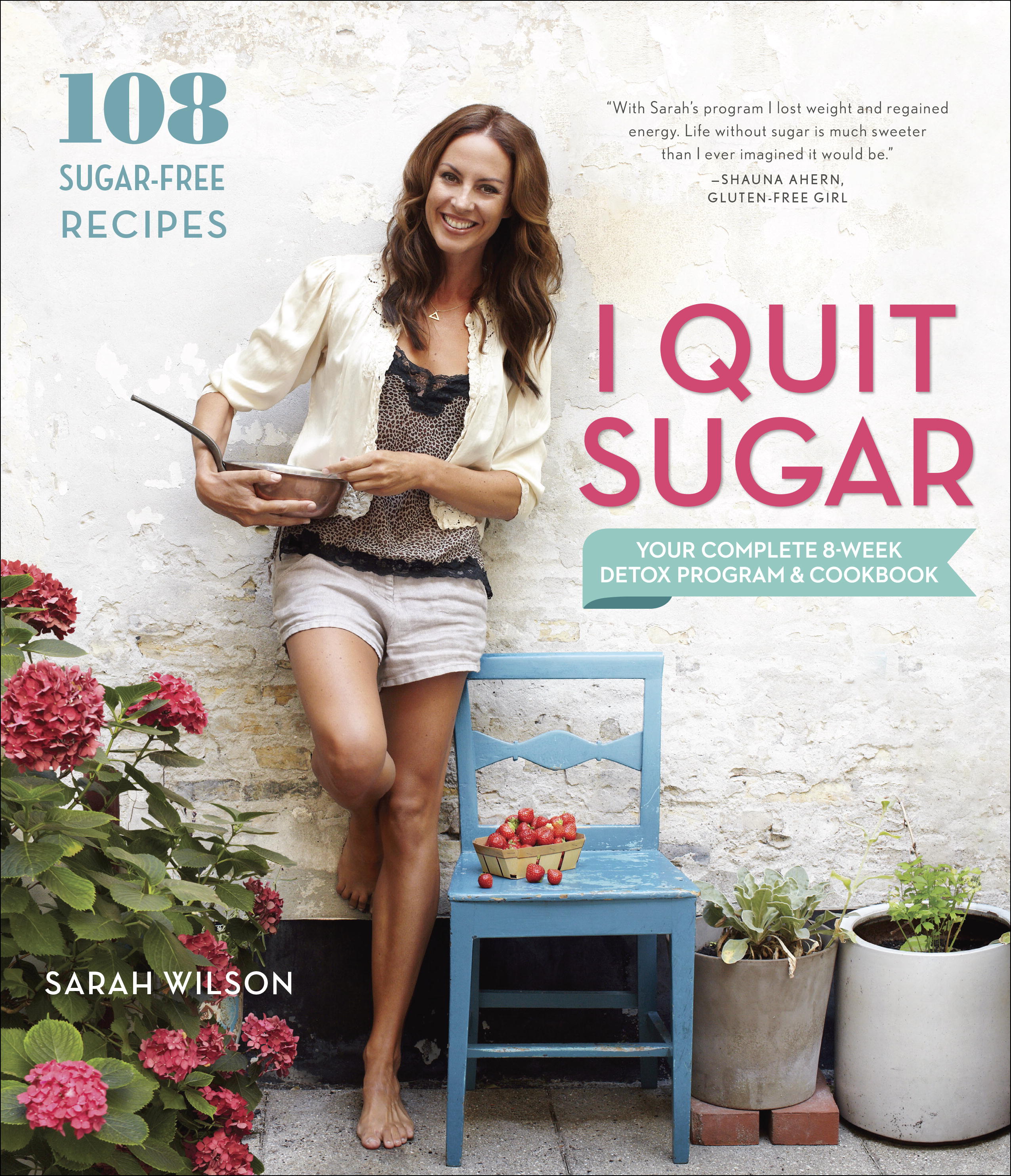
This is the cover of the US edition of I Quit Sugar. Same-same-but-pleasantly-different.

In two weeks I Quit Sugar comes out in America. In fact, I write this post as I await my flight to Seattle (I then head to Calgary and then New York). But the way things in US Bookland work is this: if a stack of people pre-order the book – buy it before its release on April 8 – then it has fighting chance of becoming a “bestseller” and then (as a result) being stocked across the whole of America. Which is my aim. To get the book to everyone who wants or needs it. No force feeding, of course. Just available as an invitation.

So, to keep it simple (oh, I feel awkward asking – sorry!): I’d truly love it if any of you interested in buying the book could do so via pre-order. Like, today. So…

If you are a US or Canadian reader

* Click here to pre-order the book now.

* You will receive a free mini sugar-free cocktail cookbook. You’ll be able to download it straight after pre-ordering, so you can get playing right away. Click here to learn more.

* Of course you can wait until the book appears in stores April 8. But a pre-order will help me out a stack. You pay the same price for the pre-order, get something for free, plus you’ll get the book ahead of everyone else. No downside.

If you’re Australian…

* I’d love you to share this message with your American mates – alert them to my fumbly favor.

* For your troubles, I’m giving away a few thank you prizes: a Tefal Soup & Co (valued at $299) which blends smoothies and

Read more

Seven ways to make your blog better

I recently posted my 1000th blog. I figure this puts me in a good position to share a few ideas that might help you if you’re starting out or want to extend things a little.

Image via The Berry
Image via The Berry

1.    If you’re just getting started…

here’s how to start a blog.

Just get into the mosh pit. It doesn’t matter where. Just be in there. It’ll be messy. Everyone will forgive you, though. Then piece things together as you go, build, layers, learn from working out the problems. Don’t panic that you’re getting it wrong. Continue. This is the new frontier.

2. If you’ve been blogging for a while, here’s a podcast I did with Srinivas Rao of Blogcast FM on how to develop your blog voice.

I cover off:

  • The foundations of traditional journalism
  • The power of including your personal story in your content
  • Why the message is more important than the medium
  • Keys to studying another writer’s style
  • Developing a message and a voice that’s authoritative

3.    If you want to get more polish….

join Problogger Community.

This is a community for bloggers at any level where you can learn directly from some world-renowned full-time bloggers and meet, get advice from and collaborate with other bloggers around the world. 

Read more

My fructose-free Chai Kombucha recipe…yes!

I’ve become a little obsessed with making kombucha. I’ve had a brew going continuously on my bench since I made my first batch a few weeks back.

Image via Nourished Kitchen

One of the concerns some of you had was with the use of sugar to feed the yeast and bacteria. As I pointed out, very little sugar is left behind. But if you’re drinking a few nips of the stuff per day, it can add up to several teaspoons. So I gave things a crack using rice malt syrup, which contains no fructose. RMS is a blend of complex carbohydrates, maltose and glucose. It’s fructose free, slow releasing and doesn’t dump on the liver like pure glucose.

I’d read that honey doesn’t work when making kombucha – the theory being the antibacterial agents kill the SCOBY (symbiotic colony of bacteria and yeast). So I was a little concerned about RMS – it’s a fermented product and I had a picture of the different bacteria squabbling for attention in the bowl, eventually annihilating each other. Plus, I’d used RMS to make my Fermented Ginger-Ade and found it needed to be a blend of sugar and RMS to work properly. Oh, and having spoken to various experts and Googled the bejesus out of the topic, I found no one had tried it this way.

But, I can report back from the moldy frontline: Rice malt syrup makes a perfect kombucha.

Simply swap the sugar for the same amount of RMS in my Kombucha recipe and you’re away. You might need to leave it to ferment an extra day or two, and I think it does produce a slightly tarter result…which I personally MUCH prefer. If you’ve been off sugar a while, you’ll probably be the same.

I’ve since used this adjusted fructose-free version to make flavoured brews. Today I’m sharing my favourite: a Chai flavour.

Chai Kombucha

  • 3 cups plain kombucha (my original recipe uses a litre of water, but I find I’m left with a little over 3 cups, a little of which

    Read more

Getting too caught up

The other day my meditation teacher Tim introduced me to a young bloke over an impromptu lunch. I was not in the mood for meeting someone new, to be frank. I was thyroidy and scratchy and couldn’t deal with the “So, what do you do?” palaver (a conversation pivot point that always makes my eyes glaze over). But something piqued me to show up.

Image via Dangerous But Sweet Tumblr

Turns out this young bloke (my goodness, I am sounding old) – Sebastian Terry – and I hung back and chatted for some time after Tim left. We’d got onto the “So, why do you do what you do?” train of chatting (a thoroughly meaty one).

Seb’s response was wonderfully naive and authentic: “To prioritise happiness”. Usually such facile answers annoy me. So do “bucket lists”, which is what Seb went on to develop. (After the death of a close friend when he was 27 he was forced to ask ‘Am I happy?’. The answer was no and so wrote a list of 100 Things – most of which are geared at helping others – that he’s systematically worked through over the past four years, relaying the experience in the book 100 Things and in a Discovery Networks documentary. So far he’s married a stranger in Vegas, helped push a man in a wheelchair for a half marathon and run with the bulls.)

But Seb was convincing. He spoke about how, since his massive success, he gets emails constantly asking him to explain the secret to his success and following. “I tell them I simply put happiness first,” he says. “But sometimes people don’t get it. They go and build a shiny website, and do a big launch, and try to do the same thing as me and expect it all to fall into place. But they’re too caught up.”

All this happened on the day I Quit Sugar For Life came out. I was stressed to buggery from some major publisher hiccups (long story) and, earlier in the day, I’d snapped at someone in an email. I’d been feeling very off kilter for weeks, actually, like I was

Read more

This is my 1000th blog. Strewth.

I wrote my first blog post June 28, 2009. I had no idea what I was doing. I still don’t. I was filming Masterchef at the time and needed something or someone a little more cerebral to engage with. So I chose, um, you lot!

Image via A Well Travelled Child Tumblr.

Like many things that I try, if it feels right, I keep going and going. I questioned why I blogged every single day. I still do. But something compelled me to keep writing.

Mostly the comments fueled me from post to post. So did the people I e-met a long the way, some of whom I started up pen pal-like relationships with (I’m talking about you Shauna and Aran). My blog forced me to get real about what matters to me. And called me to account on slippery issues like cash for comment (you can see my policy on advertising here). It also encouraged me to be more generous and less precious about myself. The online world needs to operate that way and I learned that nothing I shared was new or “mine”.

And then it became my livelihood and I started employing People I Wanted To Be Around, starting with Jo.

And here we are today, 999 posts later. I don’t like fuss. But I thought I might celebrate a little and hand over 10 x ebook packs (each pack includes a copy of all of my ebooks) to 10 commenters on my site. Some from right back in the early days and some who’ve contributed a lot of their time and thoughts along the way. Thank you Ian Acheson, Mia Watson, Anthony Porter, Laura Valerie, Jo at Living Savvy, Mike Wilde, Sassi Sam, Liz Wiggins, Jules Eyre and Sarah at Inner Beam (you’ll be receiving an email from us shortly).

I’m also giving away an additional 10 packs to new friends…see below.

Also, since I get asked this a bit…

Some of my pivotal posts:

1. My first I Quit Sugar post. It all started here, as a gentle experiment (and mostly because I was short of a topic for my Sunday Life newspaper column).

2. The post where I first shared about my autoimmune disease.

Read more

How to buy the most sustainable sofa (ever).

As many readers of this blog know, it’s taken me 40 years to buy a sofa. Which, it so happens, is 32 years longer than it took Steve Jobs.

Image via Favim.com
Image via Favim.com

I’ve previously found some comfort in the fact it took Jobs eight tortured years to find his perfect sofa and quietly repositioned my chronic couch commitment phobia as genius when I read that Job’s indecision was due to the same eccentric perfectionism that created the iPhone.

Perfectionism certainly stalled me, as it does often. In this case I feel (reasonably) justified. I do think it’s super important to make a thoroughly researched and mindful decision when it comes to big house hardware. A lot of resources go into creating, building and delivering them. As well as disposing of them once we realize we made a dumb, fashionable purchase.

I think it’s criminal that many of us now regard furniture as almost seasonal.

I don’t want to be the person chucking out a cheap sofa after three years.

I want to be the person who proudly holds on to it, allows stories to attach to it, has it in her life as a familiar totem and who can pass it on in 30 years to a loved one.

How about I outline a few factors I considered in making my decision, and some tips for buying the most sustainable, toxin-free, environmentally credible, practical, timeless, economical sofa possible. (For those not wanting to read all the way to the punch-line: I arrived at the “Leila” three-seater (deep option) by Jardan.)

First up, let’s be real:

  • The most sustainable option is second-hand. No new resources used, no waste going into landfill. Makes sense.
  • The most toxin-free option is second-hand. Most modern couches contain flame retardants that are not chemically bonded to the foam, they are ineffective in preventing furniture fires and are linked to serious health effects. Formaldehyde is used in pressed wood products and may be present in couches that are stain-resistant. With a pre-loved sofa, someone else bore these toxic loads. Clean sailing for you.

I looked into second-hand options for quite some time, and have previously taken on couches from friends and from off the street etc. But I was turning 40 and felt it was time to invest in something that actually suited my needs.

If you buy from scratch:

  • Be practical with the shape. Think about it. Reflect on how you use a couch. I went for a three-seater (I wanted the couch to be a hero

    Read more

My Paleo Inside-Out Bread recipe

My new book I Quit Sugar For Life has been out for about ten days now. And going by the feedback on social media it seems the Paleo Inside-Out Bread is a little bit popular. And more than a little idiot-proof (not one imperfect shot so far!)

Paleo Inside-Out Bread. Photos (clockwise from top right) by @therealfoodie, @jarkakunova, @sherri78 and @foodnjunk.

If you haven’t bought the book yet, I figured I’d give you a little taste of things and share the Paleo bread recipe with you. The concept is simple – it sees outside sandwich toppers embedded in the bread. A meal-in-one in every slice merely requiring a smear of butter or some cream cheese smoothed over the top.

Remember: please do share your cooking results from the book…use #IQSforlife so I can find it and regram it! Oh, and if you’re wanting to buy the book, you can do so directly here…

Screen Shot 2014-02-25 at 12.37.46 PM

Paleo Inside-Out Bread

Makes 1 loaf

  • 1 1/2 cups almond meal
  • 3/4 cups arrowroot
  • 1/2 teaspoon sea salt
  • 1/2 teaspoon bicarbonate of soda
  • 5 eggs
  • 1 1/2 teaspoons apple cider vinegar
  • 1 tablespoon finely chopped flat-leaf parsley

    Read more