how to make your own sprouts

Slide into your Birkenstocks, tie on your recycled bamboo apron and turn up Steely Dan on the stereo (or tune to Portlandia on ABC)  because today we’re sprouting legumes!Screen Shot 2012 05 01 at 4.03.42 PM1 how to make your own sprouts


If you were the kid with the mushroom kit or the Venus flytraps on your windowsill that you’d race home from school to just sit and… watch, you’ll love sprouting. If you rather like watching any creation you’ve made grow, you’ll love sprouting, too. So much veiw-able gratification as they do their sprouty thing.

The rest of you? Read on to see why it’s a good idea to try this cooking technique. And scroll below for some recipes. Me, personally, I avoid eating too many legumes: I find them super rough on my guts. Sprouting is certainly the best approach I’ve found for making them a smoother experience.

First, why sprout?

Sprouting kills toxins

Phytic acid, a toxin found in the fibre of legumes, leaches calcium, magnesium, iron, copper and zinc from our bodies. Not great. Sprouting neutralises this nasty acid (as does soaking before cooking). It also inactivates aflatoxins –  potent carcinogens – in grains.

Sprouting increases vitamins

It increases the amount of B vitamins and carotene in the little beady things. Vitamin C is also created in the process.

Sprouting (almost) fixes the farting issue…

….because the complex sugars responsible for intestinal gas are broken down into simpler glucose molecules.

Read more

chatting wing women with Agony Aunts

Have you caught Agony Aunts on ABC yet (Wednesdays 9.30pm…or iview if you missed the first ep). It’s a lovely show. [youtube]http://www.youtube.com/watch?v=z6YLnuYqbJE[/youtube] The producer Adam Zwar(he made Wilfred) and I met about 10 years ago when we both wrote a relationship-ish column in the Sunday Herald Sun. Funny to come full circle. He’s an ace … Read more

happiness that doesn’t depend on what happens

I’m facing a big challenge at the moment. It’s something that’s been building up for a while: finding out what life is like – and what I’m like – when there is no “something next”. When nothing is about to happen.

mg 0305 28 03 2012 niell 6 happiness that doesn't depend on what happens
photo by Aquabumps

Boy. What would that feel like? I’m always onto something next. Surely I’d be a shell of a human if I had no more happenings to forward onto?

I find life almost inconceivable without this relentless scheduling voice in my head, steering me on to the next thing, slotting in activities all day, timing how long it will get from here to there and what phone calls I can return while I’m transit. I rang my brother the other day. I was riding up a hill carrying groceries on the handlebars. “Geez Sarah, do you ever uni-task?” he asked. He’s 21 and he shakes his head at me.

When I was a little girl living in the country I would jump with excitement when the phone rang and physically ached to hear the sound of a car rumbling up our long driveway. I would climb a tree and wait and listen. For something to happen.  Someone’s coming! Something’s about to happen! I don’t think this anxious, incomplete anticipation has ever left my bones.

My biggest impediment to reaching something  resembling a meditative state each day when I sit in lotus is the constant diarising and scheduling more things to happen. I revert to this as soon as there’s an empty moment.

I thrive in disasters, because something is happening.  I always know what’s around the next corner…because I’ve anticipated it, planned it, scheduled it’s very possibility. Arghhh….it never stops.

I schedule, therefore I am. It’s my default cognitive position.

It’s got me places, this over-eager embracing of possibility and activity. Lots of things have happened in my life. Great jobs. Awesome opportunities. Excitement.

But it’s now starting to drive me mental. This, I know, is because it no longer serves me.

Whenever something no longer serves me, it all starts to become a noise that gets louder and brighter in my head, more irritating, until I just have to do something about it. I have a bunch of pink elephants in a room sitting opposite me. Staring at me. And demanding I act.

It’s time to act.

Read more

Sally Fallon: the ultimate anti-aging diet (a podcast)

You could say I’m a little obsessed with Sally Fallon. She’s the aunt I’ve never had (a lot of Y chromosomes in my family). The goddess of the kitchen I want to pull up a stool in. The author of the cookbook – Nourishing Traditions: The Cookbook that Challenges Politically Correct Nutrition and the Diet Dictocrats – with the zaniest subtitle ever. She’s also founding president of the Weston A. Price Foundation (for more on Weston A. Price go here), an organisation I have a lot of respect for.

BestDeal Sally Fallon: the ultimate anti-aging diet (a podcast)
image via culinaryporn.tumblr.com

*This blog post has been updated on February 5, 2016 and now reflects my current stance on eating raw foods.

She bangs on about eating whole food. Unadulterated REAL food, as our grandmother’s used to. And I really like to listen when she does. Because it’s real.

Oh, and FYI…Sally’s contributed a recipe to my I Quit Sugar Cookbook, which you can pre-order here.

Anyway, this morning I talked to her about enzymes: how eating them makes you age more slowly and gracefully and how to get more of them into your diet.

Listen in here:

[display_podcast]

For those wanting it nice and clear, here’s a cheat sheet for you

Why do we care about enzymes?

The short answer: they affect how long we live, and how well we’ll be in the process. This is how…

There are two types of enzymes for digestion

1, Digestive enzymes: Mostly manufactured by the pancreas, they break down food leaving the stomach.

2. Food enzymes: These exist in the raw food itself and they help our bodies break down that particular food as we eat it. Eg: lactase in milk helps us process lactose (which is why low-fat milk is such an issue…in the de-fatting process much of the lactase is lost).

Know this:

We have limited digestive enzymes in our bodies AND when these stores are used up, it ages us.

The aging process is the depletion of digestive enzymes, more or less.

Which means…

Eating food with lots of their own enzymes saves our bodies (our pancreases) from doing the work.

Thus saving us from aging more than we damnwell have to.

Read more

Early birds offer! Pre-order the I Quit Sugar Cookbook now….

Here’s a bit of an idea for you…and a sneak peak at one of the recipes from my ….some drum rolling please…I Quit Sugar Cookbook!!! The cookbook, as I’ve explained here, is a follow-up from I Quit Sugar: A Sweet 8-Week Program. It’s a behemoth of a book: more than 108 recipes of nutritious, easy, … Read more

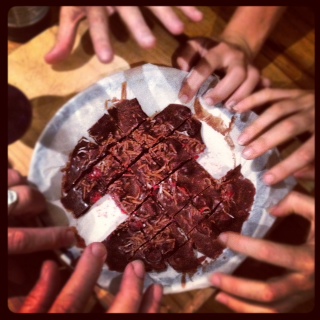
my sugar-free raspberry ripe!

I made this a while back and shared the recipe with my friend Renee. In passing.

jpeg my sugar-free raspberry ripe!

It’s the kind of recipe I’m packing my forthcoming I Quit Sugar Cookbook with. Simple, moorish, minimal-ingredients-required “assemblages”, brimful of nutrients and wholesome sweetness. Over the next few weeks I’ll be sharing some sneak peaks…on Instagram, my IQS Facebook page and Twitter. And to be sure:

The I Quit Sugar Cookbook is out next month.

To receive an early-bird discount and a gift, feel free to sign up here.

Meantime, back to the Raspberry Ripe.trans my sugar-free raspberry ripe!

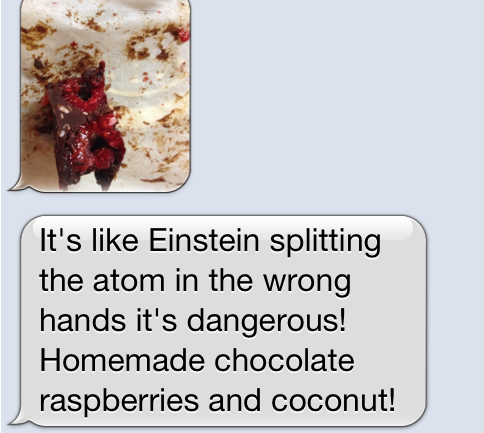
During the week I got this text from Renee:

wDtpzthN1Q6HAAAAABJRU5ErkJggg== my sugar-free raspberry ripe!

And this….

20120427 my sugar-free raspberry ripe!

It’s seductive stuff. But I’ll tell you the interesting thing. If you ever find yourself indulging in this kind of sugar-free

Read more

try this: two commitment weekends

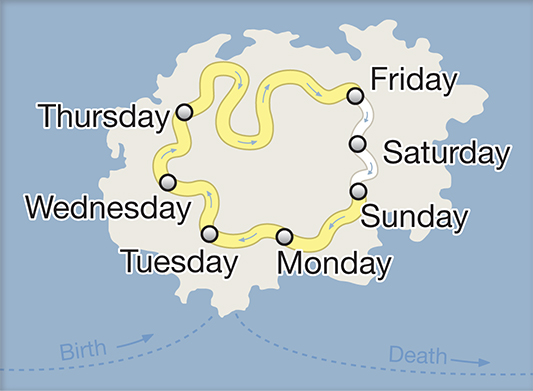
Far too many of us get our weekends wrong. We don’t rest. We try to catch up. Catch up on emails, chores, with people.

02islandweek try this: two commitment weekends
Image by Christoph Niemann

As I’ve said soooo many times before, the biggest challenge we face now is pushing back commitments. Life used to be about chasing and finding and accumulating information and ideas and commitments.

Now, the true art of living a good, full life lies in pushing back.

Creating boundaries, preserving your energy, keeping a piece of yourself for yourself. I’ve been concertedly practicing this art for a few years. It takes bravery and boldness. But as I start to master it I can see the benefits.

You might like to read this musing on the need for space, and this one on the need for rest, and this one on email boundaries.

And so it was I came across this idea of a “two commitment weekend”. I have a friend who mentioned this idea to me recently. He says yes to two things only on a weekend. The rest of the weekend has to free-flow. Years ago, my beauty editor at Cosmopolitan would not take on commitments on a Sunday.

Read more

going gluten-free? some hiccups you need to know about

Gluten’s got a grimy name just now. I’ve previously outlined my thoughts on going gluten-free (who should, why it’s not a “fad” etc). It’s worth a read if you’re a little unsure about the whole debate. If you’ve already made the move, or have contemplated it, then you might learn a lot from this rundown of the tricky things that might stump you in your tracks along the way.

31736372343608006 autc9Oc0 f going gluten-free? some hiccups you need to know about
image via food delights

Steph Osfield is a great freelance writer who used to write for me at Cosmopolitan eons ago and she sung out recently to say she’d had all kinds of dramas going GF and offered to share her thoughts. She and her family went GF due to broad-based health issues, not due to celiacs per se.  I very much appreciate what she outlines here. It’s clear, concise and has helped me with my own dance around the pesky little protein:

I was prepared to become a Lego Grand Master and tadpole wrangler when I became a mother, but I didn’t count on becoming a medical expert too. My gorgeous kids (son 12 and twin girls aged 10), have been sick so often over their young lives that our doctor says they are working their way through the medical dictionary. Whole terms often pass with only a week where they are all at school.

Our household ailments read like a medical dictionary; anaphylaxis to peanut, vulvadynia (stinging, sore vulva), multiple food sensitivities, a virus called molloscum contagiosum (four years and counting) and the last two years – nocturnal epilepsy and a sleep issue called periodic limb movement disorder. But in their younger years it was the eczema, glue ear and diagnosis of asthma that led me to take the quantum diet leap to a gluten free diet. Out went the rye bread and porridge and wholemeal pasta and in came the big surprise – we didn’t then live happily every after. Several weeks into eating gluten-free, health issues like their eczema got worse. So I become a foodie super sleuth and here’s what I learned about going gluten-free:

1. It’s not just gluten…

Corn, corn, corn – when you’re swearing off gluten, corn-based options like polenta and tacos shells and corn tortillas are usually on high rotation. Bear in mind that people sensitive to gluten are often sensitive to corn as well. If you do have this issue then increasing your corn intake may ramp up your health symptoms, which will then counter any benefits you might be getting from eating gluten free. This was the case with my kids.

Tip: Make up your own mix of flours for baking with tapioca, brown rice and buckwheat flour to avoid corn.

Here’s some other foods. You may also have a problem with:

Read more

how to ferment vegetables

So, I ferment my roots. And I activate my nuts.

IMG 0339 how to ferment vegetables
One of my mish mash lunches with sauerkraut (and bone broth)

And my guts love me for it. If there is one kooky, “witchy” thing you should try right now, it’s fermenting, or pickling. I’ve been playing around for a few months, making sauerkraut, pickled daikon, and the most lush beetroot relish. I eat a tablespoon or two with as many meals as I can…see some of my suggestions below…and I’ve noticed a tangible benefit with my digestion. Which, for those of you who are interested to know, is crap.

Anyone with auto immune issues, IBS, bloating, sugar cravings or any kind of digestive or allergy issue should truly try fermenting.

Before you start: you might like to make whey. Why whey? It really makes the best fermented veggies. Trust me.  It’s simple, too. Just make my homemade cream cheese. It produces whey on the side, which you can freeze until you’re ready to use.

What is fermenting?

Lacto-fermentation has been around for eons as a health trick – all cultures have a history of fermenting veggies, dairy, nuts, grains etc for medicinal and digestion purposes. The nerdy stuff: it’s a biological process by which sugars – glucose, fructose, and sucrose – are converted into cellular energy and a metabolic byproduct – lactic acid. When the acidity rises due to lactic acid-fermenting organisms, many harmful micro-organisms are killed – so it’s often been used as a preserving technique.

Why the good health rap?

Let’s do this in dot points:

* lactic acid enhances a food’s digestibility and increases vitamin C and vitamin A levels.

* it produces a stack of helpful enzymes as well as antibiotic substances.

* lactic acid promotes the growth of healthy flora in the intestine

* fermented foods are rich in vitamin K2 – a known cancer fighter

* it cuts the sugar content of foods quite dramatically (the same process sees wine end up as pretty much fructose-free)

* plus all you IQS kids:  it helps you beat sugar cravings!

Read more

marilyn’s bizzare (paleo) eating

I love learning what other people’s eating routines look like. I love routines. I love learning anything about Marilyn’s short life.

shape 1 marilyn's bizzare (paleo) eating
Via Glamornet.com

Whacko! An article from the 1952 issue of Pageant that outlines Marilyn’s eating routine…and beyond. It’s intriguingly Paleo, you’ll note: milk, eggs, liver, lamb chops. Remember, up until quite recently a grain-based diet was seen as fattening (ie farmers fed their pigs grains to fatten them up). It was roughly the 1950s when cereal companies started changing the dietary messaging.

Screen Shot 2012 04 12 at 3.26.28 PM marilyn's bizzare (paleo) eating

Below is her approach to exercise, which I really rather like (“I couldn’t stand exercise if I had to feel regimented about it”):

Read more