how to live to 100: drink wine and walk

I’ve written about my visit to Ikaria a few times, through a little series that’s evolved on my blog titled “How to live to 100”. Paniyiris and wine, eating no sugar and eating pork are some of the tricks I came across.

Stamatis Moraitis tending his vineyard and olive grove on Ikaria.
Stamatis Moraitis, 102, tending his vineyard and olive grove.

Recently my mate Dan Buettner, a National Geographic adventurer and author of the New York Times bestseller The Blue Zones has been out and about spreading the word on the place, based on our trip there together last year. It’s been interesting to see what other journalists (who’ve since travelled to the island to see things for themselves) have found. Here a bit of a list drawn from Guardian and New York Times articles, from the mouths of the oldies themselves.

Drink wine and walk.

Gregoris Tsahas, 100: Drinks two glasses of red wine a day. And walks four hilly kilometres a day from his house to his local cafe and back.

Rest when you need to and sleep with the window open.

Kostas Sponsas, 100: “If I feel tired, I read. It rests my mind.” He never eats fried food. Always sleeps well and with the window open. Drinks herbal teas and red wine with his food.

Stamatis Moraitis, 102: Wakes up when he feels like it, works the vineyards til mid afternoon, has lunch and
Read more

how to eat fish on the cheap.

I can linger at the fish monger. It can all be quite a bit to take in. I forget what species are sustainable and “good” to buy. And I dither about how to cook them. Recently, though, I decided to mount my monger meandering and learn a little more about what which fish to buy, and will now share my uncoverings here.

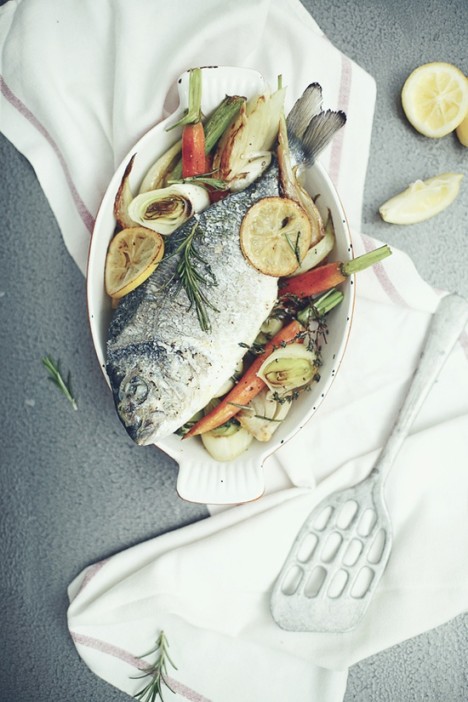
Image via Nicky and Max

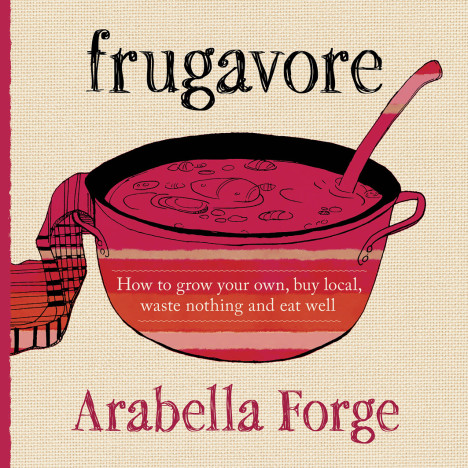
I’ve called on my friends at Greenpeace and Arabella Forge to join me. Arabella is a Melbourne dietician whose book Frugavore is a flippin’ excellent resource and cookbook for anyone wanting to cook real and mindfully.

Frugavore_cover - FINAL

She’s also the President of the Melbourne chapter of Weston A Price. So if that means something to you, you’ll very much like her work! Pam Allen who runs the sustainable seafood campaign at the Australian Marine Conservation Society has also weighed in. Plus I’ve thrown in some of my own findings, like…

1. Look out for salmon tails. I sometimes see these at my fish mongers. They’re the tail end of the fillet and often get tossed out. They have lots of lovely skin on them (the most nutritious bit of the fish…please don’t discard!!). They’re half the price of the rest of the fillet and cook up beautifully. And while we’re talking salmon…

2. Eat wild-caught instead of farmed salmon. Farmed salmon just isn’t sustainable. There are problems with the use of antibiotics and waste ending up in the natural environment. These might one day be overcome with very strict (and expensive) management to prevent any release into the ecosystem, but no one is getting it right here yet. Often wild-caught comes frozen, which is fine.

3. Favour herbivorous fish. This from Greenpeace: Most carnivorous species need to be fed a lot in order to be fattened, and this is having a significant impact on smaller species. For example, anywhere from three to over five kilograms of wild-caught fish is used to make the feed to produce one kilo of farmed salmon. Even if this feed is from sustainably managed species, it’s not an efficient ratio. The fish used to feed the salmon would be better used feeding humans.

4. Avoid anything on the red list. Pam: Some species on the sustainable fish “red list” (you can get hold of the list here) that are a big no-no are Southern Bluefin tuna, sharks (sold as flake in many fish and chip shops), striped marlin, swordfish. These

Read more

my simple home: five ways to feng shui your joint in five minutes

If you’ve been following the My Simple Home series, you’ll know I’m on a mission to create the cleanest, most eco, minimal home possible and sharing each step, figuring you might like to learn from the process, too. I’ve shared on hazards you should avoid and how to detox your kitchen, and you can catch up on the full series here. I should add: it’s a very slow process. I’ve been so busy that, well, I haven’t even bought a couch yet. I know, I know…I’m sure many of you have much to say on this (um, commitment issues?). My friends certainly do.

But I digress.

This post I’ve got building biologist and feng shui expert Nicole Bijlsma sharing her top five tips for getting the energy in my place sorted. It’s a snappy three minute video, if you’ve got the time. Otherwise, I’ve shared the highlights below.

1. Get rid of clutter.

Clutter represents the past. Hanging on to stuff? You’re hanging on to old stuff. Figuratively and literally.

2. Watch for the highs and lows.

Hidden clutter under the bed has an impact on you as you sleep. It stores in your body, and can make you sluggish. And clutter up high suggests the feeling of having things rain down on you. Remove the highs and lows.

3. Sit with a solid wall behind you.

Furniture placement is important. In a room where you spend lots of time – sitting at a work desk, or on a couch – make

Read more

Relax your nostrils

This is a rippin’ technique for highly strung, nervous types. Like me. We can’t “just relax”. We have to trick ourselves into it. Go about it from a different angle. This is OK. Truly it is. But we must do it – trick ourselves, do whatever it takes – so we can continuously,  slowly, slowly, not-all-at-once unwind. We have to keep working on it, little pocket of tension by little pocket of tension. This matters. We can’t keep going as we do. It’s not the point of life to be forever brittle and ready for attack.

Photo by Terry Richardson

So…

Relax your nostrils.

Soften the inside of your ears.

Release your toenails.

Let go of your teeth.

Let go of your eyelashes.

Repeat.

Did you just do it? It works, yes?

A yoga teacher once told me to relax my nostrils. I took it further and released more ridiculous parts of my body, one by one. And I found my whole body released when I did.

It’s just too much to relax one’s shoulders or to release tension all over. By targeting inconsequential parts of my body, there’s less pressure, less onus. It’s like my exercise theory: if I tell myself I have to head out for a one-hour gym session, I’ll baulk. But if I merely commit to a 20-minute walk and I’ll not only do it, I’m likely to walk for longer,

Read more

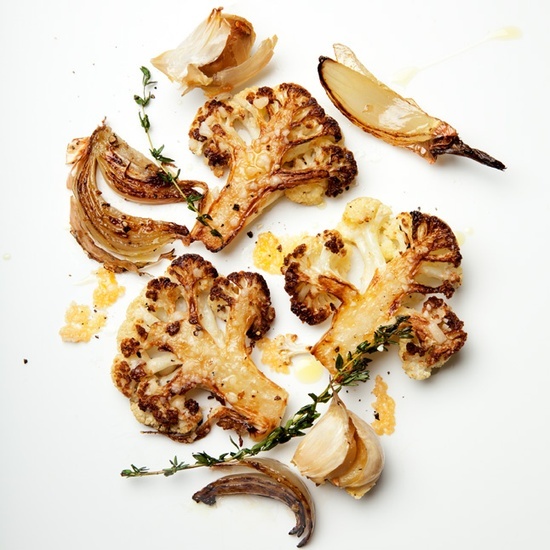
my new love: cauliflower

I’ve found a new love. It’s an autumnal love. She’s versatile. She spreads herself generously. She’s sweet, but not toxic and, OK, she’s cheap.

Parmesan roasted cauliflower. Image via Pinterest

I’ve been playing with cauliflower for a few weeks now. I think you should have a go, too. These clunky white nuggets are full of antioxidants, rich in fibre and Vitamin C, a natural detoxifier and an anti-inflammatory food. Yep, they’re a cruciferous vegetable and contain goitrogens that meant to be problematic for those of us with thyroid issues. But my take on this issue: there are far worse triggers to dampen thyroid. Plus, the goitrogenic enzymes are partially destroyed by heat. If you don’t binge on the things and only eat them cooked, you’re all good…IMO.

So…some ideas worth spreading:

1. Cauliflower Fried Rice

Serves 2

  • 3 cups cauliflower (approx half head of small cauliflower)
  • 1 tablespoon coconut oil or olive oil
  • 2  eggs
  • 2 garlic cloves, minced
  • 1 carrot, diced
  • ½ cup frozen peas
  • 3 green shallots, sliced
  • 100g prawns shelled, diced*
  • Tamari or soy sauce to taste
  • sea salt, to taste

Grate the cauliflower on the larger side of a cheese grater, or pulse in a food processor until it’s rice sized. Wrap the riced cauliflower in a couple paper towels and squeeze it to remove any excess moisture.

In a small fry pan, skillet or wok, fry the prawn meat in one teaspoon oil until almost cooked, then set aside. Beat the eggs then cook as a flat omelette in another teaspoon of the oil. Remove from the pan and slice into strips using a knife or a pair of

Read more

a friday giveaway: 30 Wild Patch chocolate gifts

Because it’s a Friday, and it’s a long weekend, I thought it might be nice to giveaway chocolate. This time, Linda from Wild Patch has kicked in to share:

30 x fructose-free chocolate gifts, worth $15 each plus shipping 

I’ve shared a bit of Linda’s story before. She’s a chocolate maker from Olinda (near Mt Dandenong) in Victoria, who did my I Quit Sugar program a while back, prompting her to create a fructose-free line. Nice!

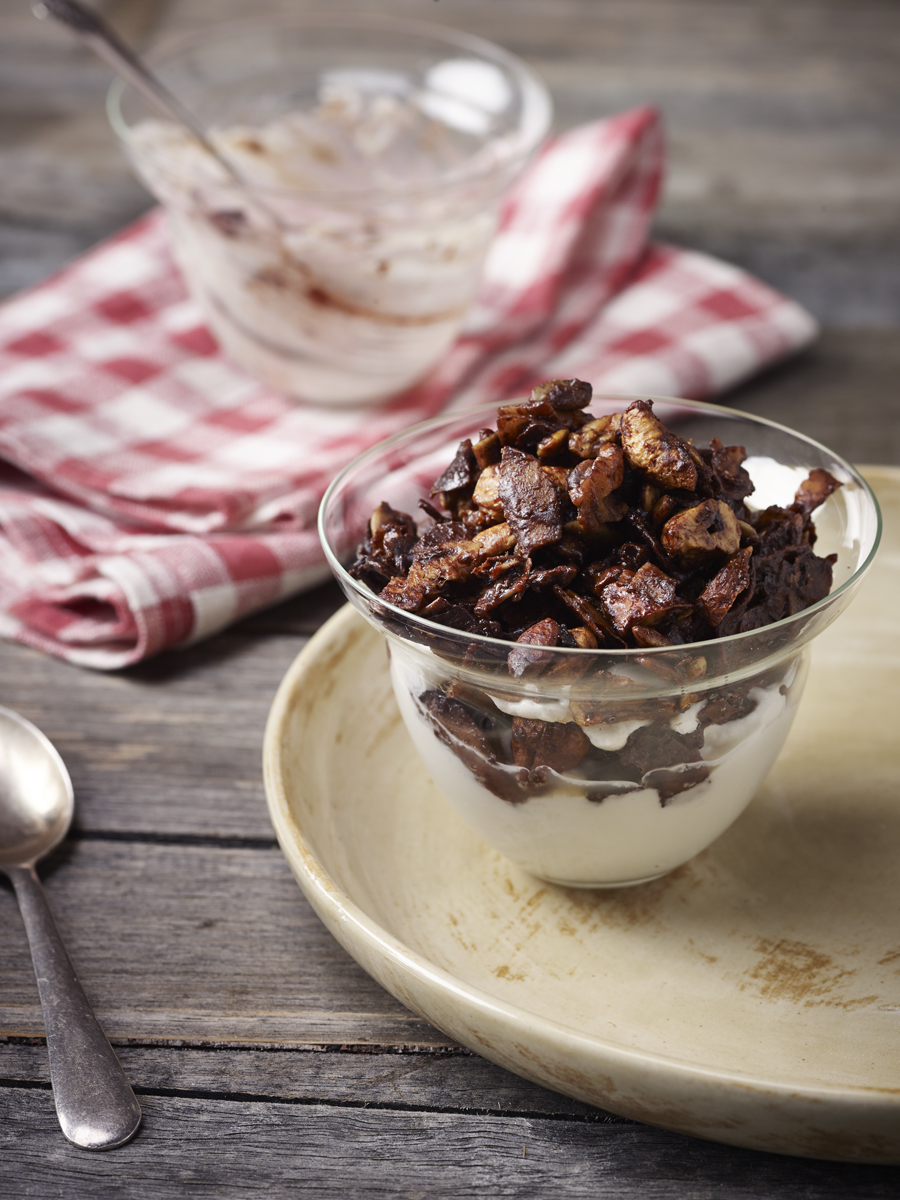
Chocolate Granola Clusters
Chocolate Granola Clusters, from my Chocolate Cookbook. Photography by Marija Ivkovic

Linda’s been importing German brand Frusano’s fructose-free chocolate bars for a while (“mainly for our own consumption” she says). Now, along with selling Frusano bars (these are the ones I’ve mentioned here on this blog before), she sells a range of fructose-free chocolate products that she makes. She also sells sugar-free chocolate supplies, including 100% cacao mass (unsweetened chocolate), cacao nibs, cacao powder and cacao butter – if you’re looking for ingredients to

Read more

Sugar-free barbeque pulled pork

As I mentioned last week I’m currently devouring Michael Pollan’s Cooked, A Natural History of Transformation with a fork, spoon, knife, splade and shovel. The opening chapter (in fact, the first quarter of the book) is devoted to the art of making barbequed pulled pork. Or “barbeque” as it’s called down South (of the States).

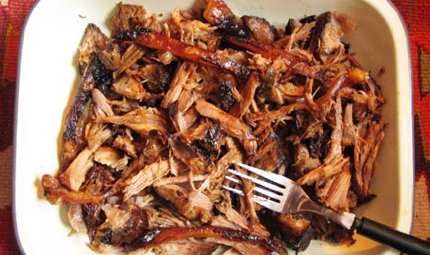
Image via The Guardian
Image via The Guardian. I served mine at night and had bad lighting…but will be photographing soon.

Anyone familiar with the art of making “barbeque” knows a fair whack of sugar is used at some point in the process (there are different processes for different regions of the US) and that it generally involves smoking the meat. Both factors, of course, are simply beyond the scope of what I do.

Therein, a challenge was laid out for me: to create a version of barbequed pulled pork that incorporated my cooking vibe and flow. I spent a morning playing with the idea, reading up on the different methods of cooking pulled pork.

And concocted a mock version that can be plonked effortlessly in a slow cooker (press go and leave for the day), doesn’t require sugar to get the cured effect, has a barbeque flavor without requiring the smoke and is sustainable and economical. Phew! You’ll be pleased to know it worked, too! Here’s what I did:

  • I rubbed the pork in fennel and salt. The traditional way is to rub the meat in a cure of equal parts sugar and salt and leave it to cure in the fridge for a few hours before cooking. This draws off moisture, then sinks the flavour and moisture back in again. I touched on this phenomenon here. After the pork is cooked and “pulled”,

    Read more

This is why I cook

I’ve been reading Michael Pollan’s latest book: Cooked, A Natural History of Transformation. I’m transfixed. I love it. I’m sure you would too.

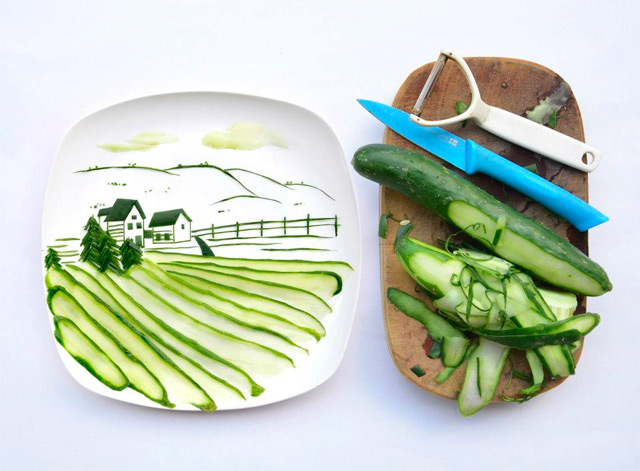
Photo by Hong Yi
Photo by Hong Yi

I’m learning all kinds of wonderful cookery thingerys. Like, salt any meat that’s to be braised or stewed for hours, if not days, before you cook it. Why? Salt obviously draws water out of things, so this advice can seem counter intuitive. But as the salt draws the water out it forms a salty liquid that then, after a bit, gets drawn back into the meat in a kind of osmotic vacuum effect. Thus making said meat super tender.

But reading the book has got me thinking about why I cook. Pollan points out it’s not an efficient thing to do. We can outsource cooking so much more cheaply and efficiently. So why bother? For me:

* Cooking is creative. I get into a flow of making and building and playing. I can test and try things and take risks. I build without a plan. I just start, then I add sauces and herbs and I feel my way toward the endpoint. It’s like that wisdom: like a car with its headlights on, we don’t need to be able to see our final destination at the end of the road. We just need to be able to shine our attention to the bit in front of us, and steer from there. This is the thrill of creativity…trusting that the road will lead us there…even if we can’t see it all in one.

* It’s manual. It’s hands-on. I roll my sleeves up and get out of my head. Out. Of. My. Head.

* It takes me beyond rules. I almost become recalcitrant. I refuse to check on The Google if I have the right temperature for baking almond meal cupcakes. I avoid using measuring cups and spoons. In fact, I only just bought a

Read more

What if you could combine coconut and rice milk in one?

I know a stack of you ask me about non-dairy milks that don’t contain sugar, GMOs, phytic acid or other toxins. Which is no mean feat. I struggle to recommend many* and mostly suggest you make your own nut milks (there’s a recipe in my I Quit Sugar book). And, then, from another angle, some of you tell me you find coconut milk in cooking a little rich.

Screen Shot 2013-05-24 at 5.15.03 PM
Image via Smoothie Club

Now, to all of you I can say: Coco Quench.

Husband and wife Don and Ann from Pureharvest make this stuff. They also make the rice malt syrup I use in many of my I Quit Sugar recipes and are a bunch of authentic pioneers in this area and I met them during a recent Melbourne trip.

* As an FYI, their nut and rice milks are actually GMO and fructose free (the only Australian brands on the market that are).

And just so you know, this is a sponsored post, but opinions are all my own and I researched the topic and came to these conclusions myself. You’ll find my position on sponsored posts and advertising here.

Don and Ann have been experimenting and making organic, health foods since the early 1970s from their little place outside Melbourne. They walk their talk. They love what they do. And they were able to explain to me the deal with their latest invention: a milk substitute that combines coconut and rice milks in one. Here’s how it goes:

Use as a coconut milk substitute.

Some recipes can be vastly improved by using a little coconut milk. But perhaps they’re not quite a curry. Perhaps they’re a soup or a stew. But using a mere dash of coconut milk or cream is a bugger – you’re left with the rest of the can. Coco Quench is good

Read more